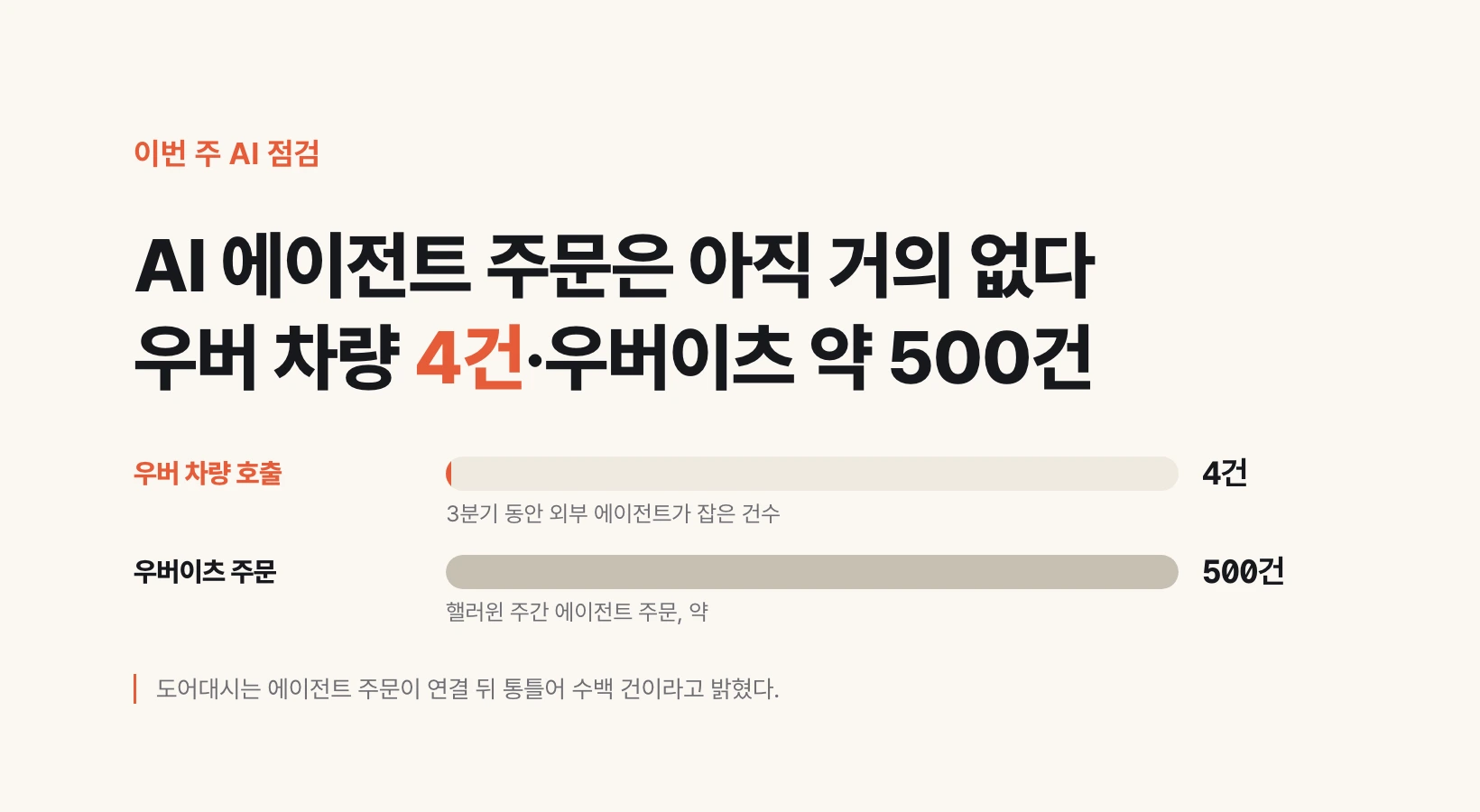
AI Agent Orders — A Few Hundred at DoorDash, Four Rides at Uber
An AI agent is an AI program that takes a goal and works through multiple steps on its own. A common showcase is saying 'order me tacos' and watching the agent open the app, pick the menu items, and pay. This week, two delivery and mobility companies disclosed for the first time how often that scenario actually happens.
In DoorDash's third-quarter earnings call on October 29, co-founder and CEO Tony Xu said outside AI agents have generated several hundred orders in total since they began running. DoorDash handled just under 1 billion orders in that same quarter. He explained that for a task as simple as ordering food, people tend to come to the DoorDash app directly.
In its earnings call on November 4, Uber said outside AI agents booked four rides during the third quarter. Agent orders on Uber Eats were a little higher, at around 500 during the week of Halloween. It was the first time Uber disclosed these numbers.
The takeaway is simple: agents that order on behalf of customers are barely used yet. DoorDash's CEO sees agents as more useful for long-consideration purchases and for work done quietly in the background. If your company is bringing in agents, start by handing one repetitive weekly internal task to an agent and measuring the result, rather than building a new customer ordering channel.
ChatGPT and Codex Usage Limits — Merging Into One in December
According to an OpenAI Help Center article, starting in December the usage allowance on Plus, Pro, and Business plans will be shared across ChatGPT and Codex. Codex is OpenAI's coding tool that reads and edits code. The company says the change comes as it brings the agentic capabilities of Work into the main ChatGPT experience. It has not named an exact start date.
Usage is counted in tokens, the small units an AI uses to break up and count text. More advanced models and complex tasks use more of the allowance, while Instant chat, the fast everyday mode, does not count against it. Remaining usage and reset times will be shown together under Settings → Usage.
OpenAI says most users should not have to wait for resets more often than they do now. But people who run long Codex tasks will now share the same allowance with their chats. If your team uses Codex heavily, record who uses it for what and how much during November. That record will help you choose plans again in December.
Claude Personal Finance — Read-Only Bank Account Connections

On November 5, Anthropic added a Personal Finance feature to Claude. After connecting bank and credit card accounts through Plaid, users can ask questions such as 'Where did my money go this month?' or 'How much interest did I pay over the past year?' Plaid is a U.S. financial connection service that links apps to bank accounts.
According to the company, access is limited to the bank's name, the account name and type, the last four digits of the account number, balances, credit limits, and up to two years of transaction history. Access is read-only, so it cannot move or invest money, and conversations in the Personal Finance hub are not used to train models.
It is rolling out as a beta to Pro, Max, and Ultra plan users in the U.S. and is not yet available in Korea. Still, it is worth noting: these are exactly the three things to check whenever you connect company data to AI — what it reads, whether it has write or transfer permissions, and whether conversations are used for training.
Gemini Omni 1.2 Flash — 15-Second Videos at a 30% Lower Price
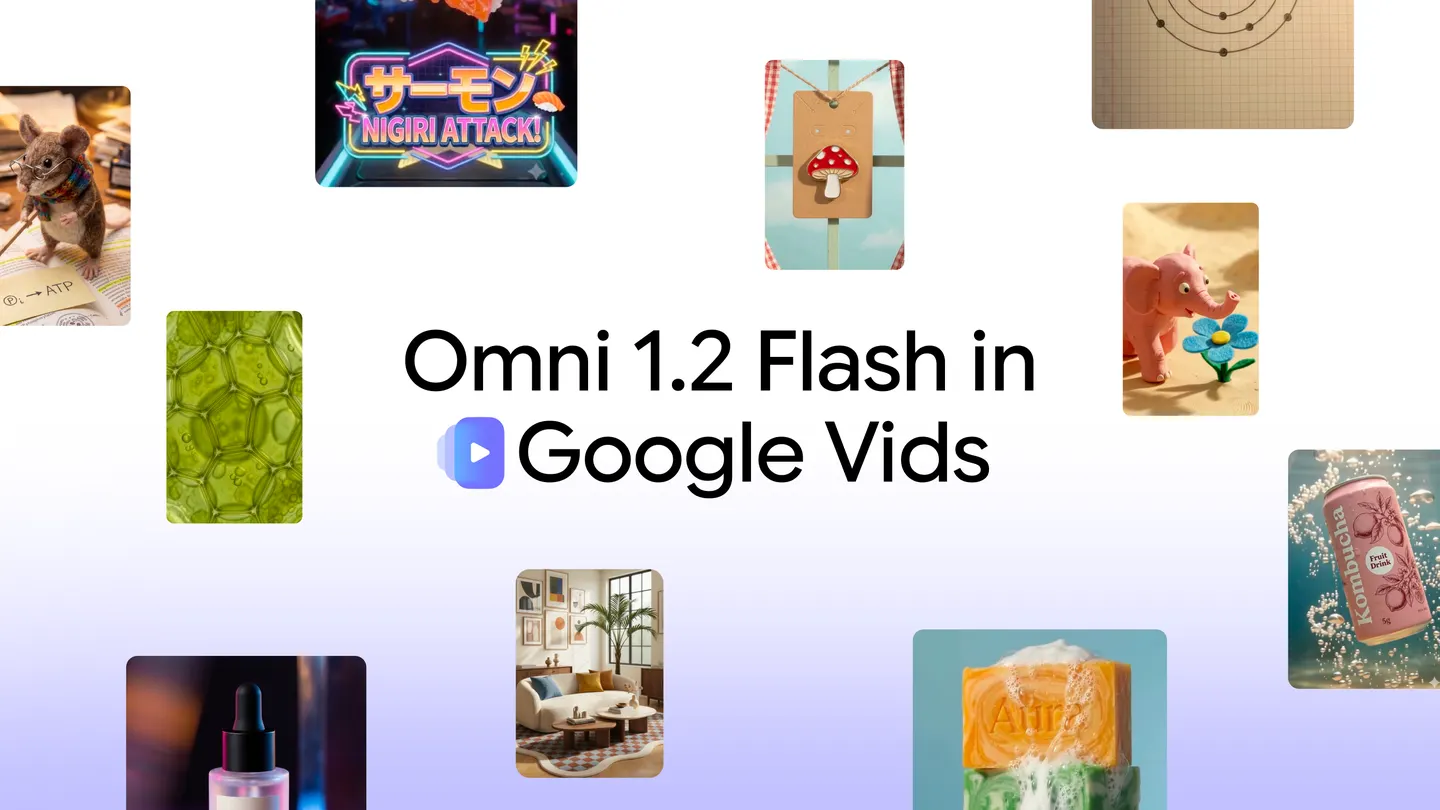
On November 5, Google made its video generation model Gemini Omni 1.2 Flash generally available in the Gemini API and Gemini for business. The maximum length of a single clip grew from 10 seconds with Omni 1.1 to 15 seconds, and you can pick any length from 3 to 15 seconds in one-second steps.
The price dropped 30% to $0.07 per second of 720p (standard HD) video, or about $1.05 for a 15-second clip. Google recommends drafting quickly at 360p or 720p, fixing only the parts that need it through follow-up instructions, and upscaling just the best results to 1080p or 4K. Generated videos carry SynthID, an invisible mark that lets you later confirm the video was made by AI.
The place to try it at work right away is Google Vids. Anyone with a Google account or a Google Workspace subscription can make up to three 15-second videos per month in Vids at no additional cost. It is worth making one short video for a product introduction or an internal announcement and comparing it with outside production.
ChatGPT Images 2.6 — Animated GIFs and Saved Reference Images
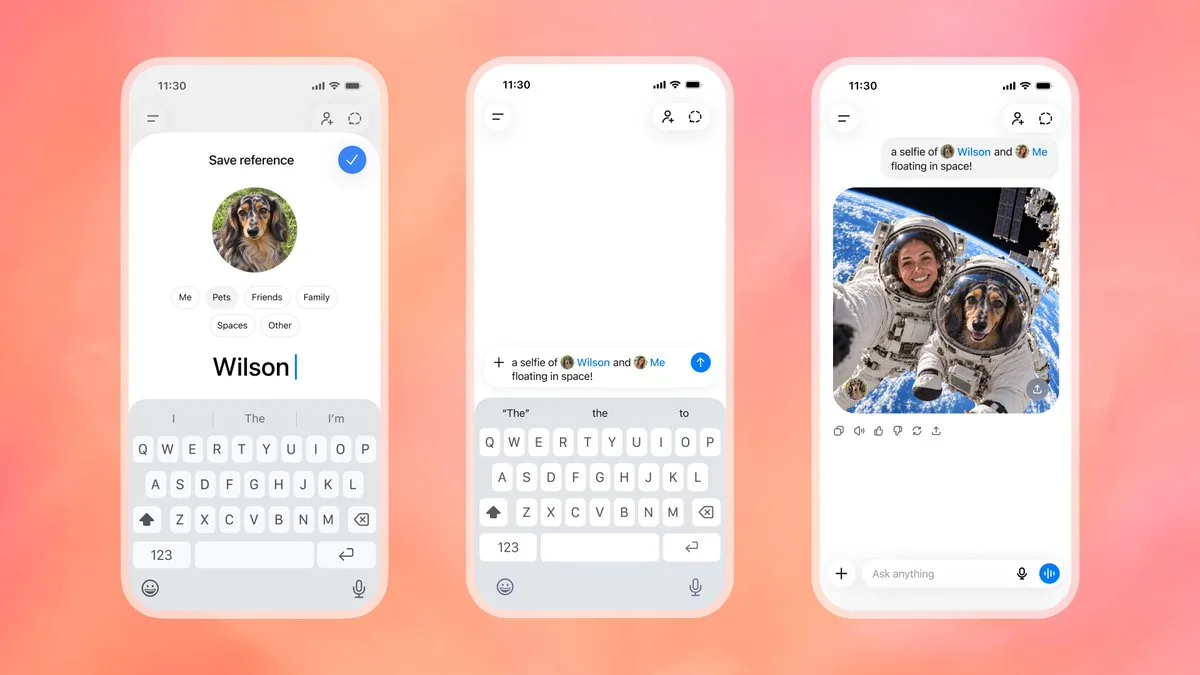
On November 4, OpenAI released ChatGPT Images 2.6. It can turn a text prompt or a single photo into an animated GIF, and you can change the playback speed or edit individual frames. A GIF is an image format that strings several pictures together and plays them on a short loop.
Saved reference images arrived too. Save a photo of yourself, a pet, or a character once, and you can call it up by name in later work without uploading it again. That suits series images or company characters where the same figure has to look the same across many pictures.
For developers, two image models, GPT-Image-2.6 Flare and Sunburst, came to the API. An API is the gateway your own program uses to call OpenAI's models. OpenAI says image generation is 50% faster and that Flare can produce an image in as little as six seconds. The speed figures are the company's own measurements.
Kimi K3.1 Pro — The Model Files Are Actually Out
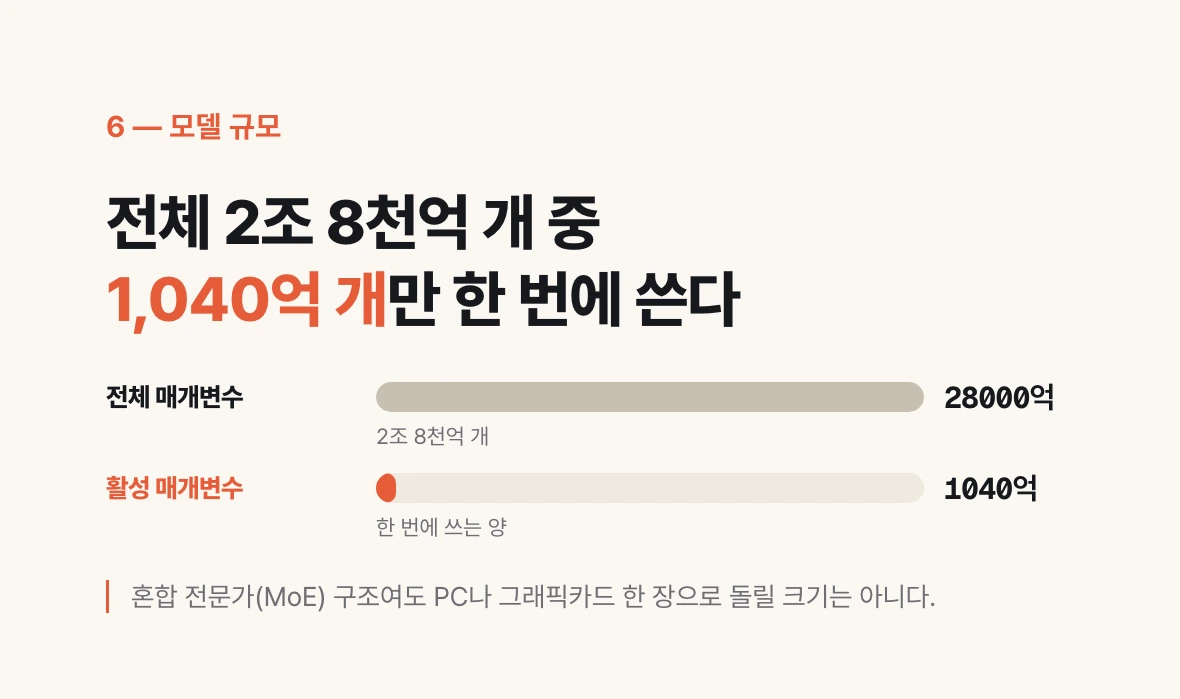
Last week, this roundup described Moonshot AI's Kimi K3.1 Pro weights as 'scheduled for release by November 4.' They are now public. Weights are the files holding the values a model learned in training; with them, anyone can run the model on their own servers. The moonshotai/Kimi-K3.1-Pro repository on the model-sharing site Hugging Face was created on November 2.
According to the model card, it has 2.8 trillion total parameters and 104 billion activated parameters used at a time. Parameters are the numbers used to measure a model's size. Because it uses a mixture-of-experts (MoE) design that picks only some expert parts for each request, it does not compute everything every time, but it is still far too large to run on an ordinary PC or a single graphics card.
The license is not a standard open-source license but a separate Kimi K3.1 Pro license set by Moonshot. Read the terms of use before downloading it for company use.
This Week's Checklist — Adoption Order, Limits, Permissions
First, give agents internal work first. As the DoorDash and Uber numbers show, there is still almost no demand for agents that order on customers' behalf. Pick one repetitive weekly internal data-entry or cleanup task, hand it to an agent, and measure the time it takes.
Second, prepare for the usage limit change. Teams that use both ChatGPT and Codex should record their November usage patterns and compare remaining limits under Settings → Usage after the December switch.
Third, check the scope of data connections first. For features like Claude Personal Finance that connect accounts, documents, or email to AI, confirm what is read, whether there are write permissions, and whether data is used for training before turning them on.
| Check | This week's evidence | First step |
|---|---|---|
| Agent adoption order | Several hundred cumulative outside-agent orders at DoorDash; four agent-booked rides at Uber in Q3 | Hand one repetitive internal task to an agent and time it |
| Usage limits | ChatGPT and Codex share one allowance on Plus, Pro, and Business from December (token-based, Instant chat excluded) | Record November Codex usage |
| Data connection permissions | Claude Personal Finance is read-only, up to two years of transactions, conversations not used for training | Check what is read, write permissions, and training use before connecting |
| Video production cost | Gemini Omni 1.2 Flash at $0.07 per second of 720p; three Vids videos per month at no additional cost | Test one short internal video in Vids |