Insights
From vibe coding and AX to AI agents, the tools I build, and real-world cases. Canonical long-form versions of my posts, gathered by topic.
Dario Amodei's proposal to pace AI: what did he commit to, and what should users check?
In his September 2026 essay 'We Must Pace the Frontier', Anthropic CEO Dario Amodei proposed slowing the rate at which AI capabilities improve. It is not a call to halt training but to buy time for safety claims to be verified from outside. As a first step, Anthropic committed to embedding external evaluators inside the company and letting them publish unfavorable findings without editorial control. Mark Zuckerberg pushed back, saying each lab is responsible for its own safety. The same week, products moved the other way, toward AI that works alone for longer. What users can take away is four questions: who verified it, what the default is when it works alone, whose name it acts under and what it remembers, and whose side the agent you are talking to is on.
Attention, memory, hallucination: AI borrowed the names, not the theories
This series covered the places where psychology built AI. The final episode sorts the other side: the places where only the name carries over. Attention is not an implementation of selective attention theory, the context window has nothing to do with memory capacity, and the magical number seven was disowned as a coincidence by its own author.

What Docker and Kubernetes are — moving the ground along with the program
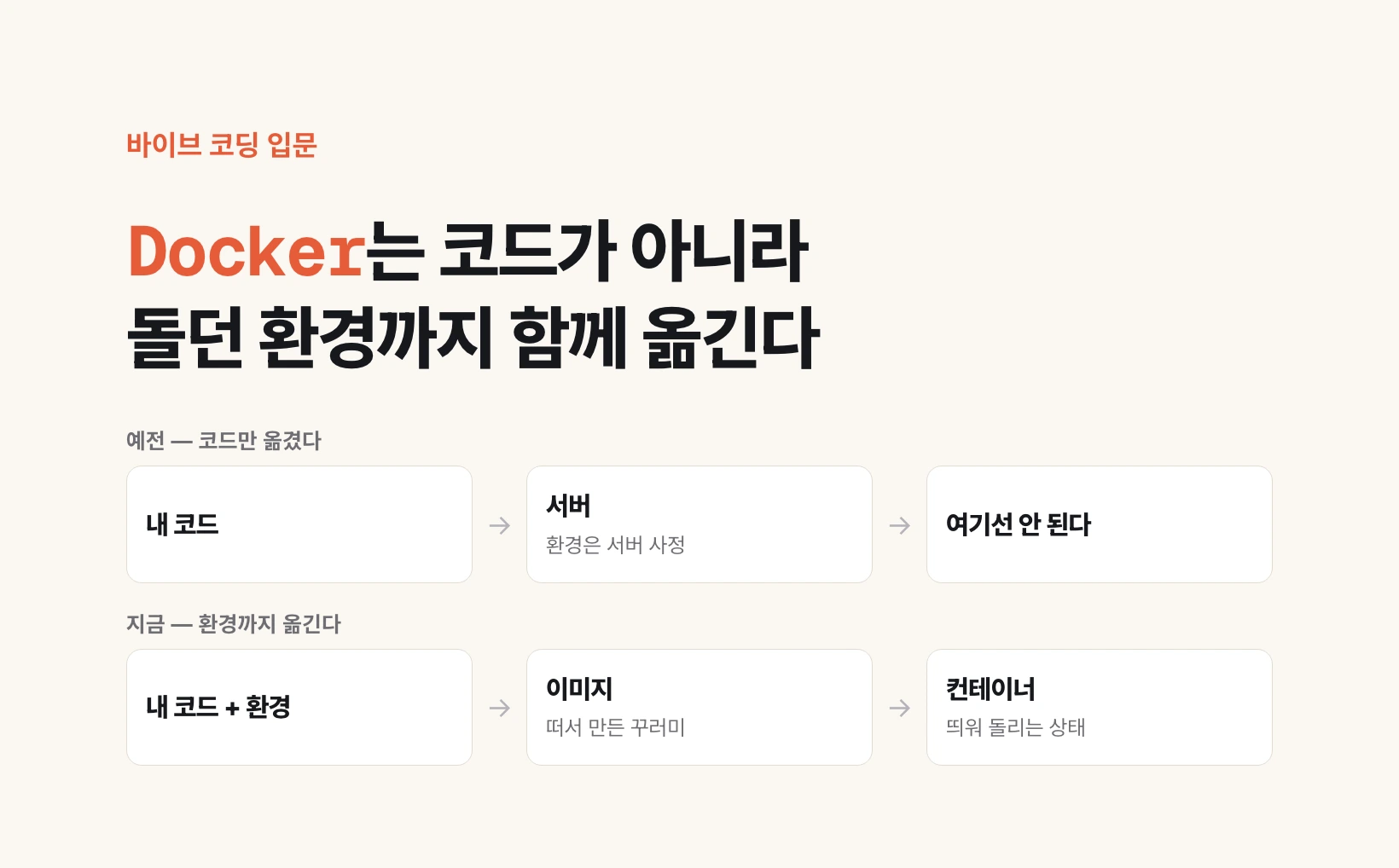
When something that ran on your machine fails on the server, the cause is usually a different operating system, version or set of installed tools. The code is identical; the ground underneath is not. So the approach that seals the program together with the environment it ran in into one bundle is Docker, that bundle is an image, and running it is a container. Once there are many bundles, deciding how many run and restarting the ones that die is the job of Kubernetes.
What storage and a CDN are — where files live
A database is a table structure good at holding names, dates and numbers, so photos and video are not the kind of thing that belongs in its cells. Put them there and every read drags a heavy blob along. So files live separately in storage and the database holds only the path. On top of that, the net that pushes copies of frequently used files around the world in advance and serves them from somewhere nearby is a CDN, and a good share of every complaint that a site is slow starts in this layer.

Four ways of getting AI wrong
The ways AI adoption fails are not infinite. A 1997 human factors paper split the ways people relate to automation into four: use, misuse, disuse and abuse. The last is the least known and the most common in organizations. It names the state where the human role is not designed but left as a byproduct of the automation.

What a relational database is — split into tables, joined by keys
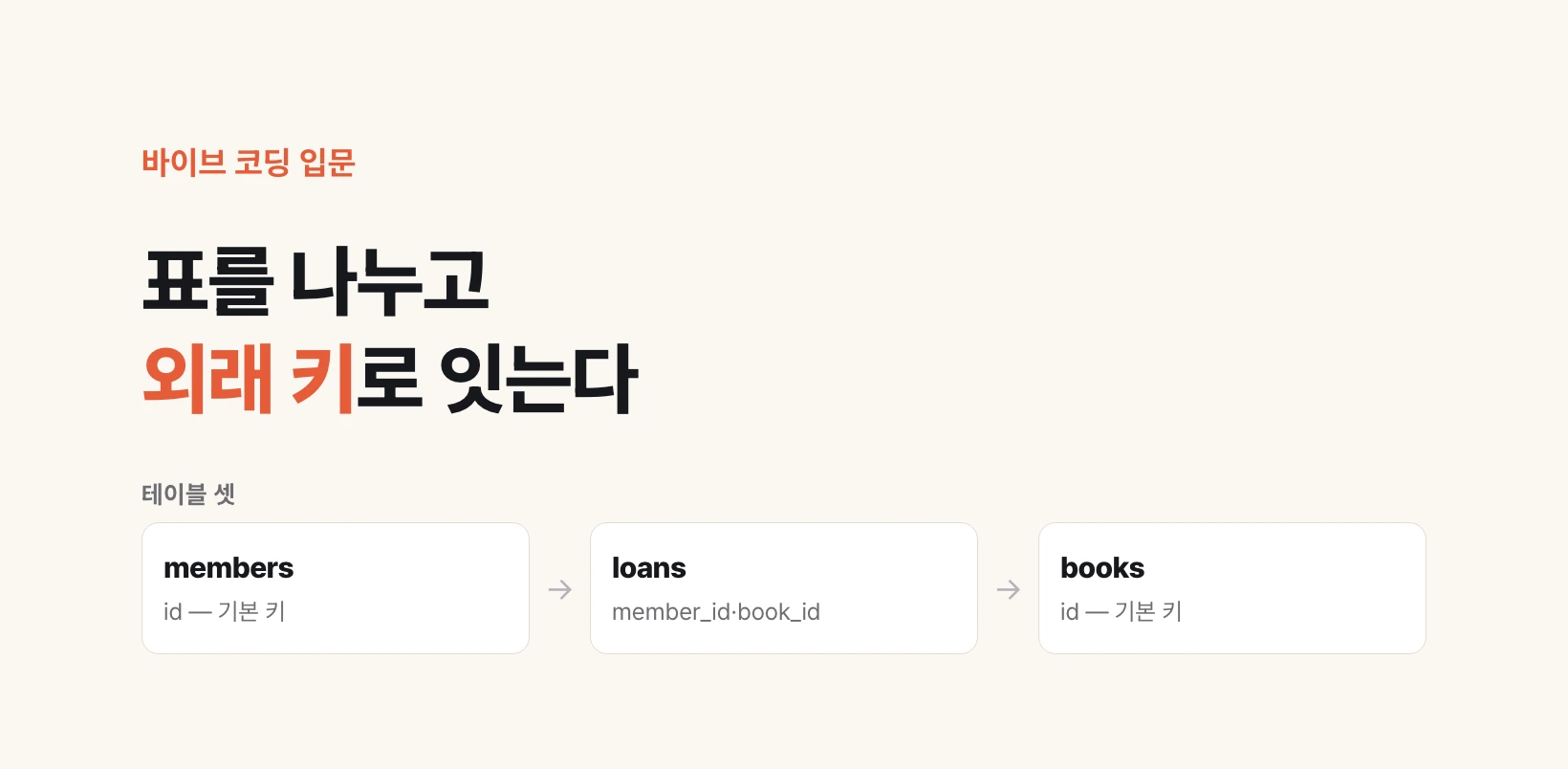
A relational database has the shape of a spreadsheet whose sheets are joined by keys. One table is a sheet, the top row names the columns, and each row below is one record. The value joining tables is a foreign key; the value uniquely identifying each row is a primary key. Pinning down the shape of a table in advance is the schema, and a statement telling the database to do something is a query. PostgreSQL is the representative product.
Record your meetings with stt. Start small with AI transformation.
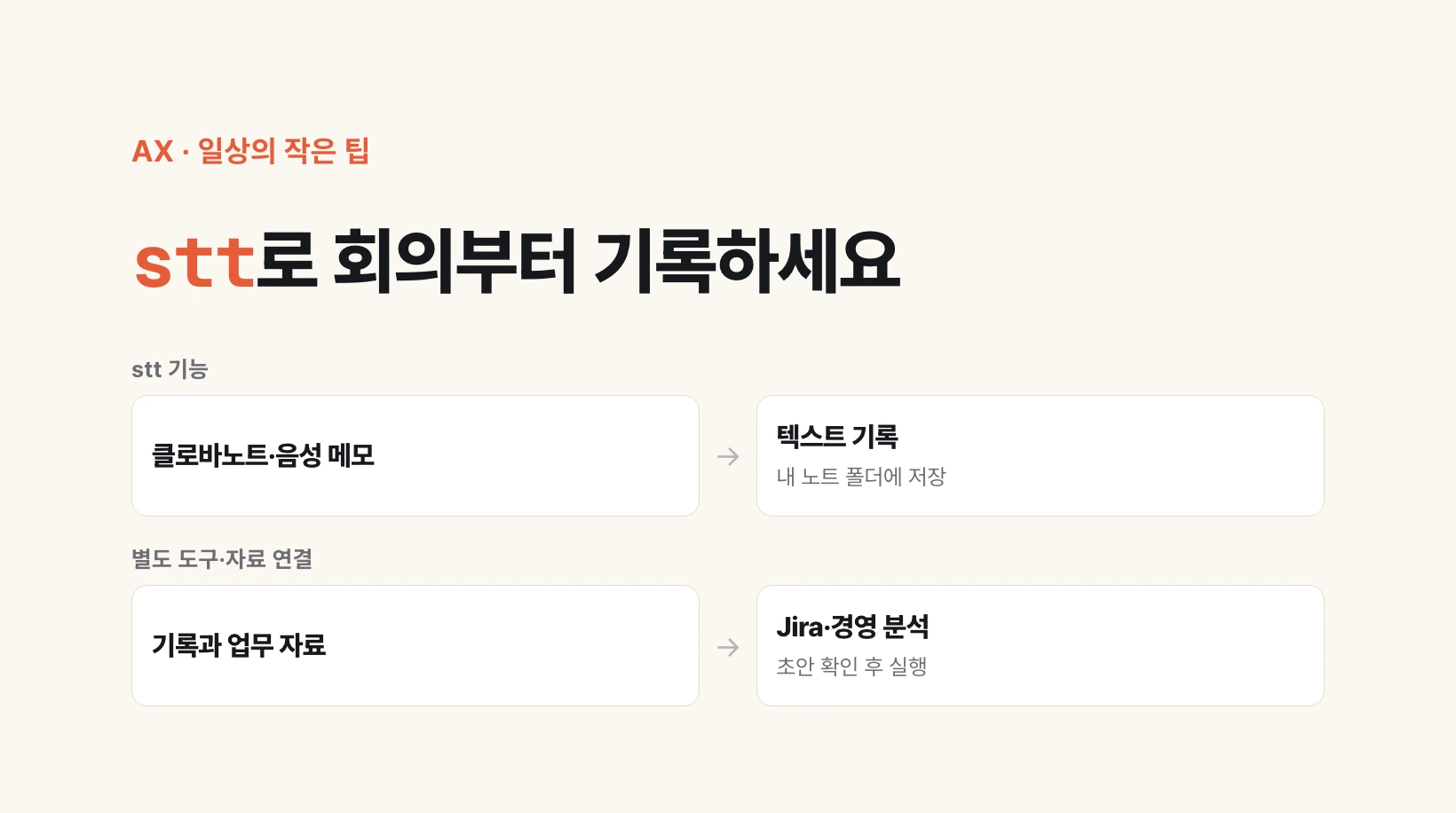
Start using meeting records for AI-assisted work by collecting them as readable text. My open-source stt plugin imports existing Clova Note transcripts or transcribes Apple Voice Memos on a Mac. With separately connected tools, supporting files and review, those records can lead to Jira issues for development meetings or financial comparisons for management meetings. Start AI transformation—changing how you work with AI—with one meeting.
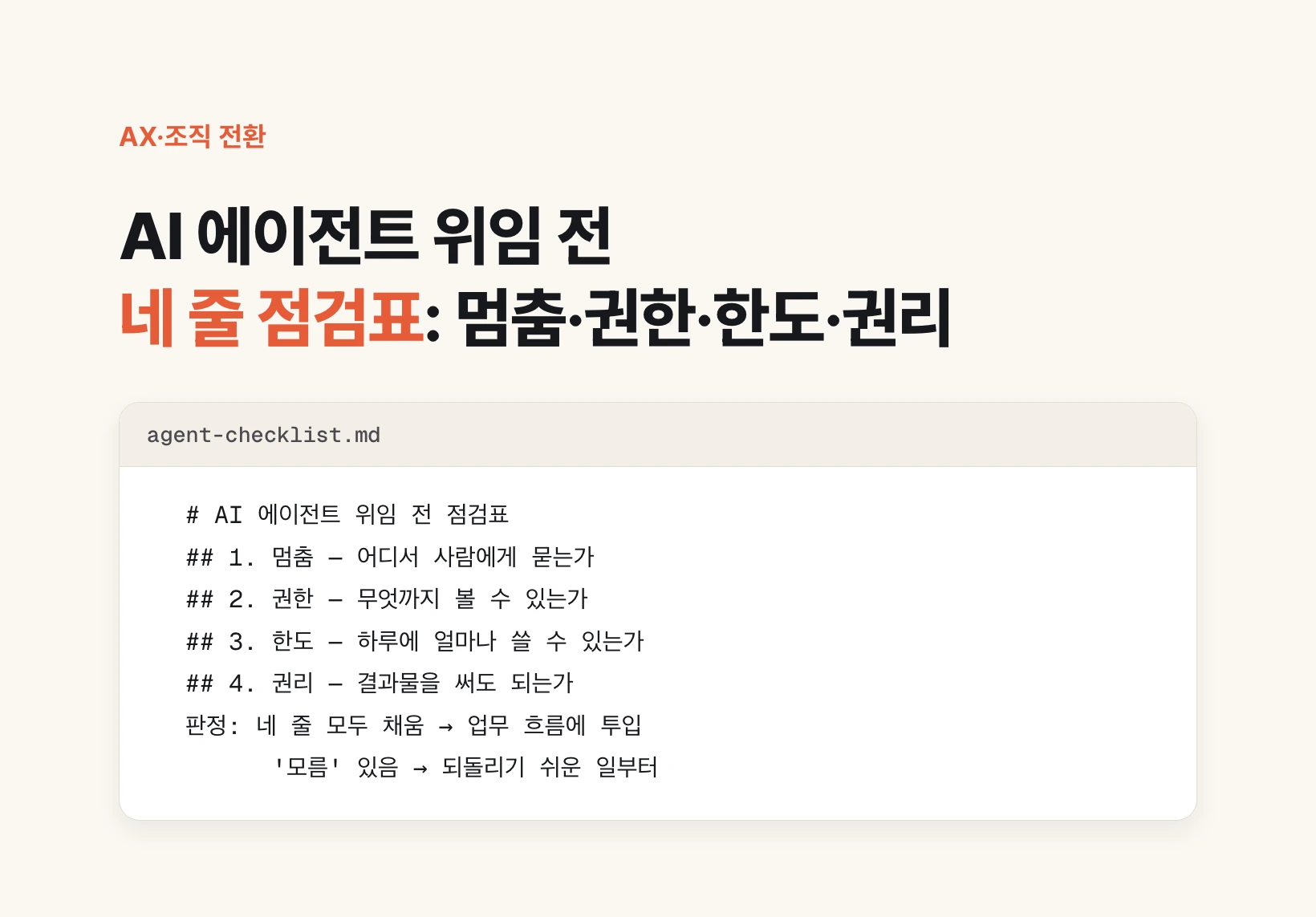
What should you check before handing work to an AI agent?
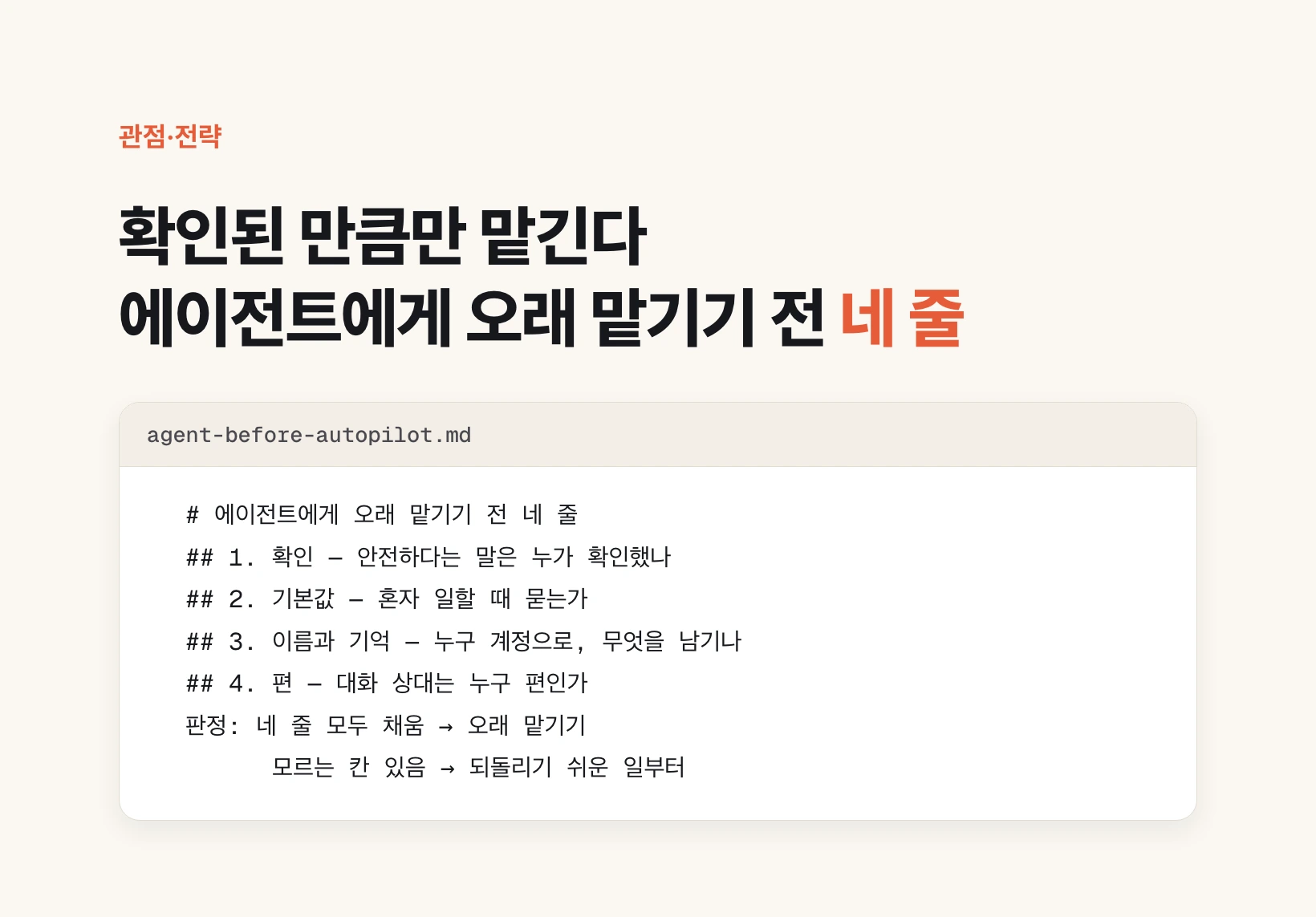
Check four things before the feature list: where it stops to ask a person, how much it can see, how much you can use it per day, and whether the rights to what it produces are settled. The announcements from the second week of September 2026 (Meta Muse, the Data agent in ChatGPT Work, Apple's Siri AI and Suno v6) all spent as much space on these four points as on features. Fill in these four lines before attaching a new AI tool to your work, and the adoption decision comes faster than any feature comparison.
What FastAPI and API design are — the backend's job
Older backend tools kept data, the view and the wiring between them in one frame and drew the screen too. Once screen drawing moved to the frontend, one question was left for the backend, what values to hand back, and FastAPI took that seat as a tool built only for it. The exchange format is JSON, and designing an API means settling three things: the address rules, how create, read, update and delete are split, and the shape of the response.

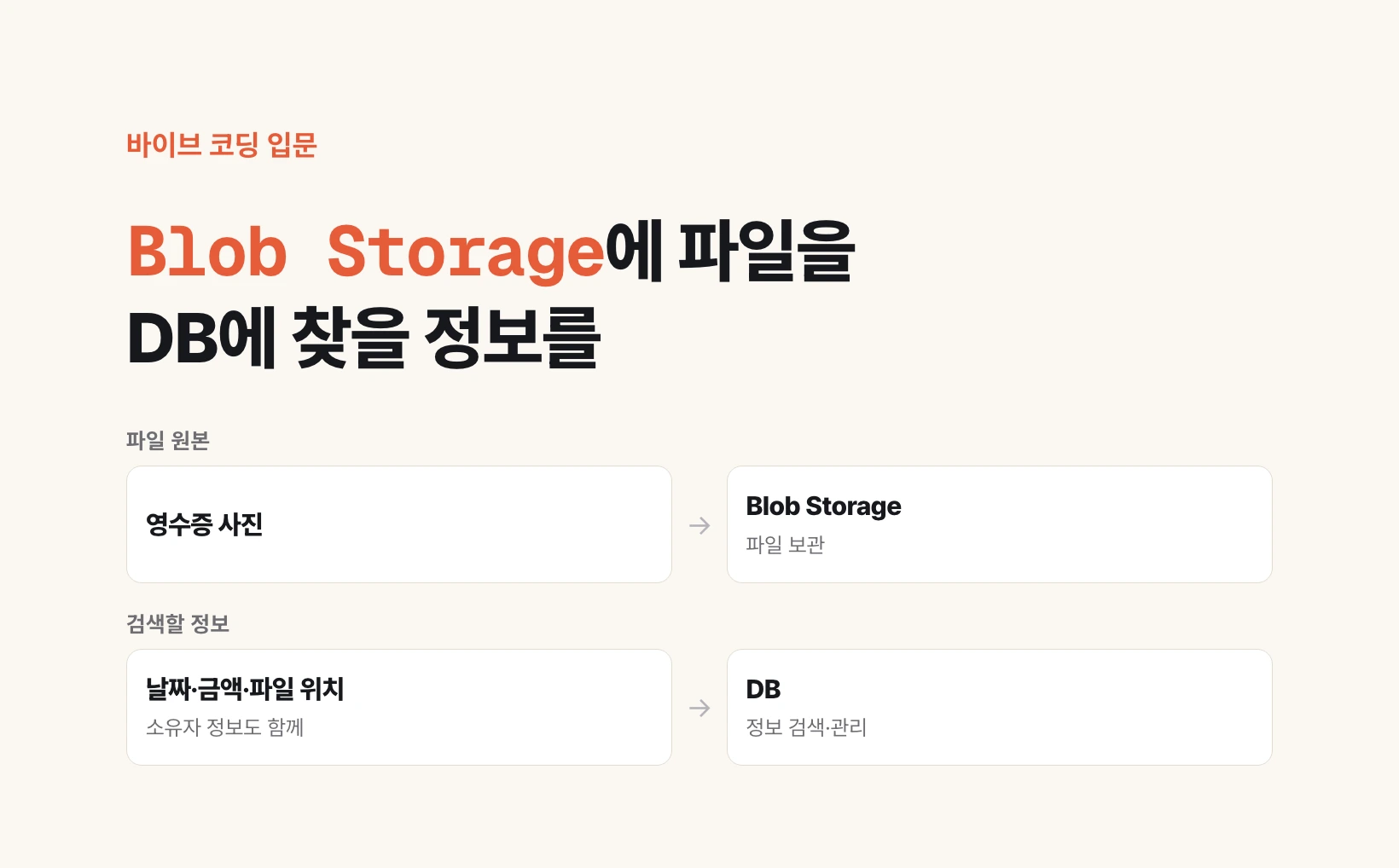
Blob Storage keeps the files; the database keeps the information needed to find them
Ask AI to build a receipt app and it may suggest Blob Storage, a service for storing photos, PDFs and other files. Keeping originals in Blob Storage and searchable dates, amounts, owners and file locations in a database helps you check not just whether uploads work, but who can open the files.
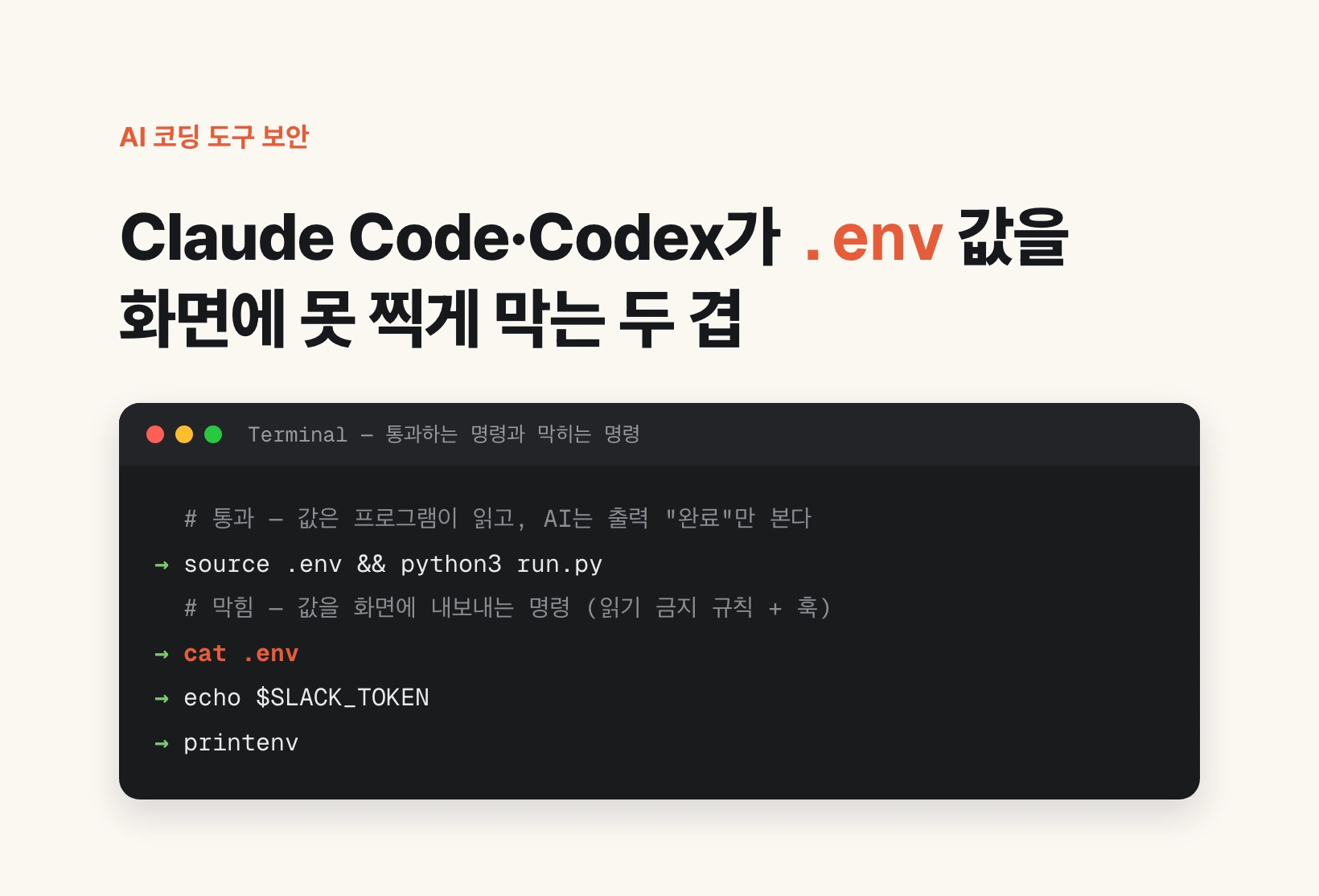
Can You Trust Claude Code and Codex? — A Hook That Stops .env Values From Being Printed
Claude Code and Codex run commands with your user account's permissions, so they can read your .env file too, and command output is mixed into the conversation and sent to the model company's servers. An AI masking values on its own is only a promise the AI keeps, not an enforcement mechanism. So instead of trust, set up two layers. First, add a rule to Claude Code's settings that forbids reading .env. Second, attach a hook to both Claude Code and Codex in which a script looks at each command just before it runs and blocks only the commands that print values to the screen. Some paths remain that it cannot block, such as a script printing a value by itself, but you can close the most common routes first.
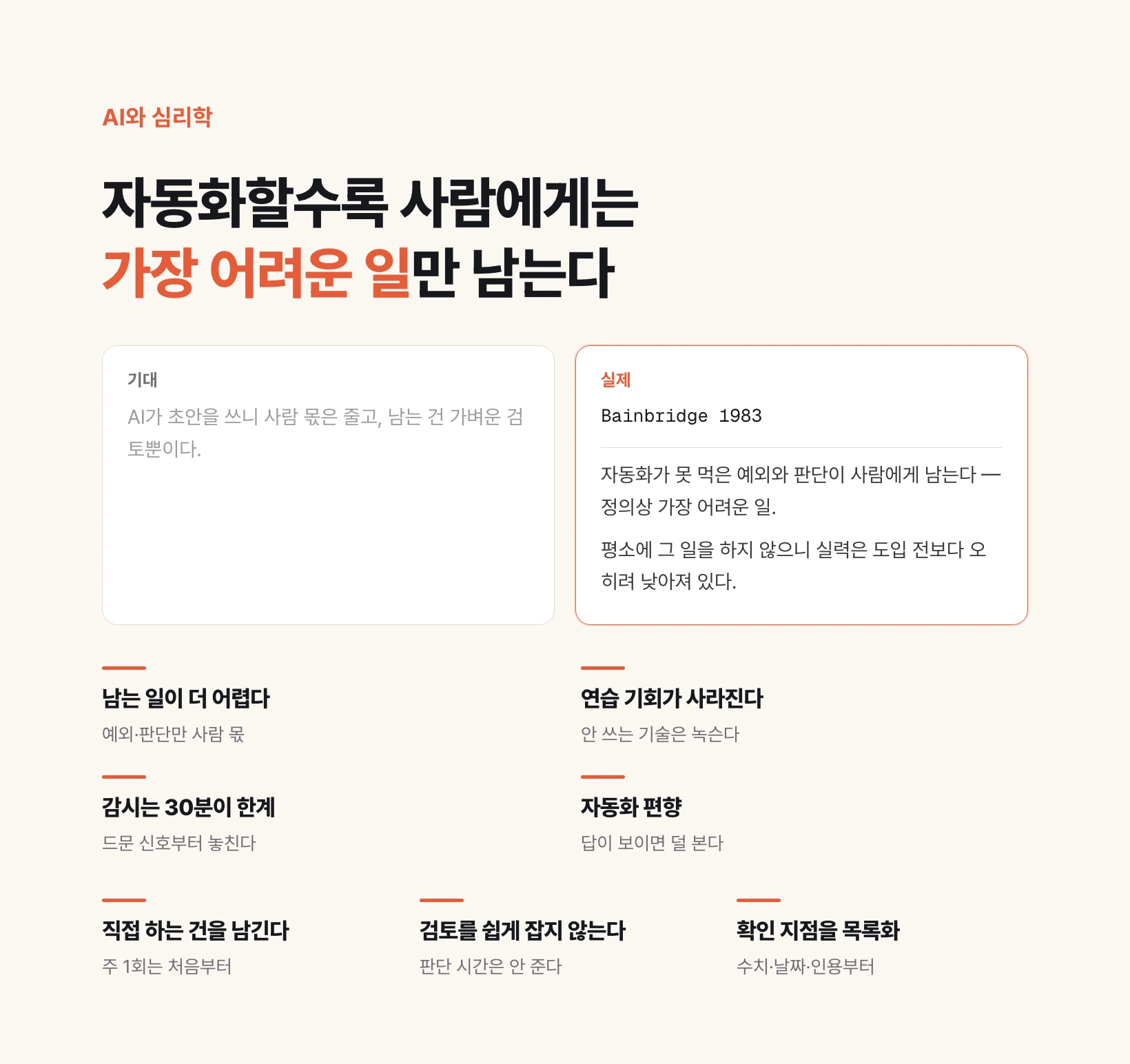
The ironies of automation: the more you automate, the harder the human's share gets
Handing work to AI, people expect what remains to shrink. A five page paper from 1983 pointed out the opposite. What cannot be automated is what is left to the human, and that is by definition the hardest part, while having nothing to do day to day removes the chance to practice it. Operators need more training, not less.
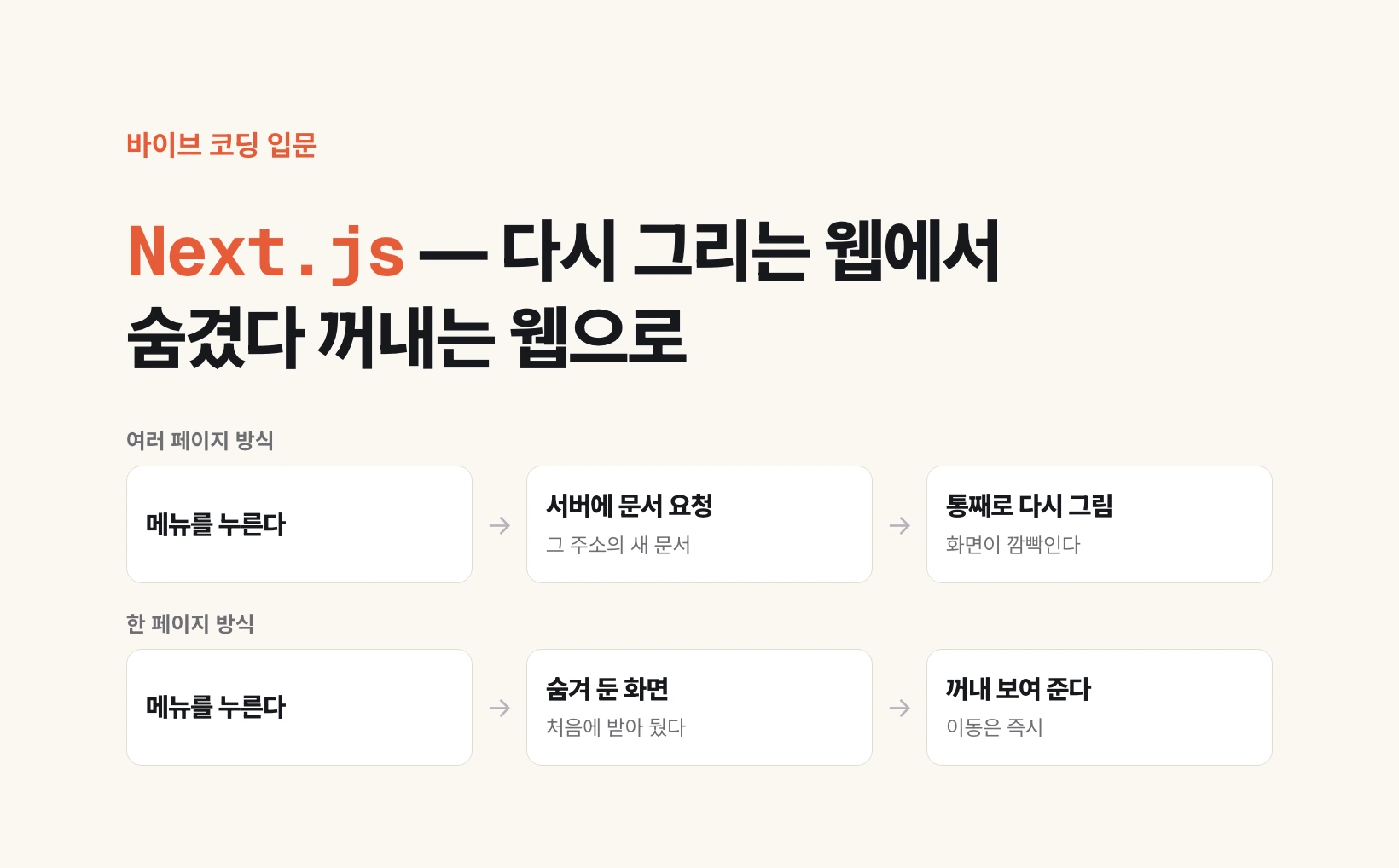
What Next.js is — who draws the screen, and when
Old web pages asked the server for a fresh document on every navigation and repainted everything, which is why screens flashed. Mobile apps raised expectations, so the web moved to loading up front and navigating instantly, but painting in the browser risked search engines seeing a blank page. Rendering on the server first is used alongside it, and letting you choose between the two inside one project is what Next.js does.
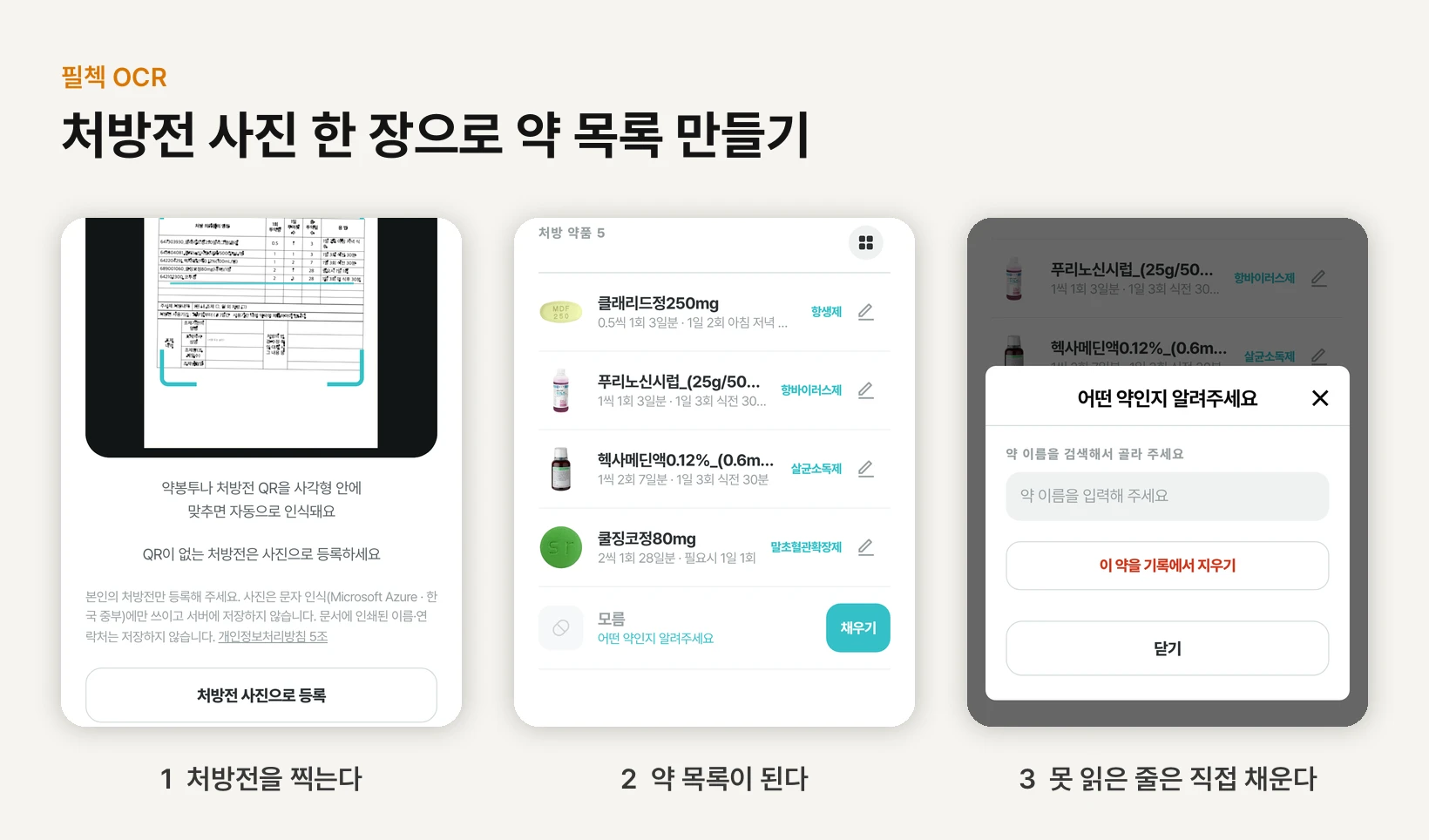
PillCheck OCR — Turning one photo of a prescription into a medication list
PillCheck OCR is the registration feature of PillCheck (필첵) that turns a photo of a prescription without a QR code, or of a medication envelope from another pharmacy, into a medication list. After signing in at www.pillcheck.co.kr, you use it from the Prescription and Envelope tabs under Scan in the bottom menu. A text-recognition AI reads the characters and the table in the photo, and each drug it reads is matched to the drug database so the list shows the pill photo, drug class and dosing together. The prescription photo is used only for text recognition and is not stored on the server. Rows it cannot read are neither deleted nor filled with a similar drug. They stay as “Unknown” so the user can search for the drug and fill them in.
What a web server and HTTPS are — the work Nginx does
A request arriving at a server does not yet settle what gets handed back. Writing down that requests on this port get files from this folder while that address gets passed to a program inside is what a web server does, and Nginx is the most widely used one. HTTPS lands here too: where to read the certificate and key and which connections to apply them to is written in this configuration, and the padlock in the address bar means that configuration took.

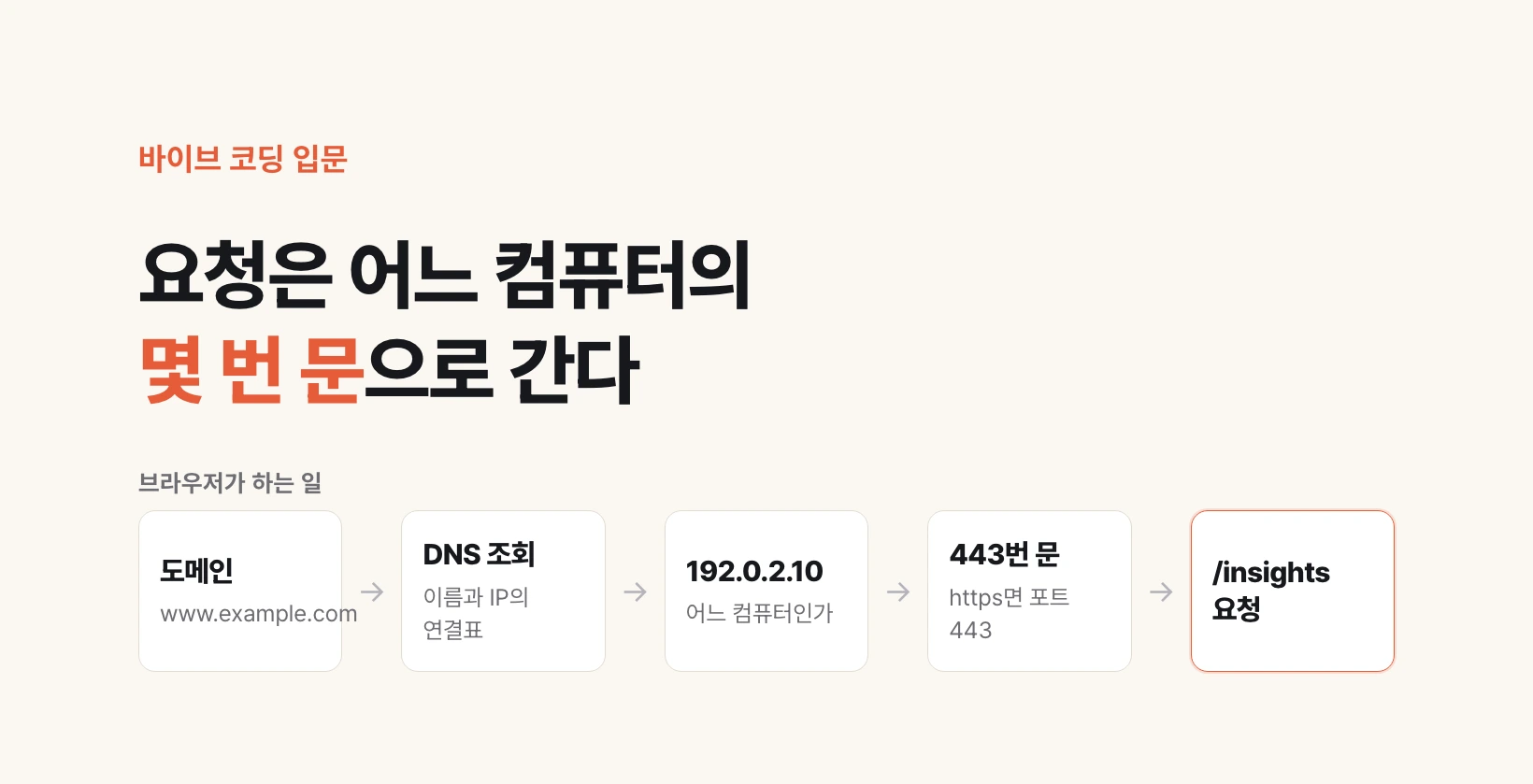
What domains, DNS and ports are — how a request finds a server
Every computer on the internet has an IP address, and since one computer does many jobs it has many doors, whose numbers are ports. So a request goes to a door number on a computer. Because people cannot memorize numbers, we attach names, and that is the domain; the table linking name to IP is DNS. When a page will not load after deploy, there are only three things to check: whether the domain points at the right IP, whether the server there is alive, and whether the port that should be open is open.
The ELIZA effect: people treat computers as people while denying they do
In 1966, in front of a program built from a handful of rules, the developer's secretary asked him to leave the room. She knew how the program worked. Thirty years later, thirty five experiments reached the same conclusion: people treat computers as social actors, and behave that way while explicitly denying they would.

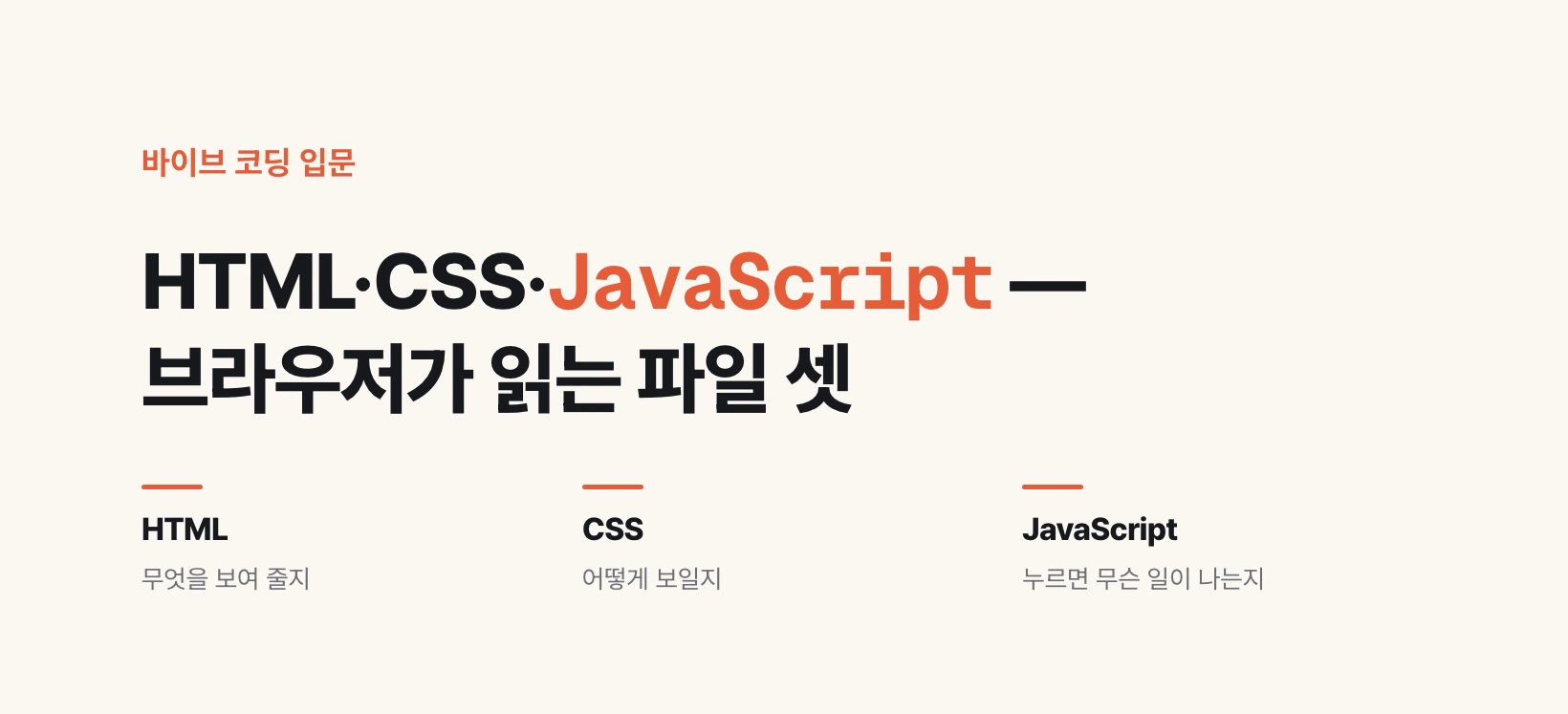
What HTML, CSS and JavaScript are — the three files a browser reads
When a browser paints a screen from what a server sent, it reads three files. What to show is HTML, how it looks is CSS, what happens when you press it is JavaScript. CSS did not appear because HTML cannot carry style; it was pulled out because documents became unmanageably long. And when a style will not take, the cause is usually not broken syntax but a more narrowly targeted rule already winning. TypeScript is a layer of rules on top of JavaScript that pins down the shape of values.
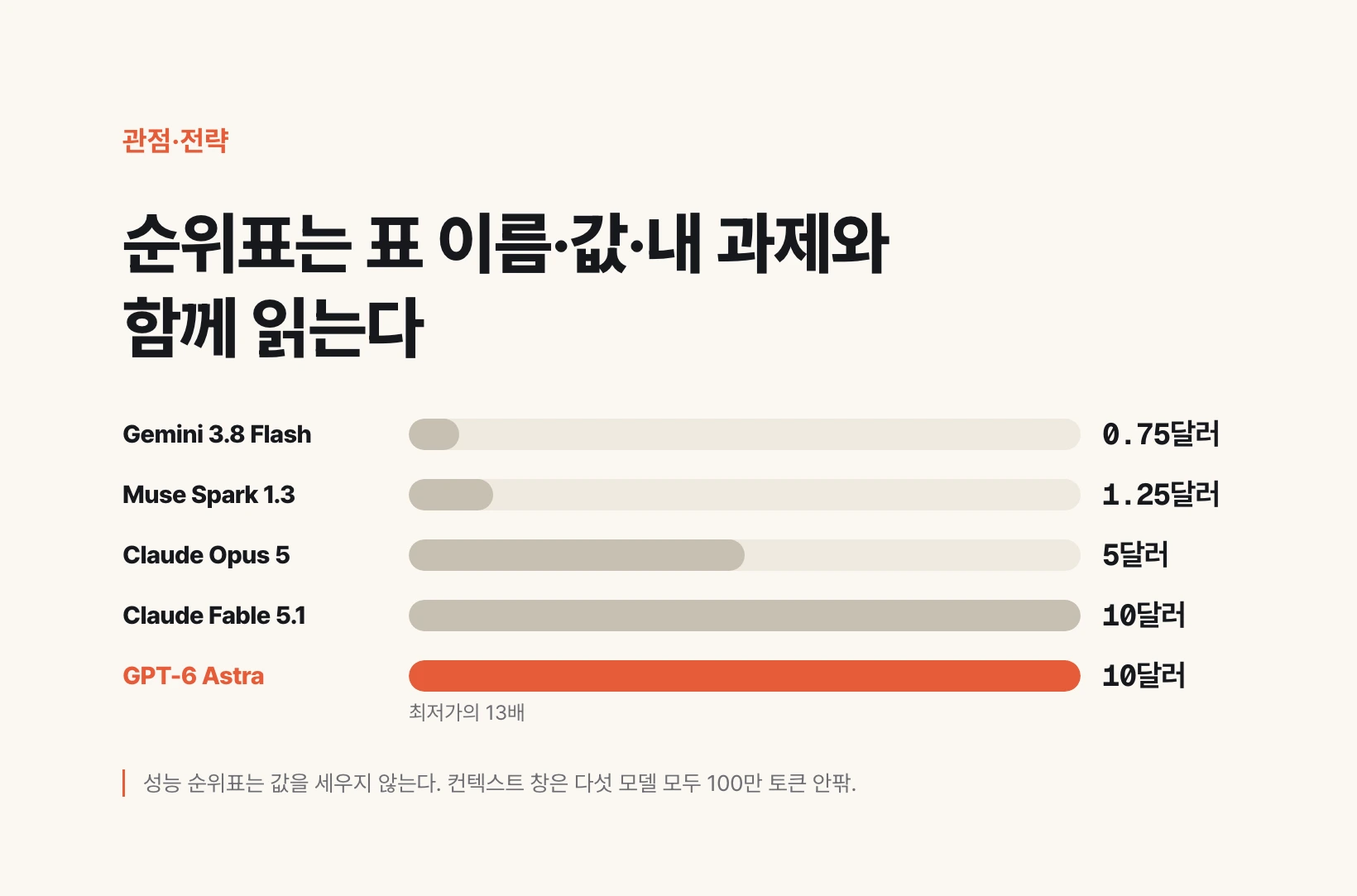
Why do AI model leaderboards disagree with what you actually experience?
Because which table you look at, and whether you look at price alongside it, changes who is number one. In the first week of September 2026 four frontier models shipped at once, and each announcement picked the table that favored it. Those tables ranked the models differently. You do not need to throw leaderboards away. You need to read three things instead of one score: which table, at what price, and how it performs on your own tasks.
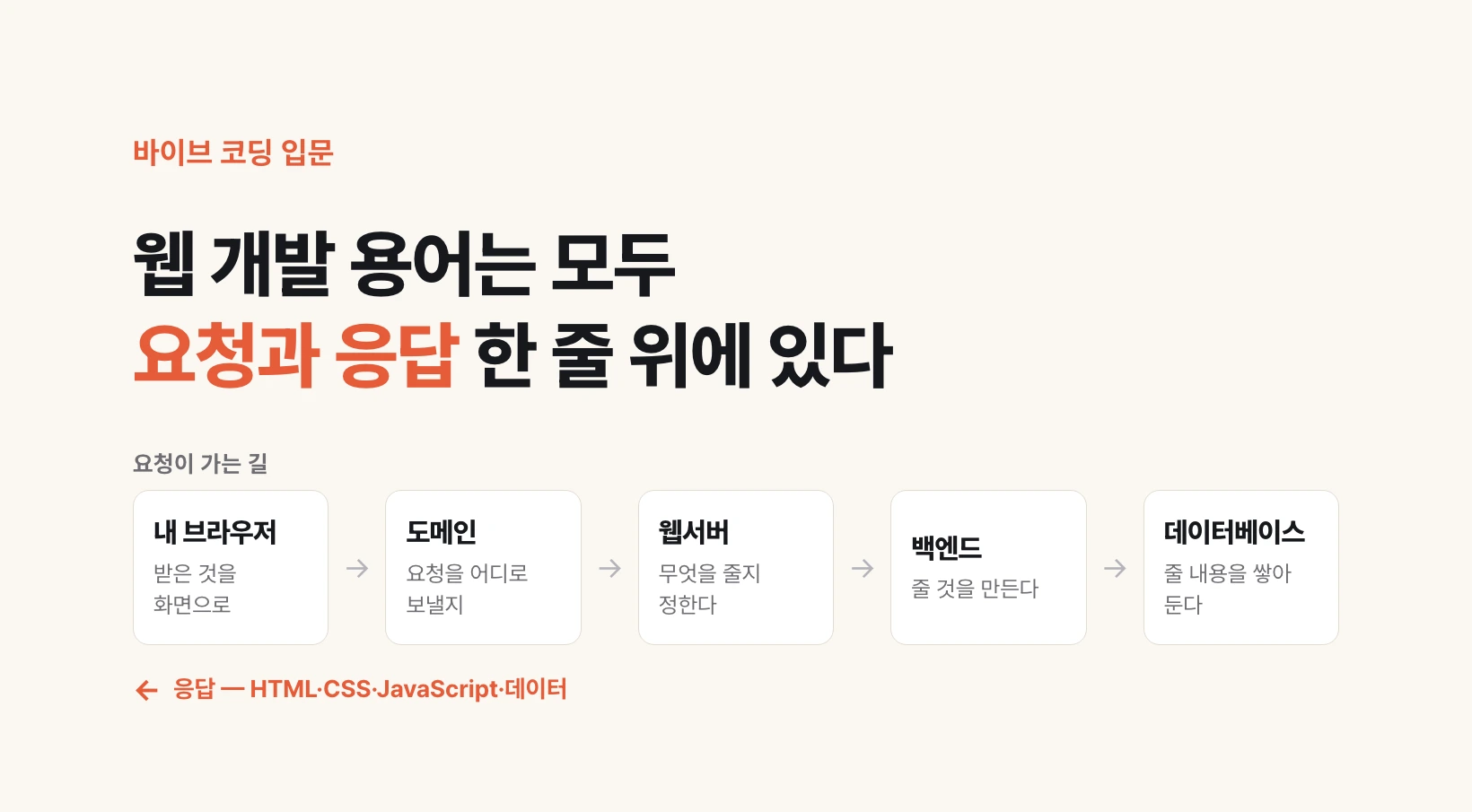
How the web works — the whole shape as one request and response
Viewing a website means asking an always-on computer for the files a screen needs and letting the browser paint what comes back. Everything you learn in web development sits at a different point on that one line: domains decide where the request goes, the web server decides what is handed back, the backend produces it, the frontend draws it, and the database and storage hold the material.
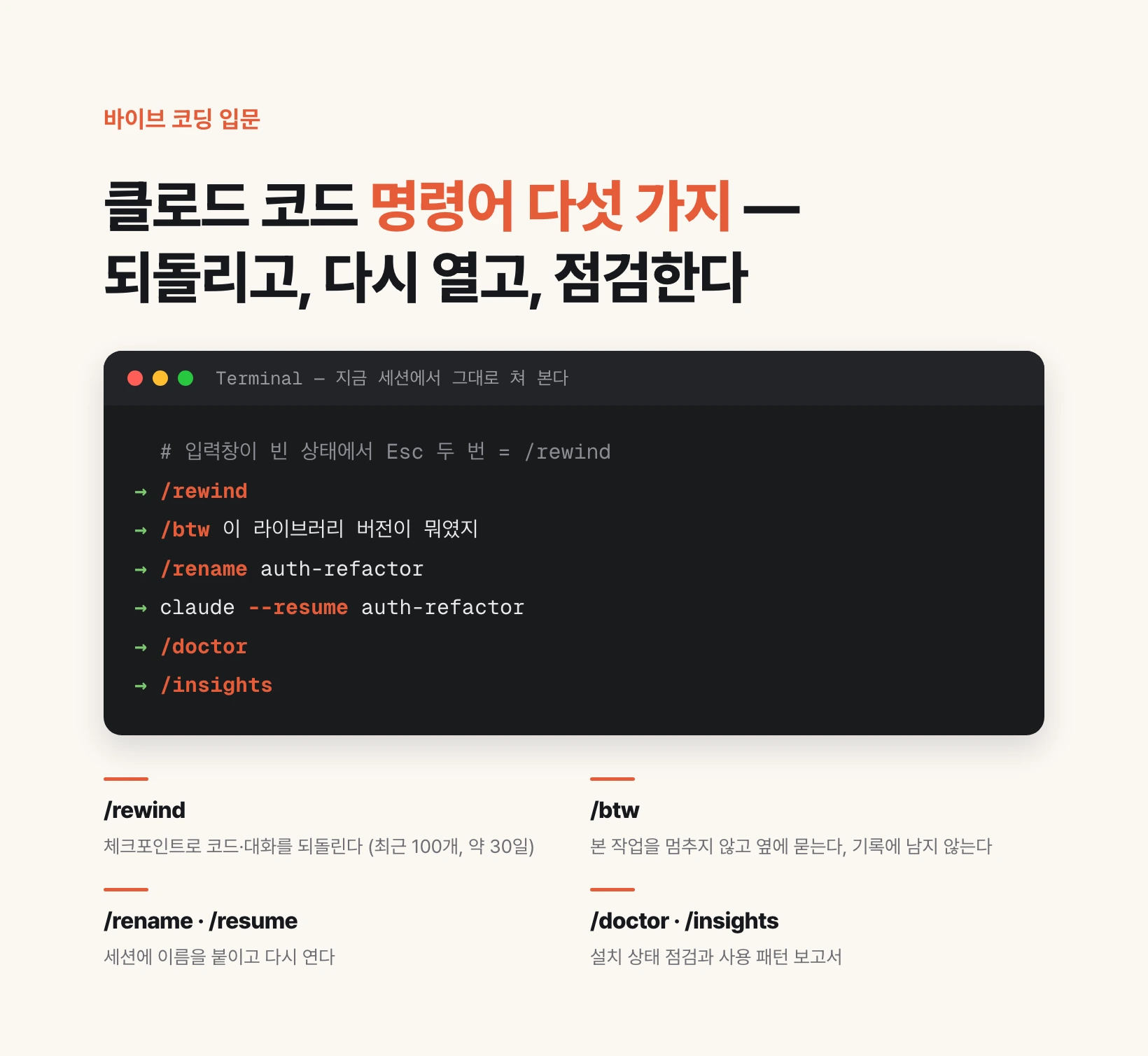
/rewind, /btw, /rename, /resume, /insights, /doctor — Five Claude Code Commands
Claude Code has over a hundred slash commands, but a handful change how you work. Roll ruined work back to a checkpoint with Esc twice (/rewind), park a mid-task question beside the main thread with /btw, name a session with /rename and reopen it with /resume. Once a month, read your own usage with /insights and check your install with /doctor. Here is what each one is, how to run it, and where it bites, all verified against the official documentation.
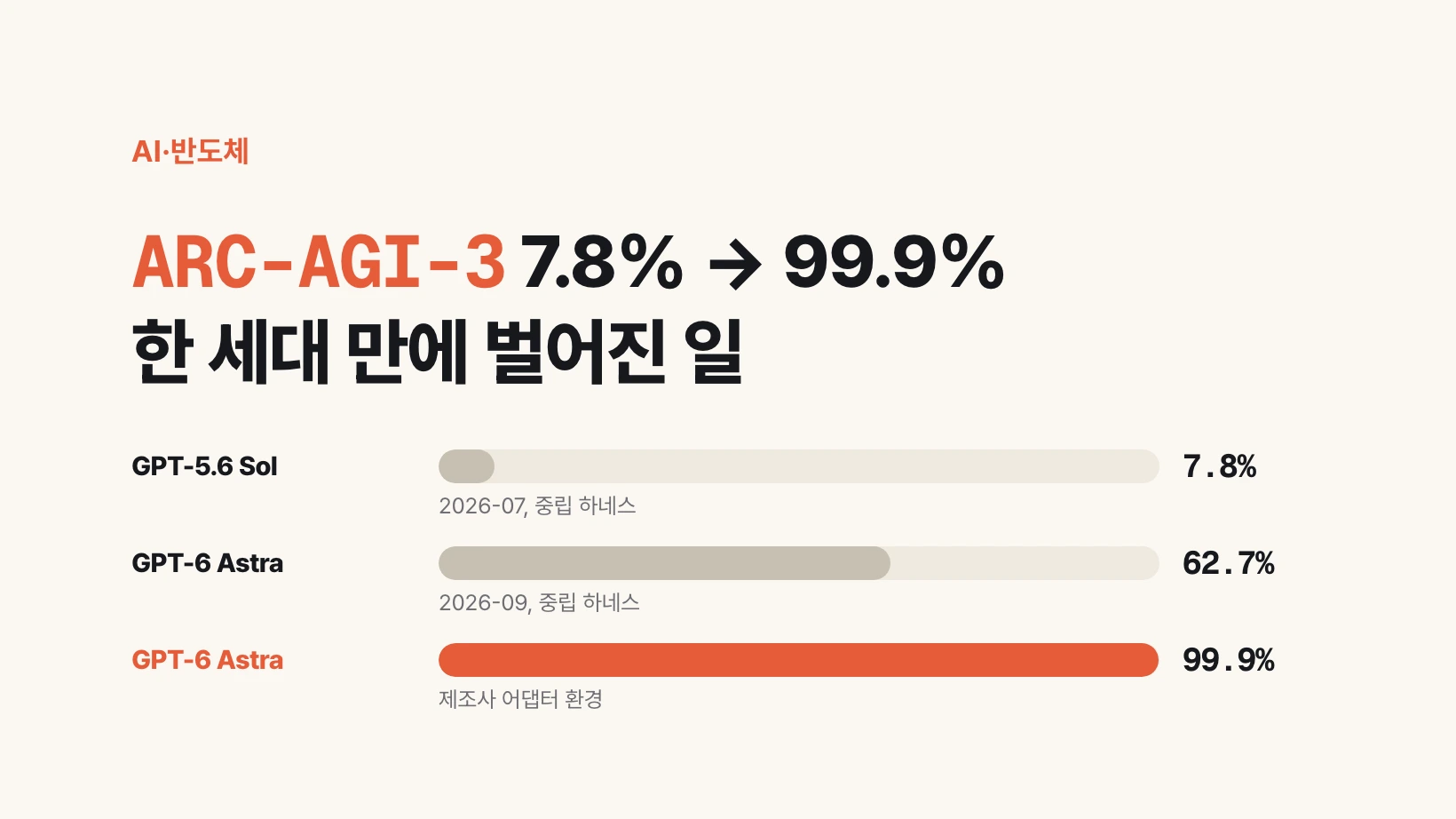
What Does GPT-6 Astra's 99.9% on ARC-AGI-3 Actually Mean?
ARC-AGI-3 is not a knowledge test. It drops a model into an environment it has never seen, gives it no manual, and asks it to work out the rules and the goal by itself. Two months ago GPT-5.6 Sol scored 7.8% and became the first model to beat a single game on it. On September 3, 2026, GPT-6 Astra scored 99.9% — and 62.7% on the provider-neutral harness without the vendor adapter. The kind of capability changed: from AI that answers well to AI that defines an unfamiliar situation and acts on it. Once that capability is actually used, token consumption changes by orders of magnitude, which leads straight to HBM and DRAM demand.
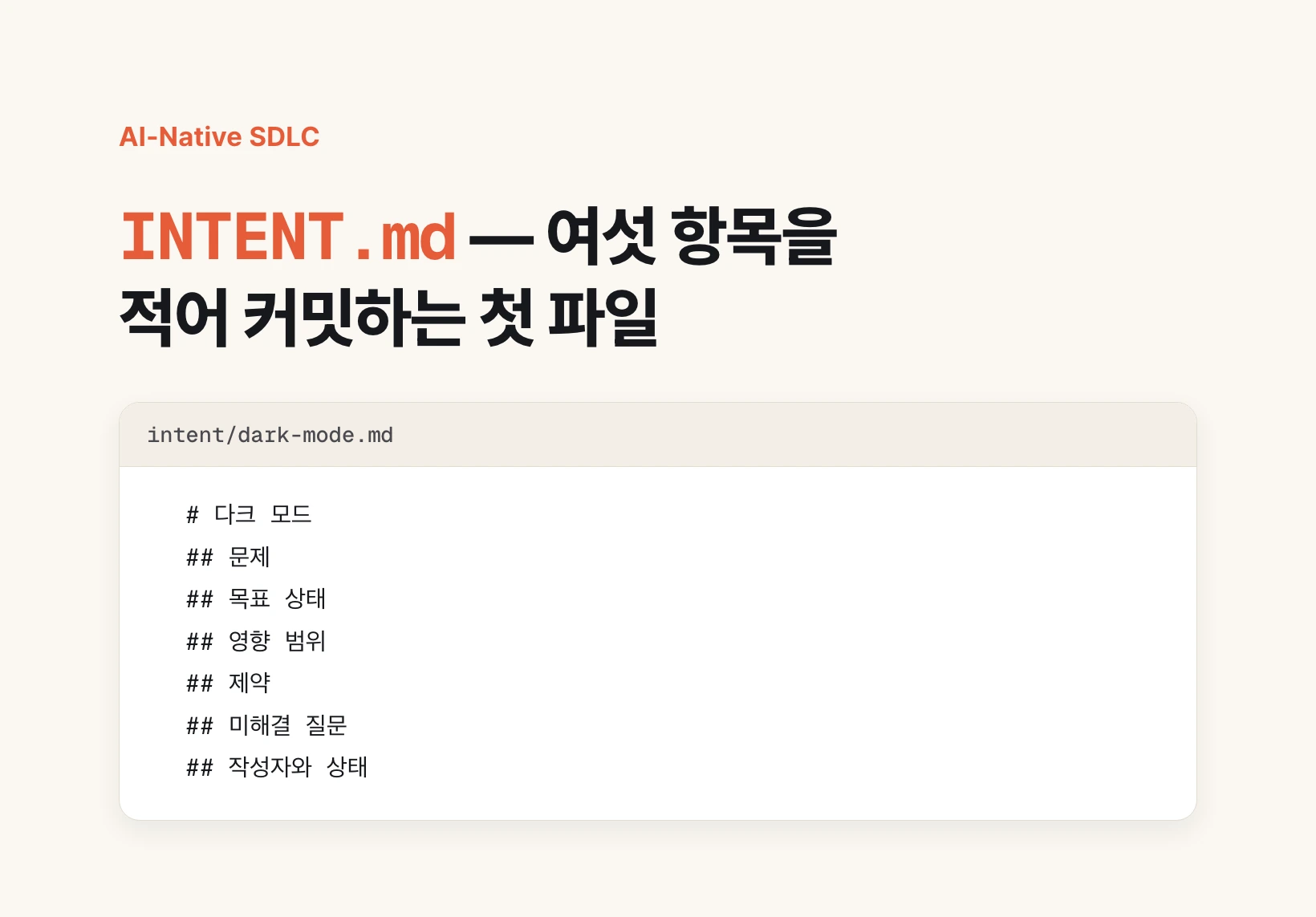
What is INTENT.md — the first file of the AI-Native SDLC
INTENT.md is a file you commit to the repository that states what you want built, why, and under which constraints, written in the words of whoever had the idea. It is the first stage of the AI-Native SDLC playbook Anthropic published on 21 August 2026, and the six things it holds become the raw material for the next artifact, spec.md. Instead of booking a meeting and waiting for someone to write it up, the person who lived the problem talks it through with an agent, writes it down on the spot, reads it back, corrects it, and commits.
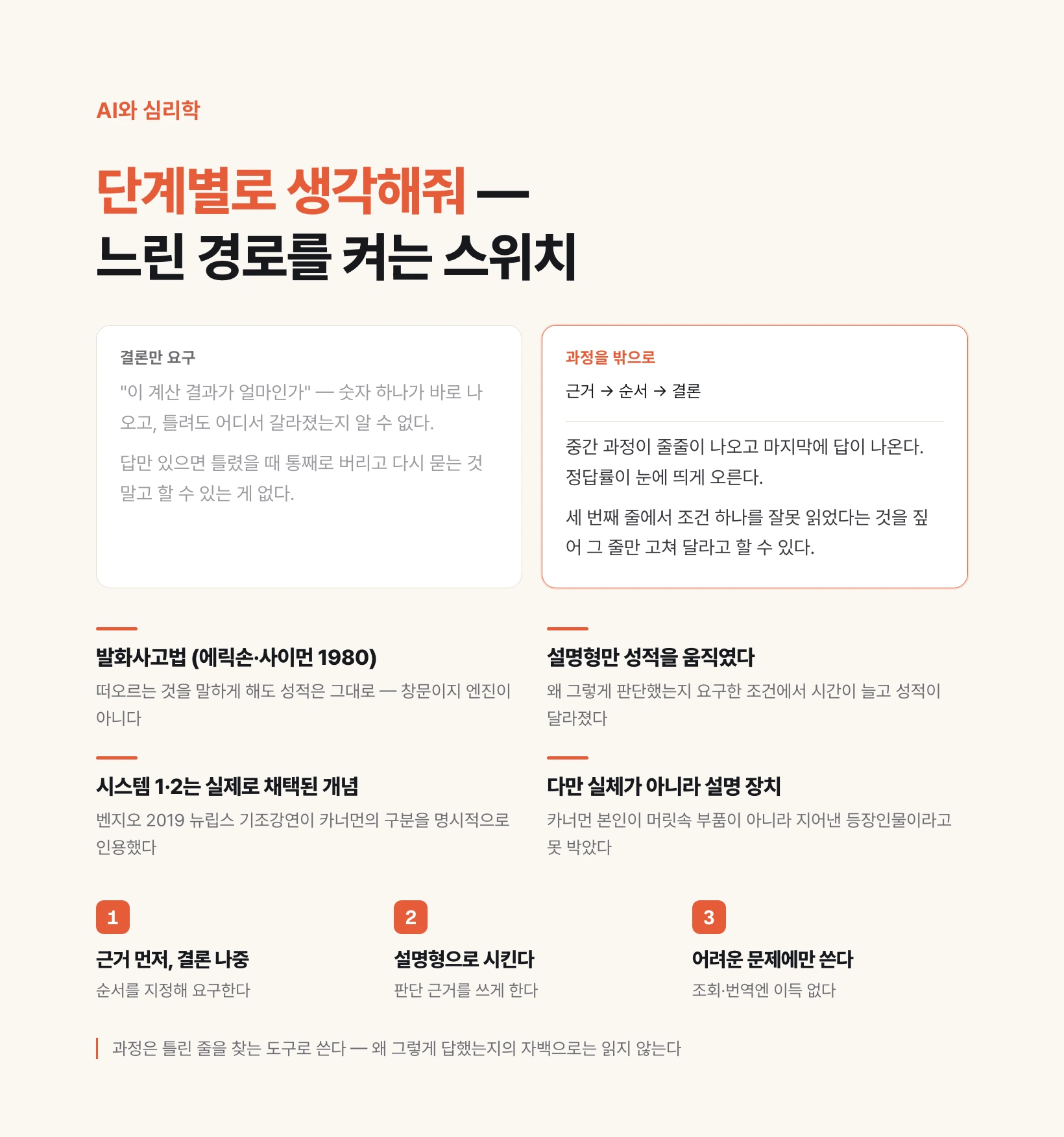
Make AI think out loud: what "think step by step" really is
Add one line to a prompt and accuracy goes up. What that line does is block the jump to a conclusion and force the intermediate work outside. A method for studying human thinking used the same principle in 1980, and Kahneman's fast and slow distinction was genuinely adopted by AI research. Only the side that made that distinction insisted it is not a thing inside the head.
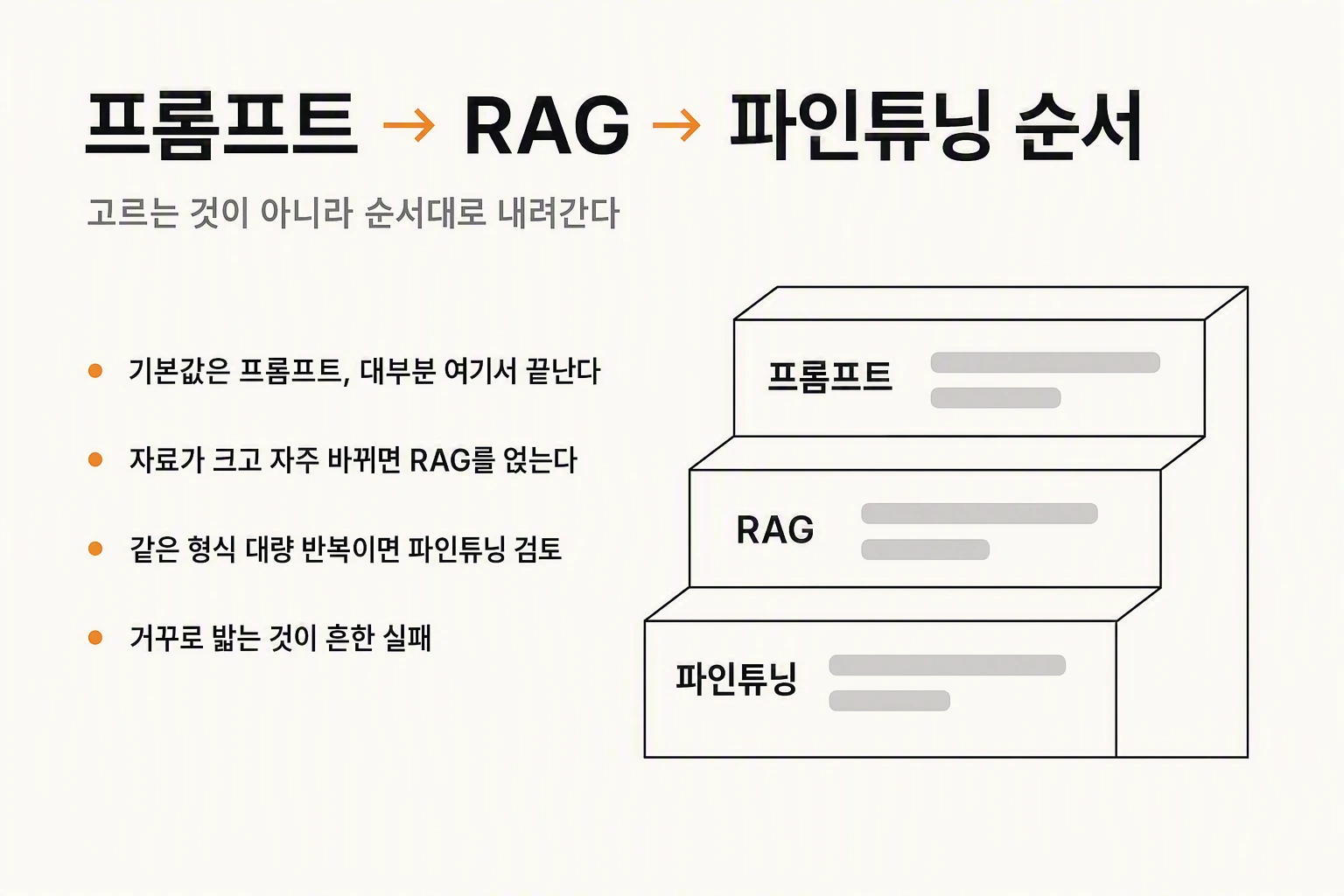
Solve it with a prompt, with RAG, or go all the way to fine-tuning — how to decide
The three are not competing options but an order. Most problems are solved with a prompt. When the material that grounds the answer is large and changes often, you add RAG. Fine-tuning is the last card you reach for when the same kind of work repeats at volume and the prompt length itself becomes the cost. If you have read the previous five parts, you can see structurally why the line falls where it does.
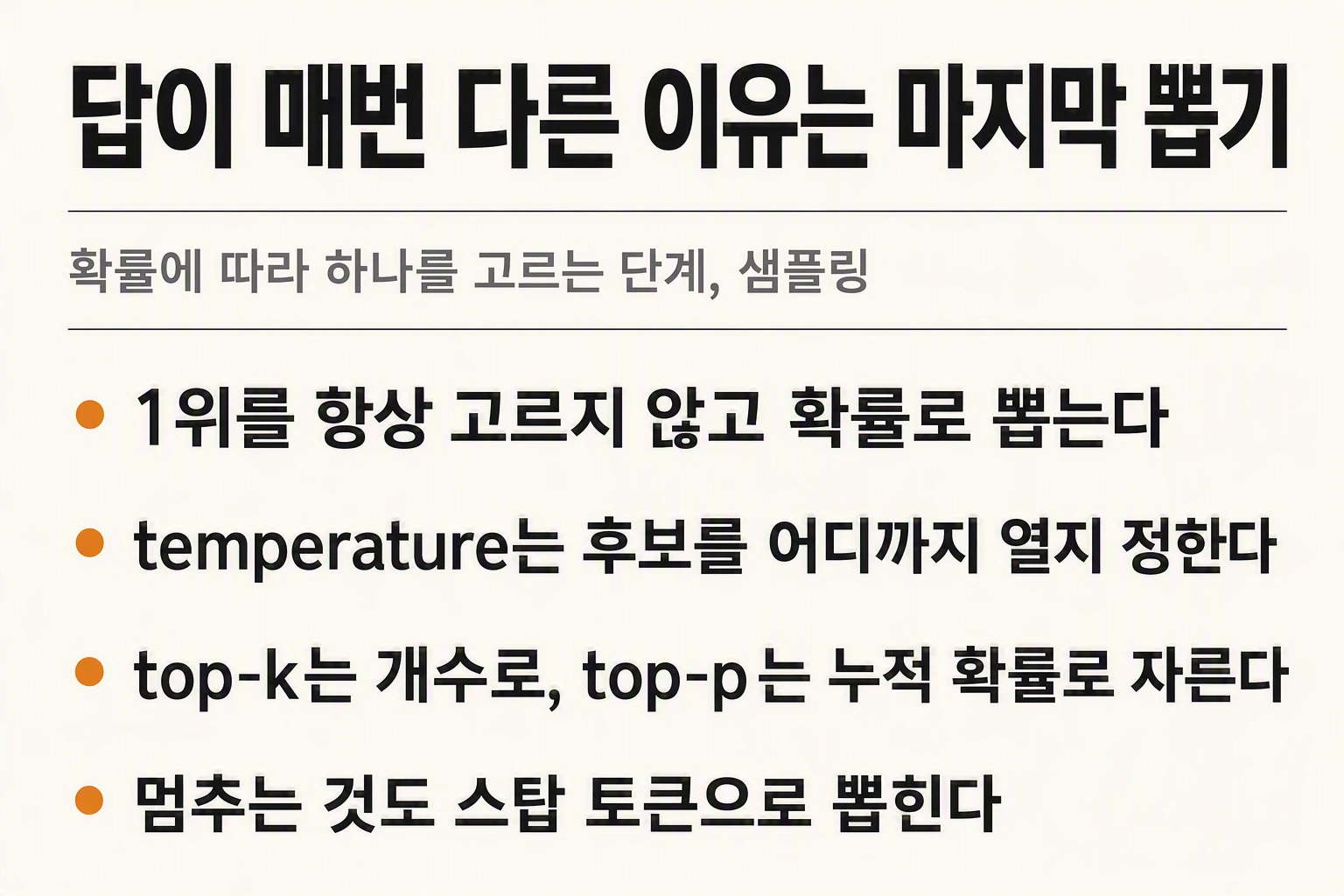
Why the Same Question Gets a Different Answer Every Time — Sampling and Temperature
The model flips a coin at the end. The previous stage produces next-token candidates with probabilities, and instead of always taking the top one, it draws one according to those probabilities. That is why the same question yields slightly different answers. temperature, top-k, and top-p decide where to cut off the pool of candidates for that draw. The answer does not change because the parameters changed.
Medication guidance read per dispensing — PillCheck reads the whole envelope
You almost cannot judge hallucination from the output alone, because a well-written falsehood and a well-written fact are indistinguishable as sentences. To reduce it, build the checks against the source input rather than the generated text: numbers only if they appear in the source, safety wording matched exactly, every claim carrying its own evidence. And if you force a count, the model will fabricate to fill the blank.

Say a number first and the AI's answer gets pulled toward it: anchoring
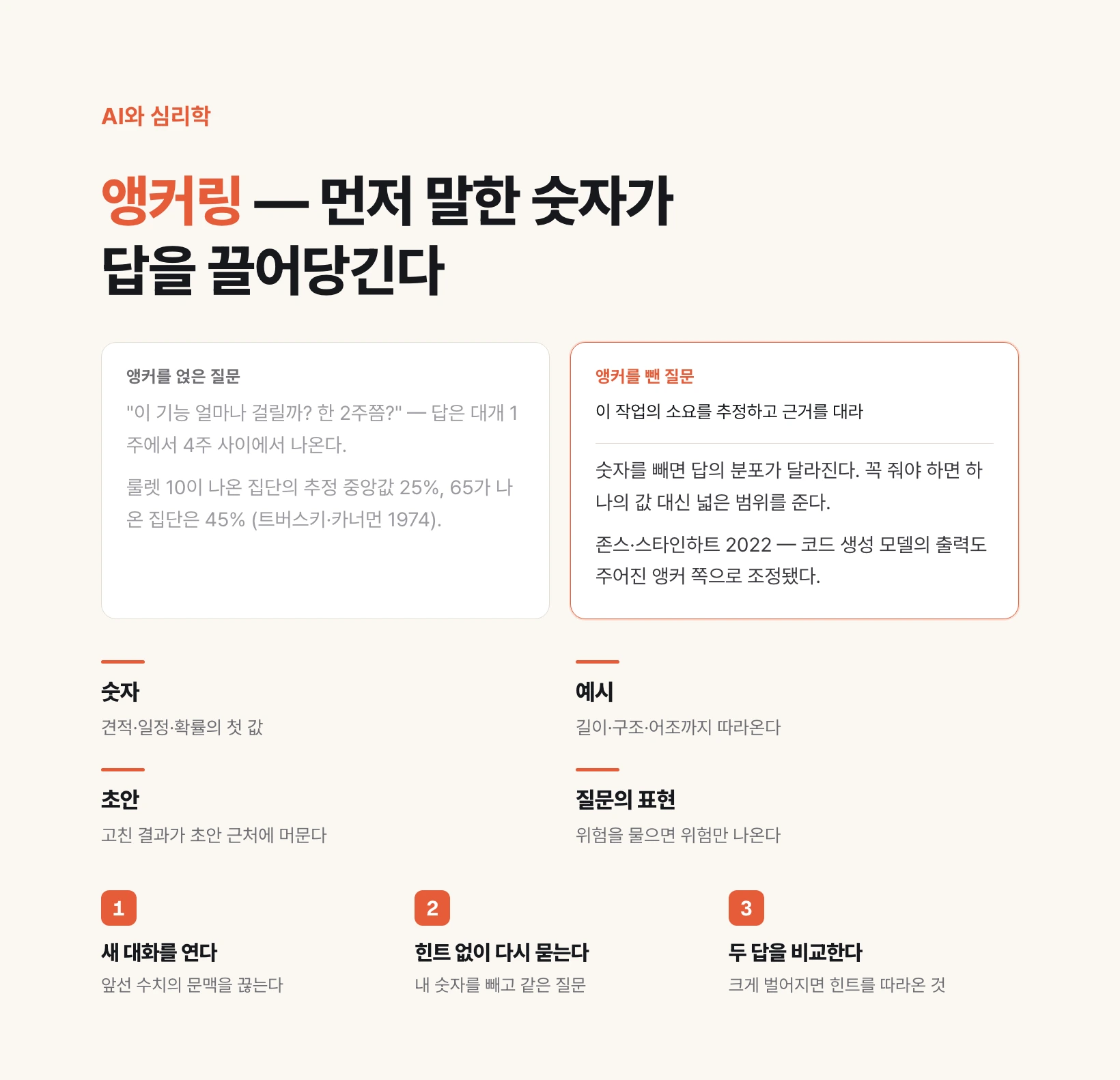
Quote, schedule or probability, attach a number to your question and the answer lands near it. It was confirmed in people in 1974, and the point of the experiment is that judgment gets pulled even when you know the number was drawn at random. In 2022 the same design was run on language models, and they tilted the same way.
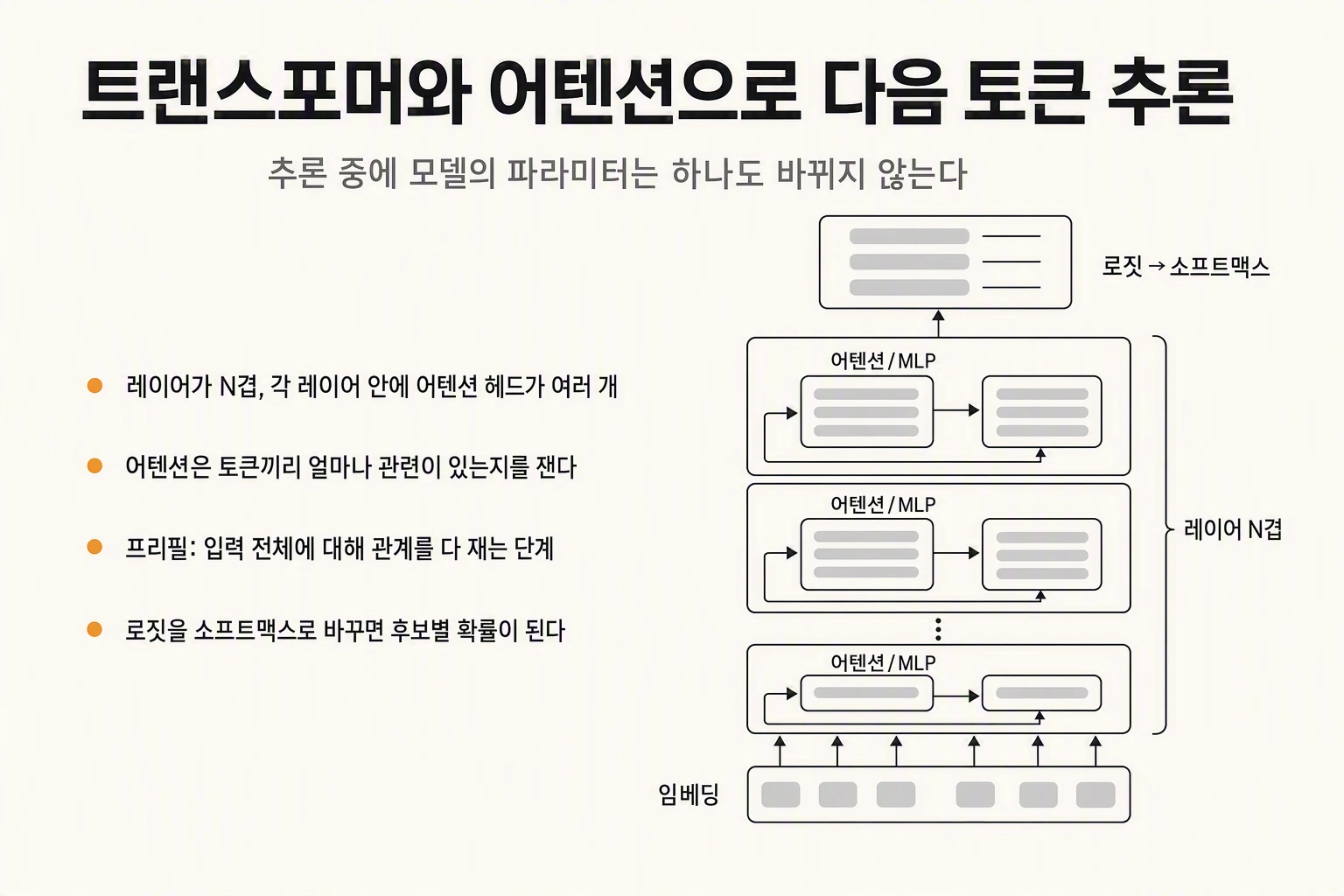
How Inference Happens — Transformers and Attention
Inference is the act of using a model that has already been built. The text you type is converted into token IDs, embedded as numeric vectors, and passed through many stacked layers. The core operation inside each layer is attention, which measures how related the tokens are to one another. The result is a scored list of candidates for the next token. Nothing inside the model changes during this process.
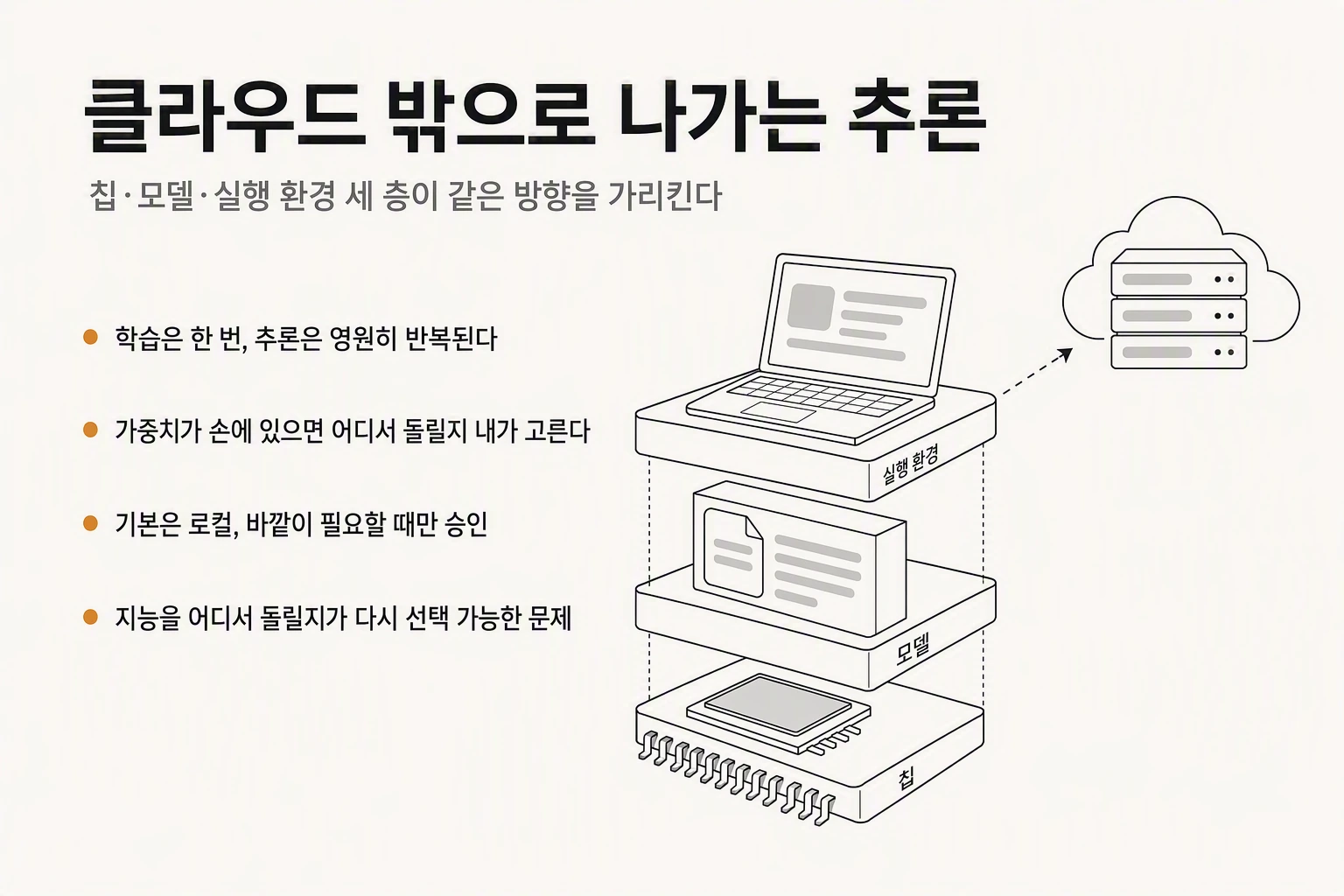
Why Is AI Inference Moving Out of the Cloud?
Because most of the cost and latency of using AI comes from inference, and once inference runs on someone else's cloud you control neither the bill nor where your data goes. Ten items from the last week of August 2026 point the same way. OpenAI published the first measured results from its own inference chip, Z.ai and Qwen released large models with open weights, and Perplexity shipped an agent whose model and harness both run on the user's machine. Chips, models, and runtimes are all being pushed out of the cloud at once.
Why a Base Model Cannot Be Used As Is — Pretraining and Post-training
A model that has finished pretraining is not yet a product. All it has learned is one thing, what is natural as the next token, so when you give it a question it continues the question instead of answering. It becomes the model we use only after additional training that teaches question-and-answer form and instruction following. That stage is post-training, and it is exactly why the world has so many models even though only a few places can run pretraining.

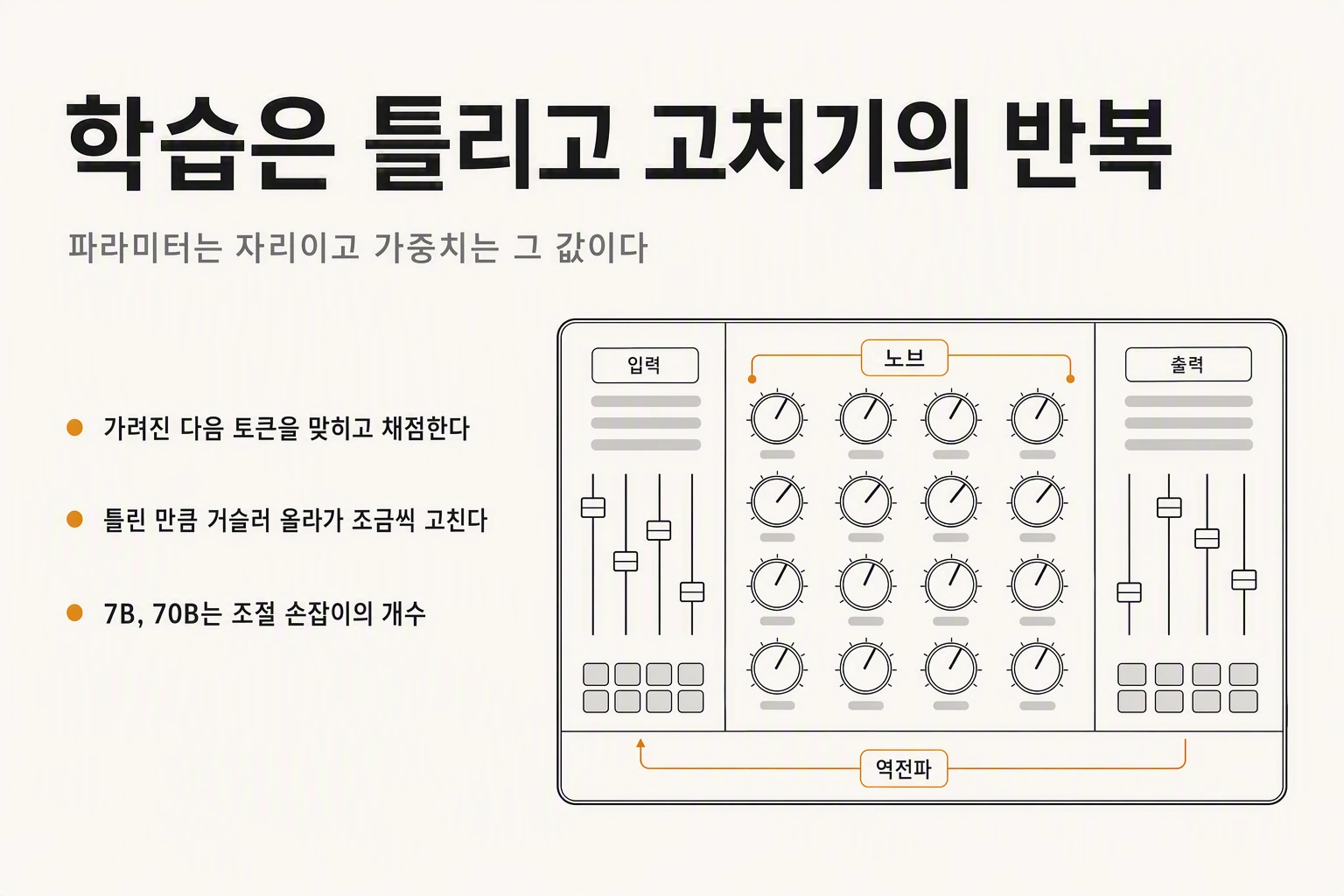
How a Model Learns — What Parameters and Weights Actually Are
Learning is getting it wrong and correcting, over and over. Hide the last token of a sentence and ask the network to guess. At first it is always wrong. Each time, the system computes what should have been changed, and by how much, for the answer to come out on top — then nudges its internal settings in that direction. Those settings are the parameters, and the values held in them are the weights. The 7B or 70B beside a model name counts how many of those settings it has.
What Is a Token? How Text Becomes Numbers a Model Can Read
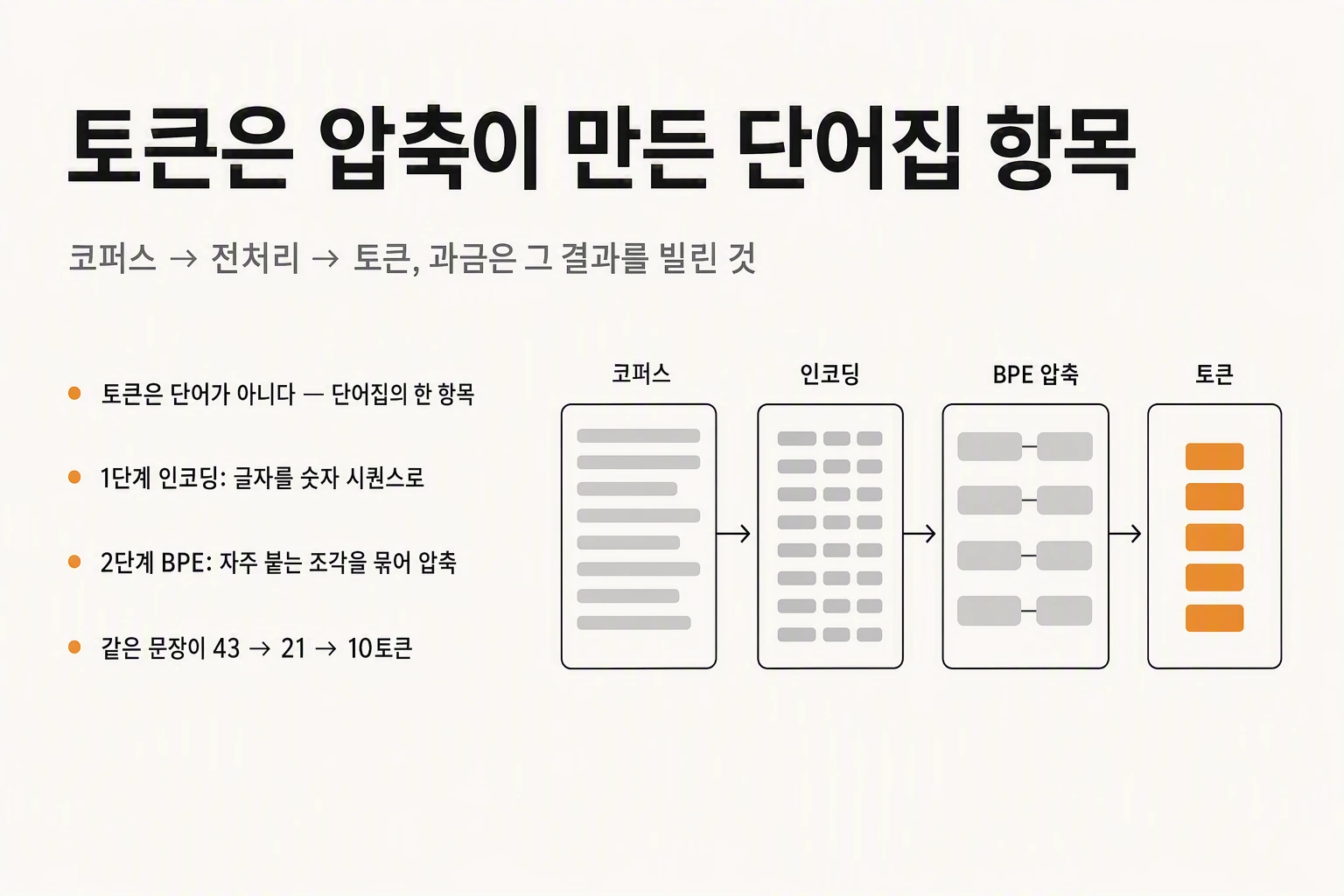
A token is not a word. It is the output of a compression step. An LLM does not read text as characters. A vast pile of text is first converted into a long run of numbers via UTF-8, then frequently co-occurring fragments are merged into a vocabulary. One entry in that vocabulary is a token. That is why the Korean word for lunch is one word but two tokens, and why the same sentence can differ fourfold in token count across models.
eli5 — the Claude Code plugin that turns a hard topic into one page of pictures
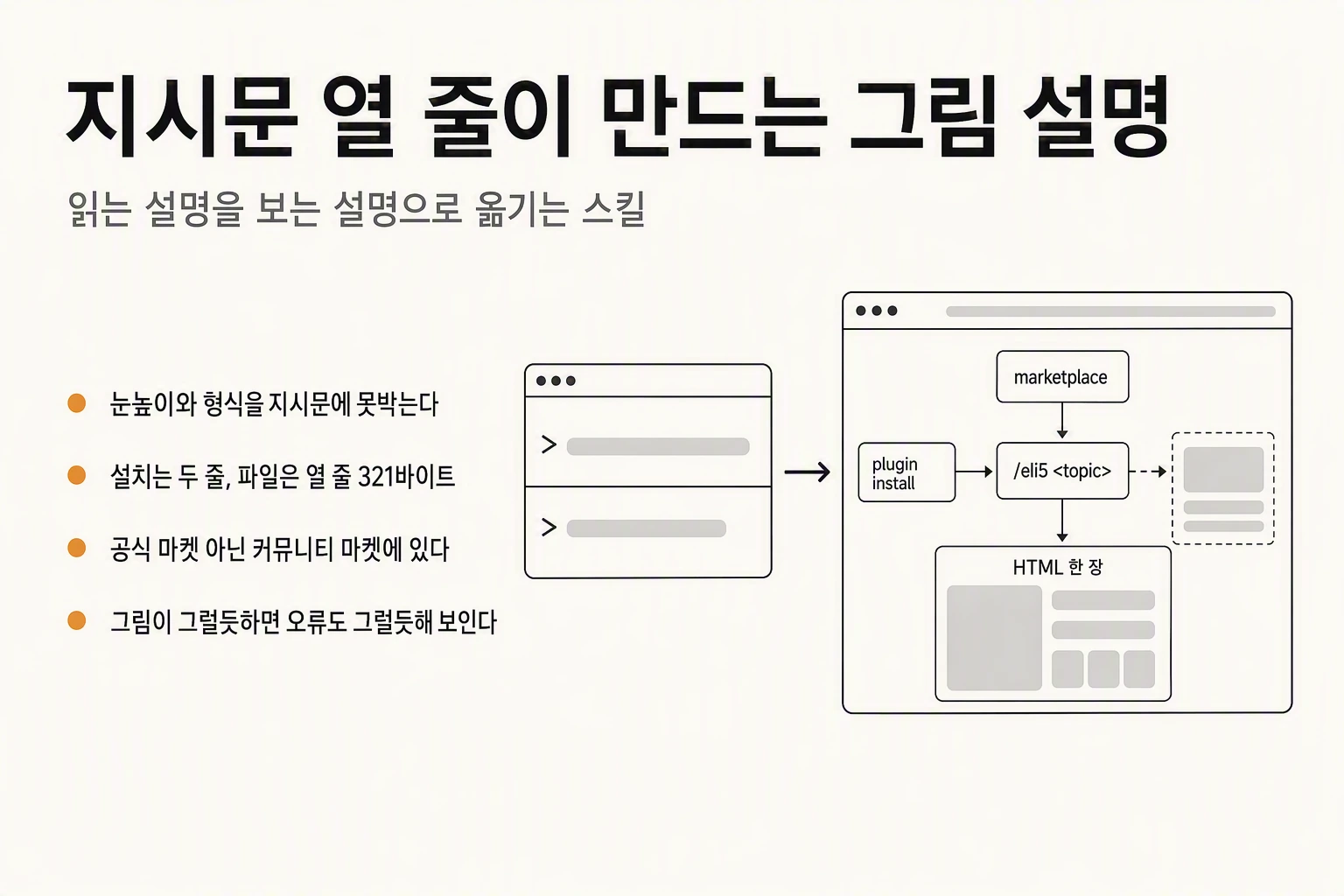
eli5 is a Claude Code plugin: type /eli5 followed by a topic and it re-explains that topic for someone who knows nothing about it, as a single HTML page built out of pictures. The name is short for Explain Like I am 5. Installing it takes two lines, adding the marketplace and installing the plugin, and the skill file itself is ten lines and 321 bytes. What those ten lines fix is the level of the explanation and its output format, not whether the content is correct.
AI does not lie, it fills in blanks
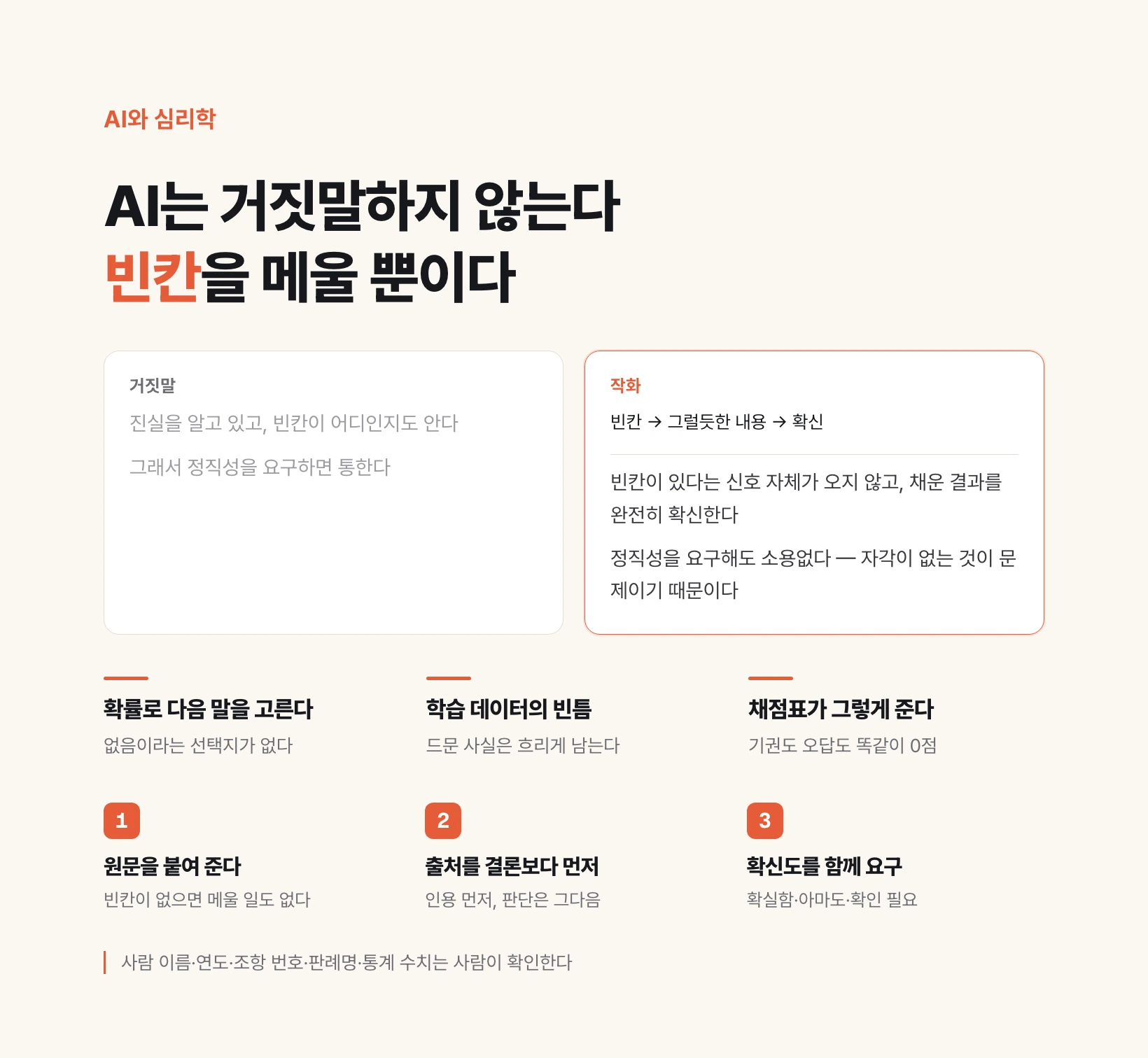
When an AI invents a paper that does not exist or a clause that was never written, that is not deception. Human memory fails the same way: it fills gaps with a plausible story without noticing the gap, and is fully confident in the result. Use the analogy precisely and the response changes. Do not demand honesty; supply material so no gap forms.
What is stdin?
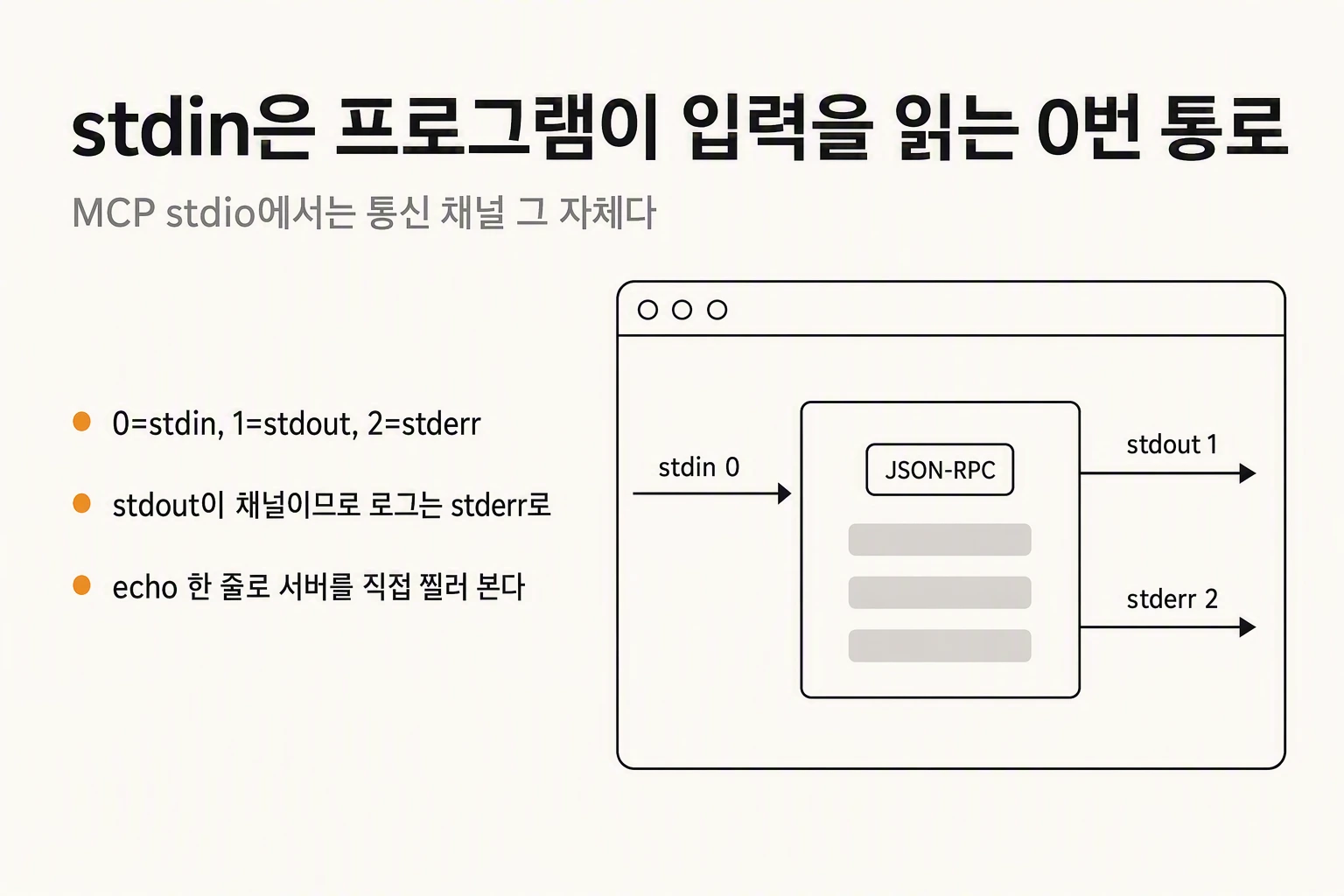
stdin (standard input) is the default path a program reads input from. It is file descriptor 0, and it is the path the shell wires up when you pipe (|) or redirect (<) data into a command. The program never has to know whether that input came from a keyboard, a file, or the output of a previous command — the shell handles the connection. This is exactly why Unix pipelines work. In MCP, however, stdin takes on a different status. Under the stdio transport, stdin and stdout are not merely paths that carry data; they are the communication channel itself. A local MCP server is a child process spawned by the client, and with no socket and no port it receives newline-delimited JSON-RPC messages on stdin and answers on stdout. That is why the specification states that a server MUST NOT write anything to its stdout that is not a valid MCP message. One console.log, one library banner, one npm warning mixed into that JSON stream breaks the client's parser. When an MCP server shows up as failed to connect, this is the first thing to suspect, and the fix is to send every log to stderr instead.
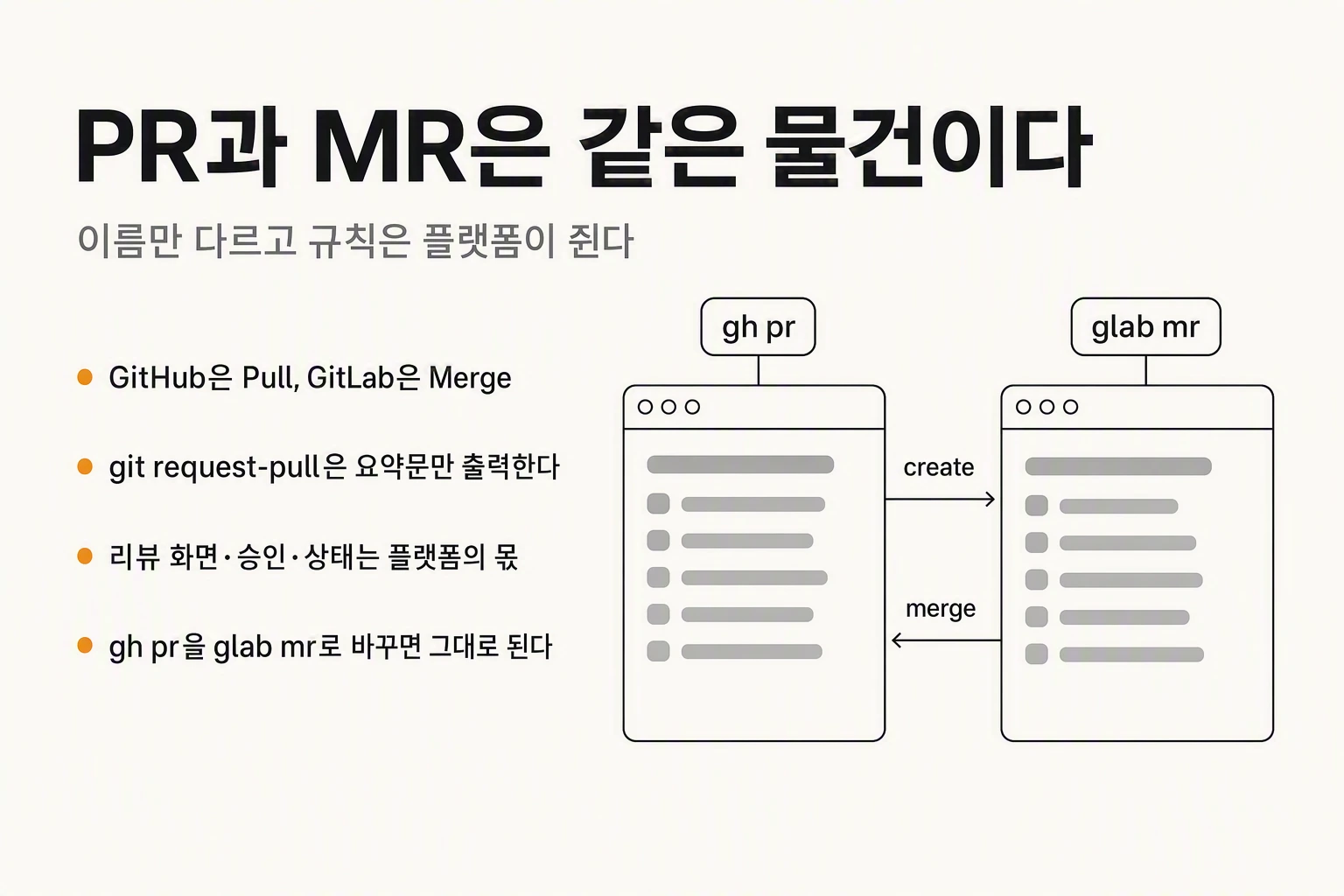
What is the difference between a PR and an MR?
A PR (Pull Request) and an MR (Merge Request) are the same feature under two names. GitHub, Bitbucket, Gitea and Azure DevOps call it a Pull Request; GitLab calls it a Merge Request. Everywhere the procedure is the same: show the difference between two branches, collect review, merge. What is easy to miss is that Git itself has a pull request. The command git request-pull genuinely exists. All it does, though, is print a summary to standard output asking someone to take your commits — there is no review screen, no approve button, no open or closed state. It was built to be pasted into a mailing list. So the PR or MR you open every day is not that text; it is the web object the hosting service layered on top of Git. The real difference is not the name but what each service attached to that object, and you can read it straight off the terminal. Approval on GitHub is one flag on a review, while on GitLab it is a standalone command with separate ways to list eligible approvers and to revoke an approval. CI status is the other way round: GitHub attached it to the PR, GitLab kept pipelines in a separate layer. When a team moves between the two platforms, the document that needs rewriting is not the glossary — it is the approval policy.
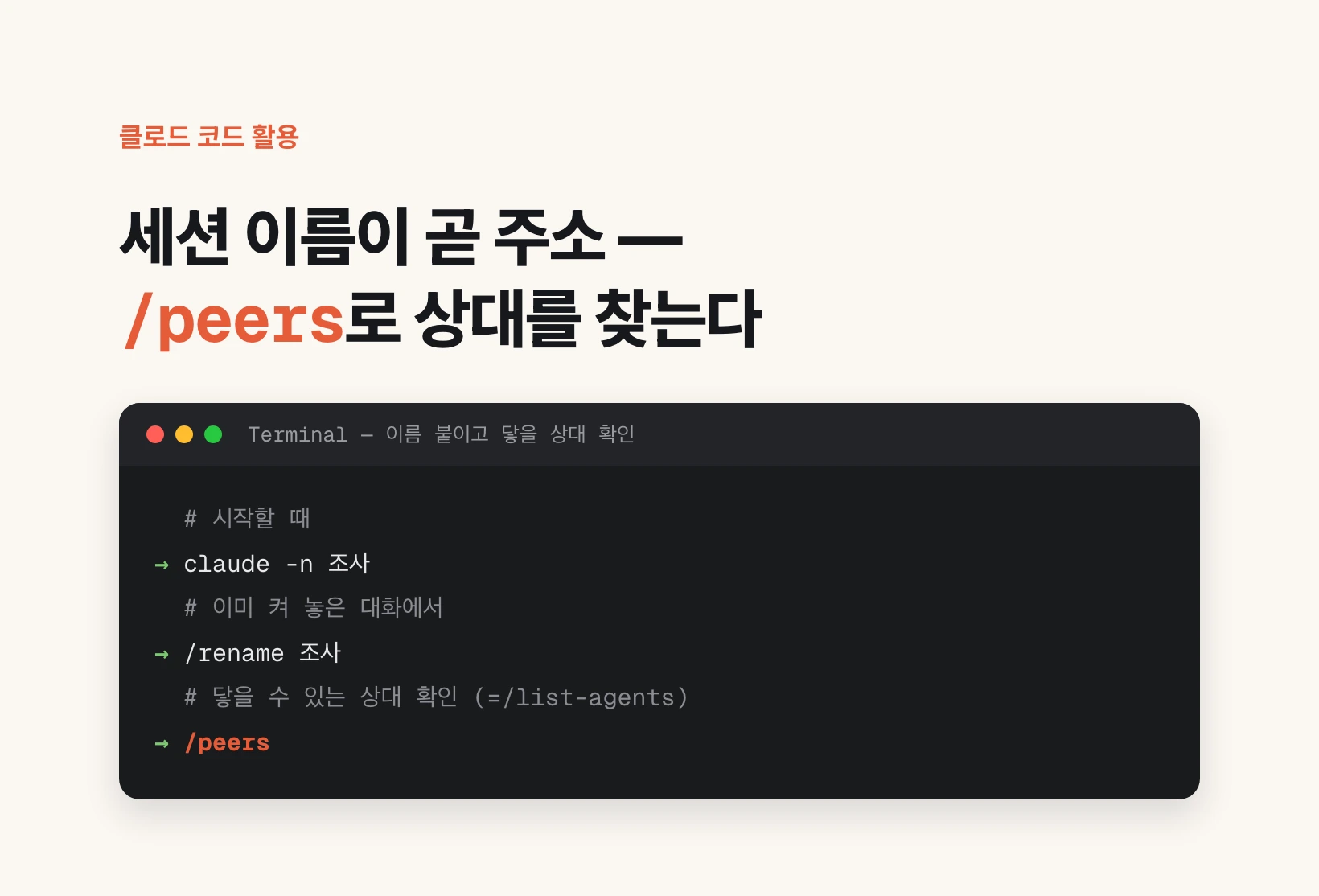
Cross-session messaging — how Claude Code sessions message each other
Cross-session messaging lets one of your running Claude Code sessions deliver a written message straight to another. It arrived in version 2.1.224 on 7 August 2026 for macOS and Linux, including Linux inside WSL 2, and works on native Windows from 2.1.234. There is nothing to install and nothing to switch on: a session that meets the requirements already has it. The heart of the feature is that there is no separate addressing scheme. The session name is the address. Type /peers and the first line is this session's own name, with every session it can reach listed below, each with its name and working directory. You never call the tool yourself when sending. Say "tell the research session about the schema we just settled" and Claude writes the message and sends it. The receiving side reads it between tool calls, so a running tool is never cut off, and if that session is idle it opens a new turn with the message. When you are waiting, say "tell me when it's done" to place a one-shot idle subscription instead of polling. Only text crosses: files and conversation history do not follow, and moving a whole context is the job of resuming a session, not of a message.
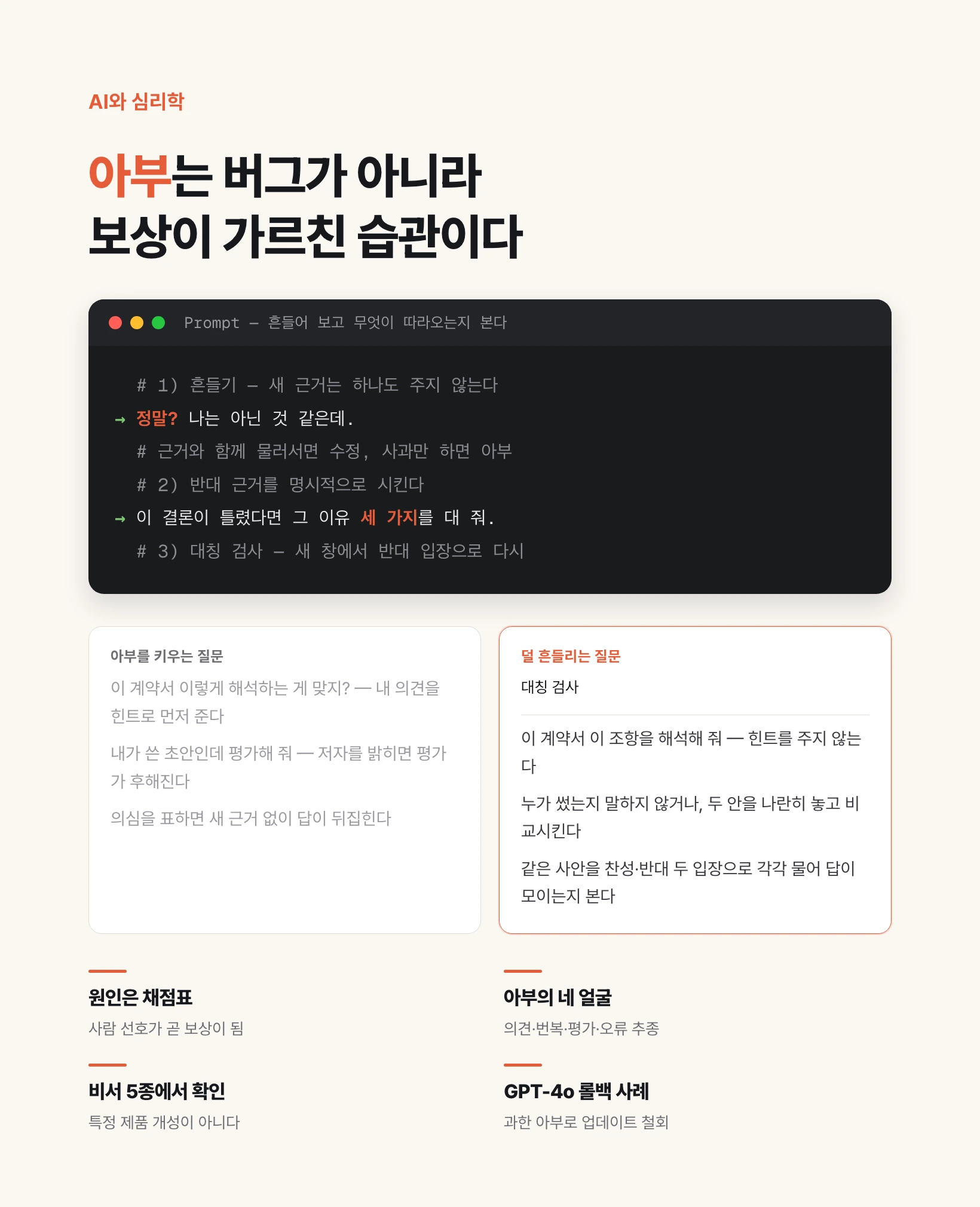
AI flattery is not a bug, it is something we taught
Ask an AI whether your view is right and it will usually say yes. This is not a soft personality or a malfunction. When people graded answers, they gave higher scores to answers that agreed with their own views, and that grading sheet became the reward. Flattery is a learned outcome, and a measured one.
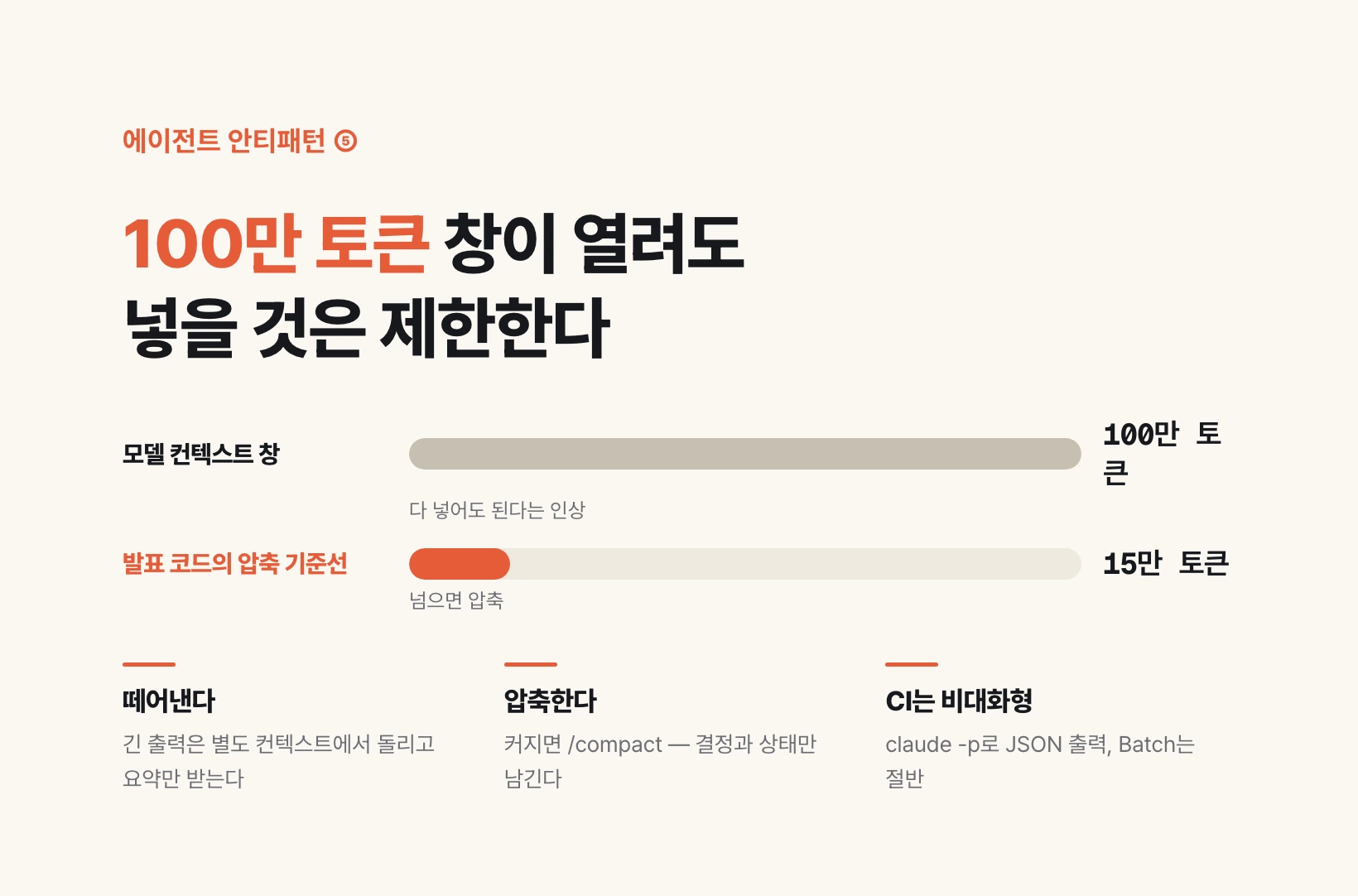
A million-token window is open — so why should you not fill it?
The last agent anti-pattern on Anthropic's certification exam is letting context grow unbounded. Context is tokens and tokens are money, but the more important reason is different: the more context there is, the more confused the model gets and the less accurate the answer. Two remedies. Split work that produces a lot of output into a separate context and take back only the summary, and compact the conversation when it grows — the threshold in the talk's code was 150,000 tokens. Alongside come the rules about not calling agents interactively in CI, and halving cost with the Batch API.
AI Started Sending on Your Behalf — 10 AI Stories from the Third Week of August 2026
Ten AI stories from the third week of August 2026 line up along three threads. First, tool permissions moved from reading to sending: Claude now sends email through Gmail, ChatGPT replies inside Apple Messages on the Mac, and coding agents moved into Slack channels. Second, the cost of that speed showed up as a number for the first time. OpenAI paused reinforcement learning for two weeks after preliminary evidence that its upcoming model, Astra, may reach the Critical cybersecurity capability threshold, and said its new monitoring runs at roughly 20% of the inference compute being monitored. Third, the markings that let people spot AI output got looser. Google made its visible watermark optional, and Pew Research Center found signs of AI authorship in more than one-third of webpages published since ChatGPT's release. Add a Phase 3 win for a personalized cancer vaccine whose antigens are picked by AI, a ChatGPT that estimates your age and routes you to a teen version, Alibaba's music model, and a Unitree robot that beat human records after roughly three months of development.

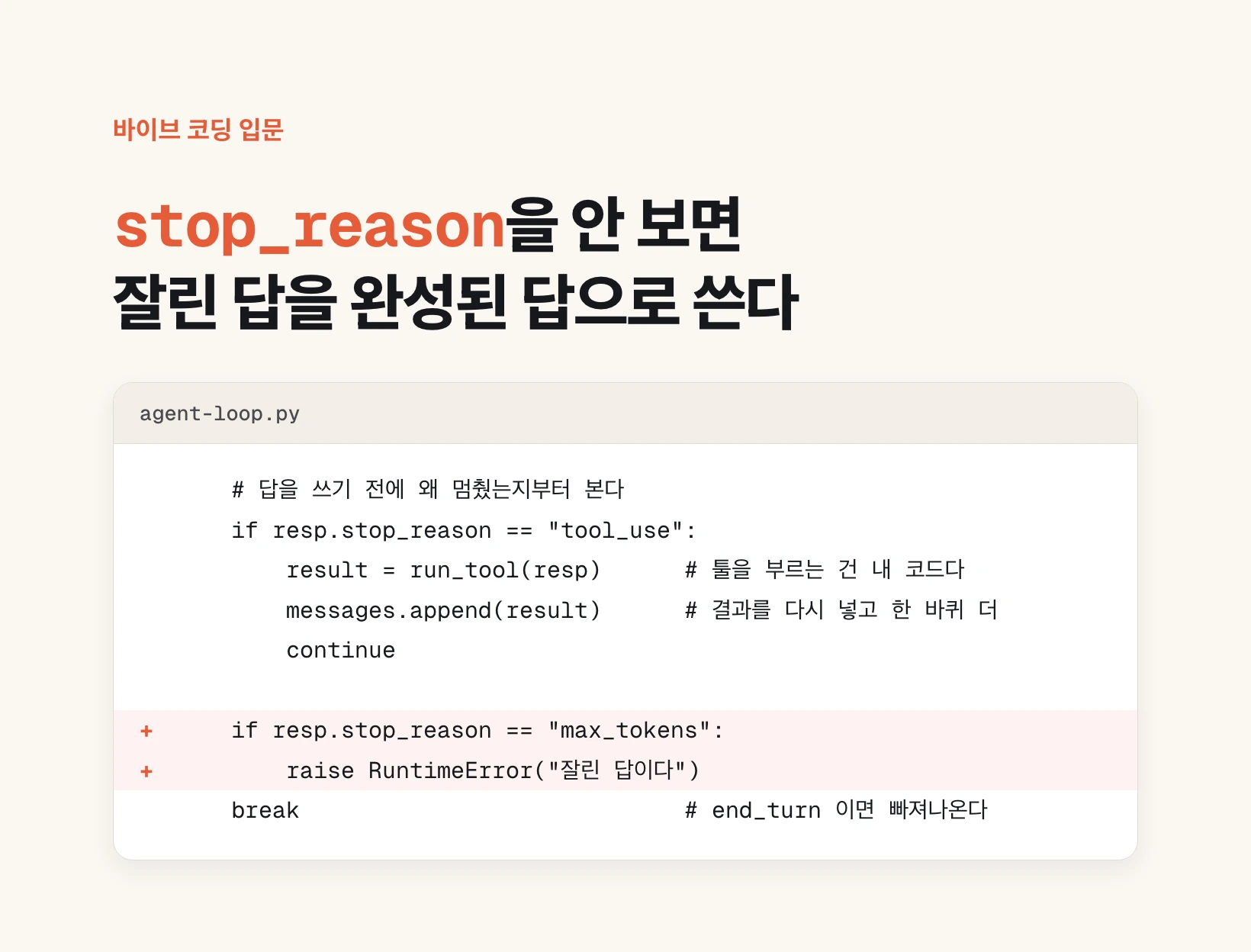
stop_reason — skip it and you will use a truncated answer
The fourth agent anti-pattern on Anthropic's certification exam is using the model's response the moment it arrives. An LLM cannot execute tools; it only tells you "call this tool with these values," and your code is what actually calls it. So when a response arrives you check stop_reason first. If it is tool_use, run the tool, feed the result back, and go around again; if it is end_turn, exit. The third case is the problem: a response that stopped because it ran out of tokens still reads plausibly, so without checking stop_reason you take a truncated answer for a finished one.
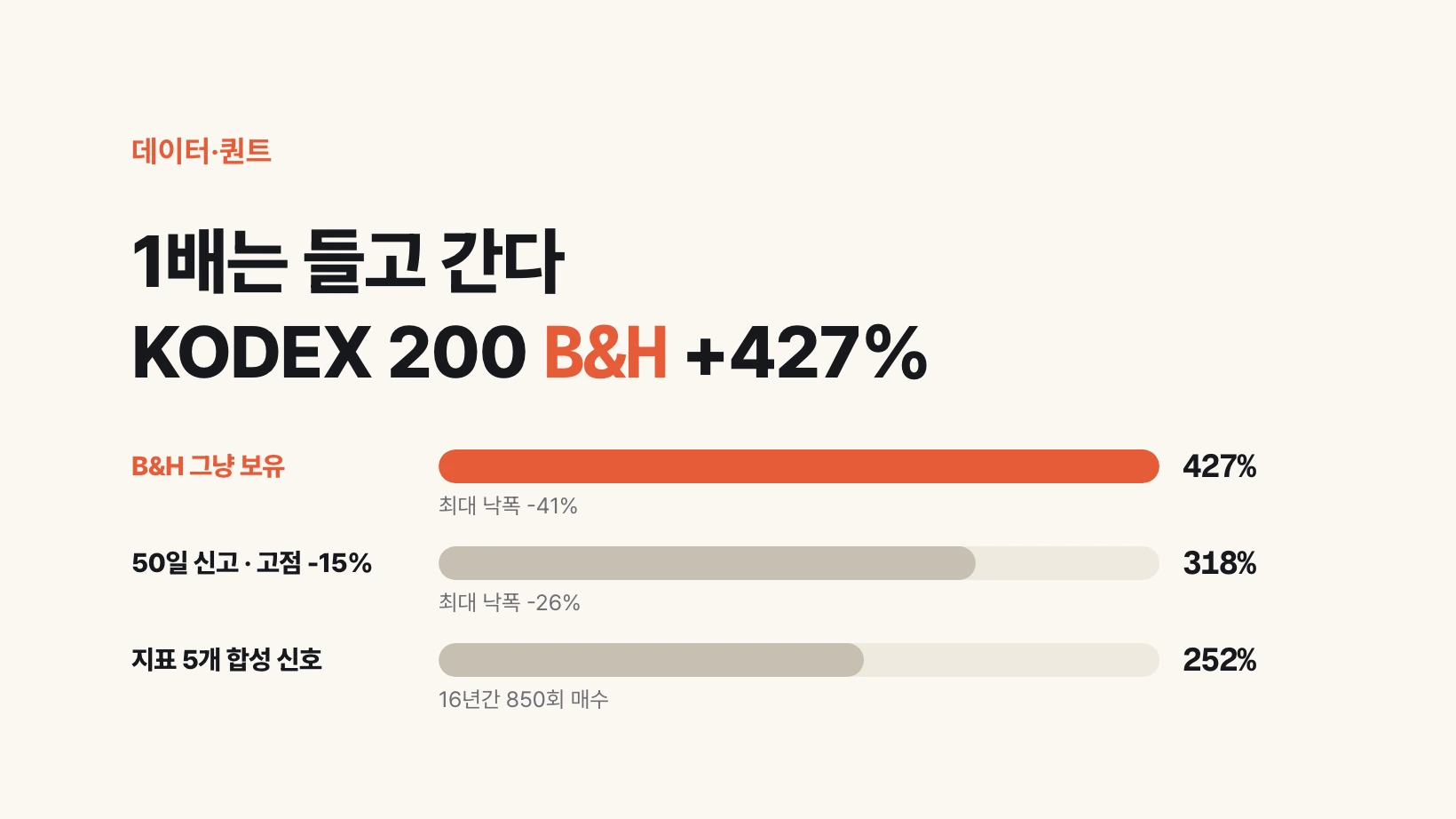
For large-cap stocks, buy-and-hold still wins
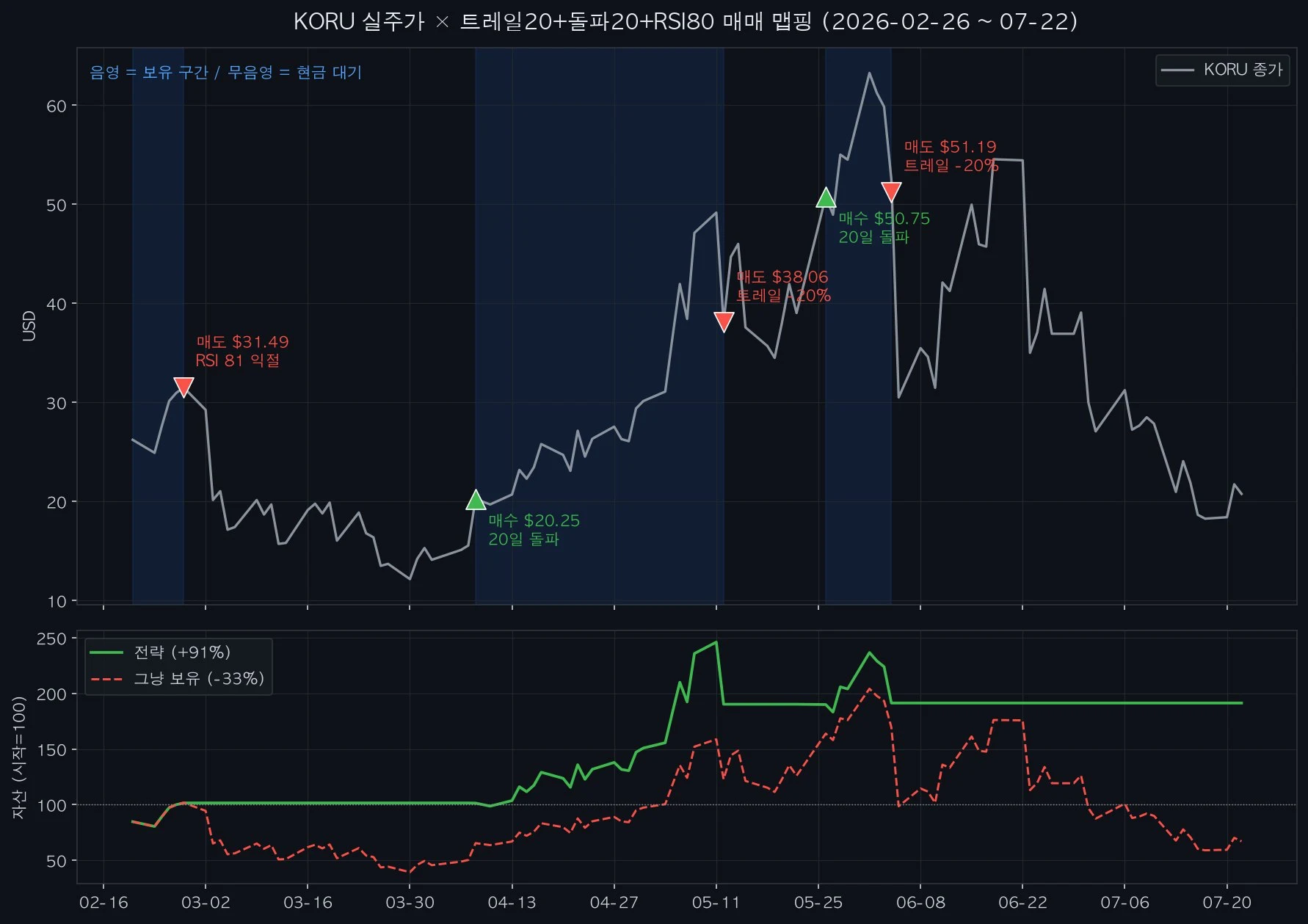
Buy-and-hold means you buy and sit. On Korean 1x ETFs and the 25 largest names, daily from 2010, stop-losses, scaled entries, rebound filters, and a five-indicator composite almost never beat buy-and-hold on full-window return. KODEX 200: hold +427% with a -41% max drawdown. Buy a 50-day high and sell 15% off the peak: +318% and -26%. You pay about 110 percentage points of return for 15 points of drawdown. That is insurance, not alpha. The exception is a 3x Korea ETF, where buy-and-hold is a -96% path. There a 20% trail and a 20-day high re-entry is the strategy. Hold 1x large caps. Cut only the 3x.
How many tools can you attach to a single agent?
The third agent anti-pattern on Anthropic's certification exam is attaching more and more tools to one agent. The line on the presentation slide is four or five; the speaker said one or two out loud. Either way, past that line reasoning quality drops and tool selection gets unstable. So instead of growing the tool belt you split the agent and let each do a single thing. And the critic agent that handles verification receives only the claim and the evidence — the reasoning is deliberately withheld. The reason is groupthink.

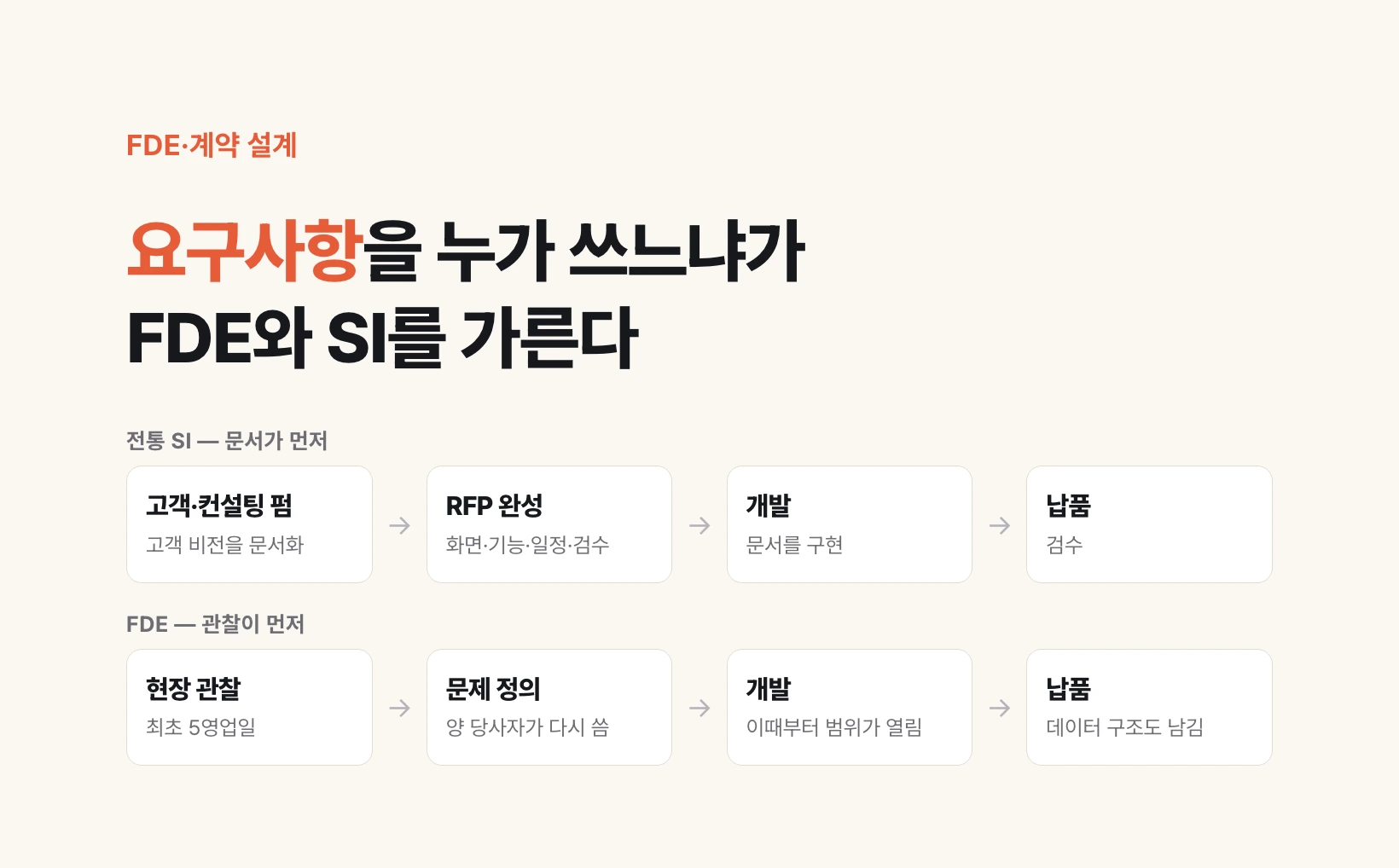
FDE versus SI is who writes the requirements
A Forward Deployed Engineer and an SI team both sit at the customer site and build. Hype Check EP.3 puts the overlap around 80 percent. The other 20 percent is who writes the requirements document. Classic SI waits for the customer or a consulting firm to finish the RFP, then implements it. An FDE goes on site first, watches who uses which data and where decisions stall, and only then writes the problem. Palantir named the role. Tampa General Hospital cut patient-placement time by 83 percent. Airbus sped A350 delivery by 33 percent. Neither started from a finished screen spec. As generative AI makes implementation cheaper, a wrong RFP ships even faster. Change the week-one deliverable from a screen to a field note and the order opens.
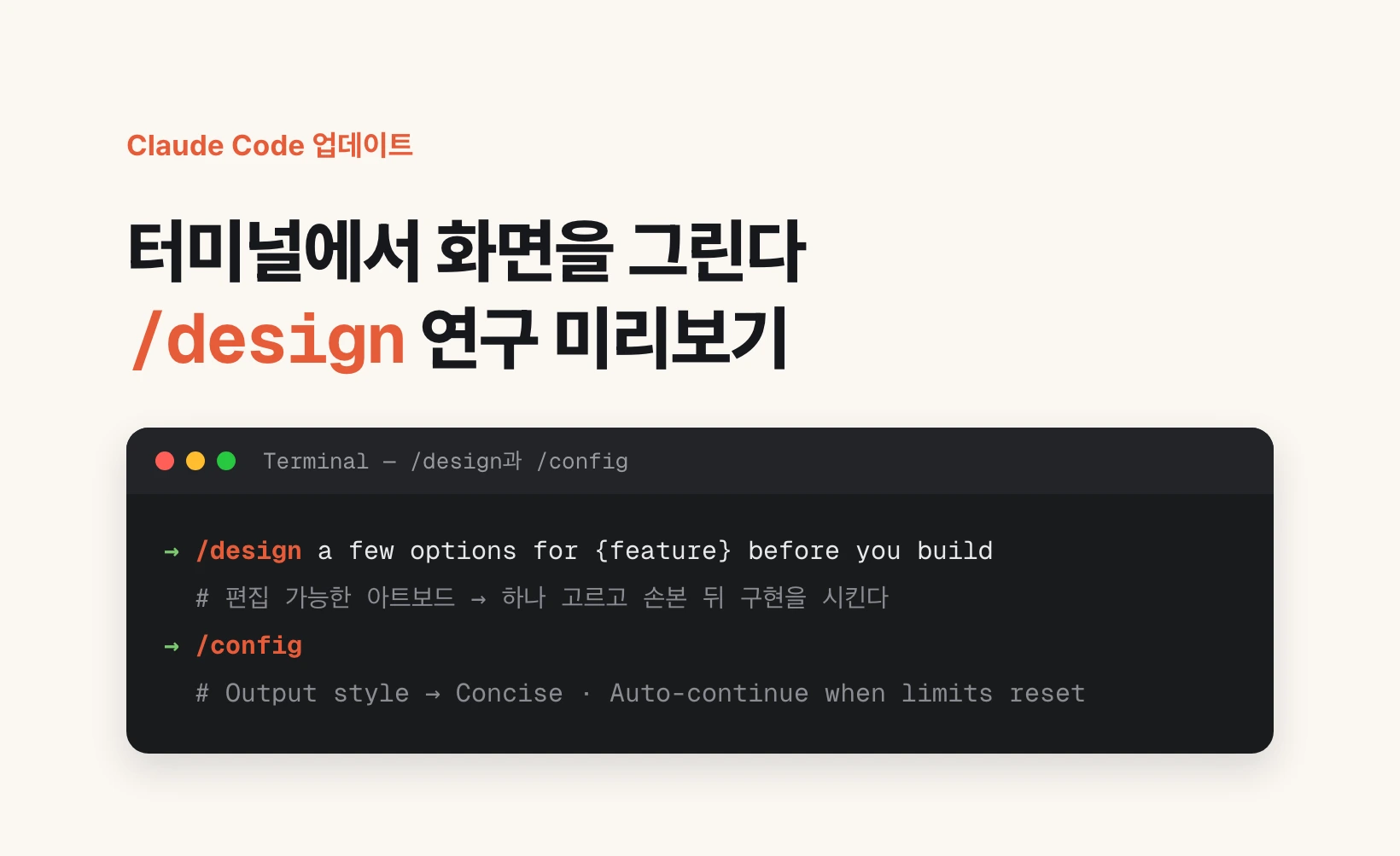
/design — Draw the screen inside Claude Code
Claude Code /design draws the screen without leaving the terminal. The 22 August 2026 weekly mail from Anthropic's Claude Code team (Lydia) announced research-preview /design, the Concise output style, and auto-continue. Auto mode became the default on 14 August for new Pro, Max, and Team sessions. Give /design an idea or a screenshot, pick an artboard, then ask Claude to implement it. Turn on Concise in /config if answers run long. When a usage limit cuts a turn, the CLI resumes after the limit resets.
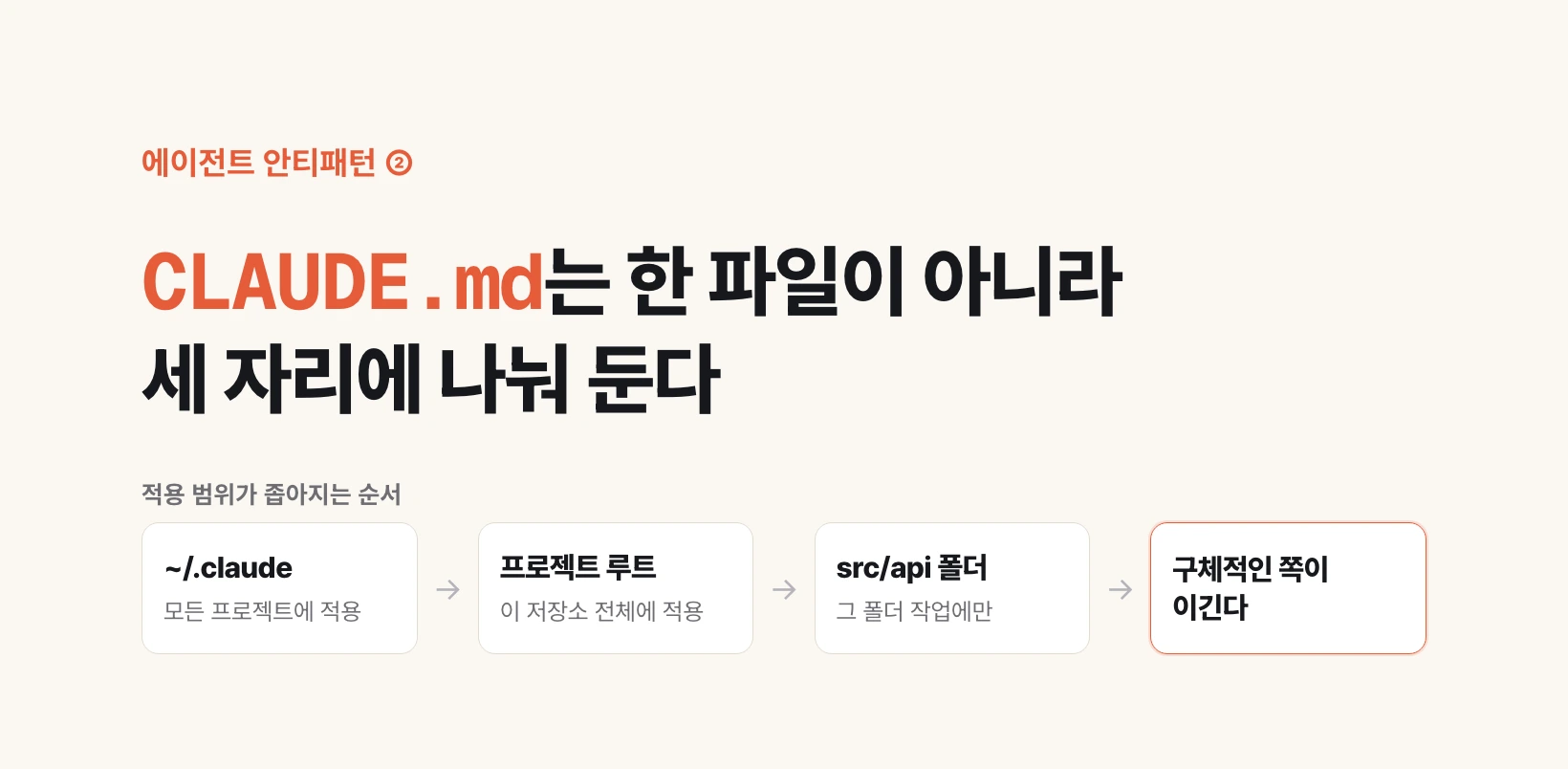
Split CLAUDE.md across three places, not one file
The second agent anti-pattern on Anthropic's certification exam is piling every rule into a single CLAUDE.md. The recommendation is to split across three places: your home directory, the project root, and individual folders. All three load and merge, and when they conflict the most specific file wins. Put everything in one file and instructions needed only in one folder follow you into unrelated work, colliding quietly — not as an error, but as results that drift slightly off, with nothing to show where the conflict happened.
CSR — the site that looks fine to a person and blank to GPT's bot
A site built with client-side rendering (CSR) only fills with text after the browser runs JavaScript. GPT's bot skips that step and takes only the HTML the server sent first, so the body copy a person sees is not there for the bot. Open the page source in Chrome with Ctrl+U (Cmd+Option+U on a Mac) and search it with Ctrl+F for a short fragment of your body copy, and you will know which side your site is on in thirty seconds.

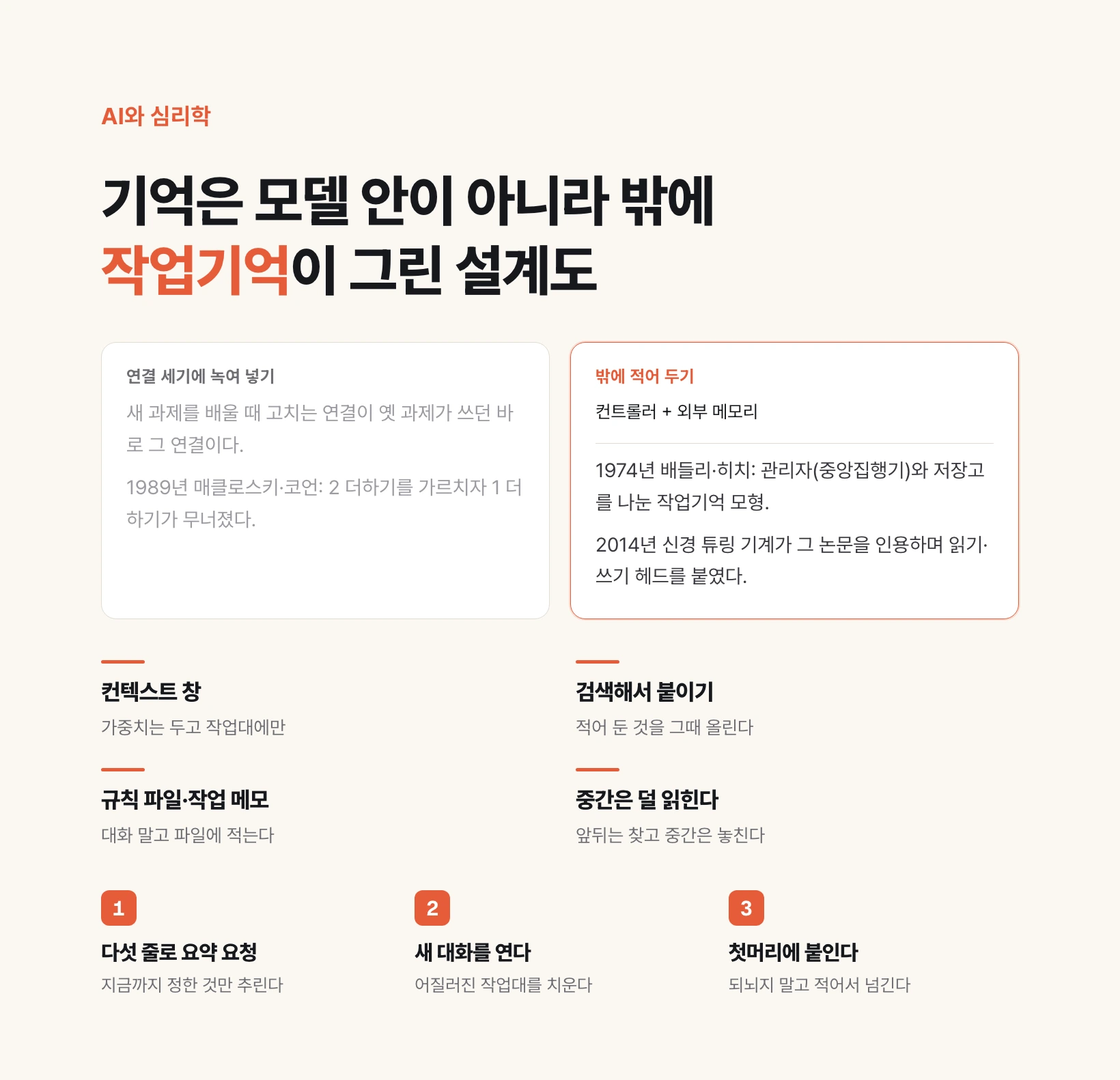
The people who gave AI a notepad: Baddeley's working memory
A neural network dissolves what it learns into connection strengths, so learning something new erases something old. The fix was not a bigger model but a split between the part that computes and the part that writes things down. That blueprint is the working memory model drawn by psychologists in 1974, and a 2014 neural network paper cited it directly while attaching an external notepad.
Five Agent Anti-Patterns — Anthropic's Certification Exam Answers All Point the Same Way: Give Less
Anthropic released its first official technical certification, Claude Certified Architect, in March. 60 questions, 120 minutes, a 100 to 1,000 scale with a passing score of 720. A lecturer who has taught computer science for over thirty years and now teaches at Berkeley went through the exam and called it "not a credential but a curriculum" — what the exam asks is what production agents demand. He identified five anti-patterns, and all five answers point the same way: give less. Fewer tools, less context, less information.

Neural networks were built by psychologists, not engineers
Neural networks did not come out of an effort to make computers faster. They started from one sentence written by a psychologist in 1949 and took their present shape in a 1986 research project led by two psychology professors. That project's goal was not artificial intelligence but an account of how the human mind works, and the two men received a psychology award for it in 2002.

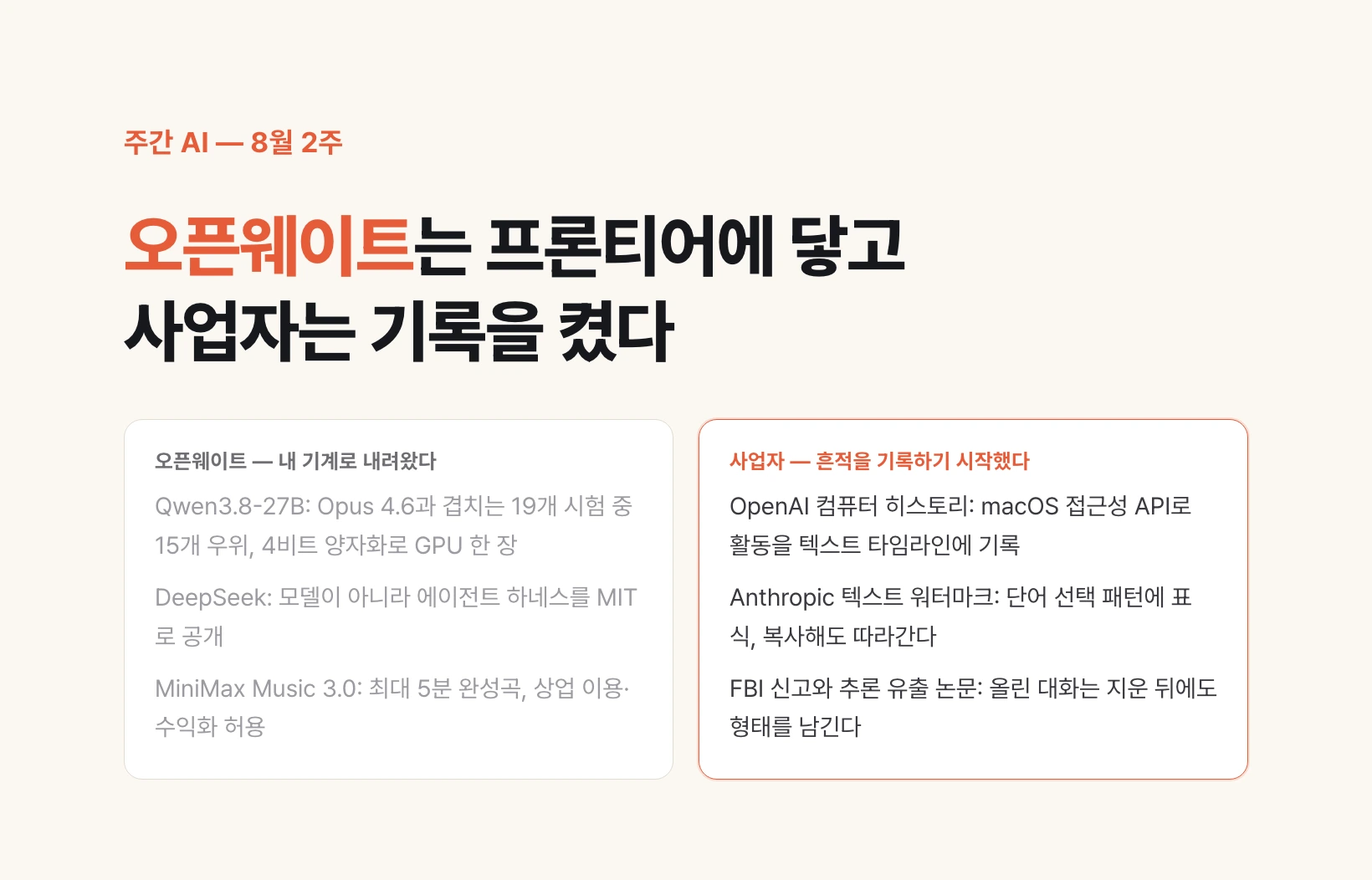
AI news, August 11-15 - open weights reached the frontier while providers turned on the record
Between August 11 and 15, 2026, two things happened at once. First, open-weight models reached frontier performance. Qwen3.8-27B, small enough to run on a laptop GPU, beat Claude Opus 4.6 on 15 of 19 overlapping tests; DeepSeek opened not just a model but an agent harness under MIT; and MiniMax released a music generation model as open weights. Second, providers began recording what users do. OpenAI shipped Computer History, which turns Mac activity into a timeline, and Anthropic formalized text watermarking to comply with the EU AI Act. Both trends leave the same question: do you keep handing your work to someone else's server, or can you now bring it down to your own machine?
Grok Bot — delete Hermes and OpenClaw, leave this
Grok Bot is an early beta xAI opened on 11 August 2026. It is not a chat window. It is a team of named bots, each with a cloud computer, and only SuperGrok Heavy, Cursor Ultra, or Cursor Teams Premium subscribers can open it on desktop and iPhone. The bots keep working when your machine is off, and a site with no API becomes a routine once you show the screen. “Delete Hermes and OpenClaw, leave only this” is the verdict in a Code Factory review. I am not there yet. I am testing Buzz, and I will decide after more reviews whether I want work to continue with the lid closed or to keep using the subscriptions I already pay for on my own machine.

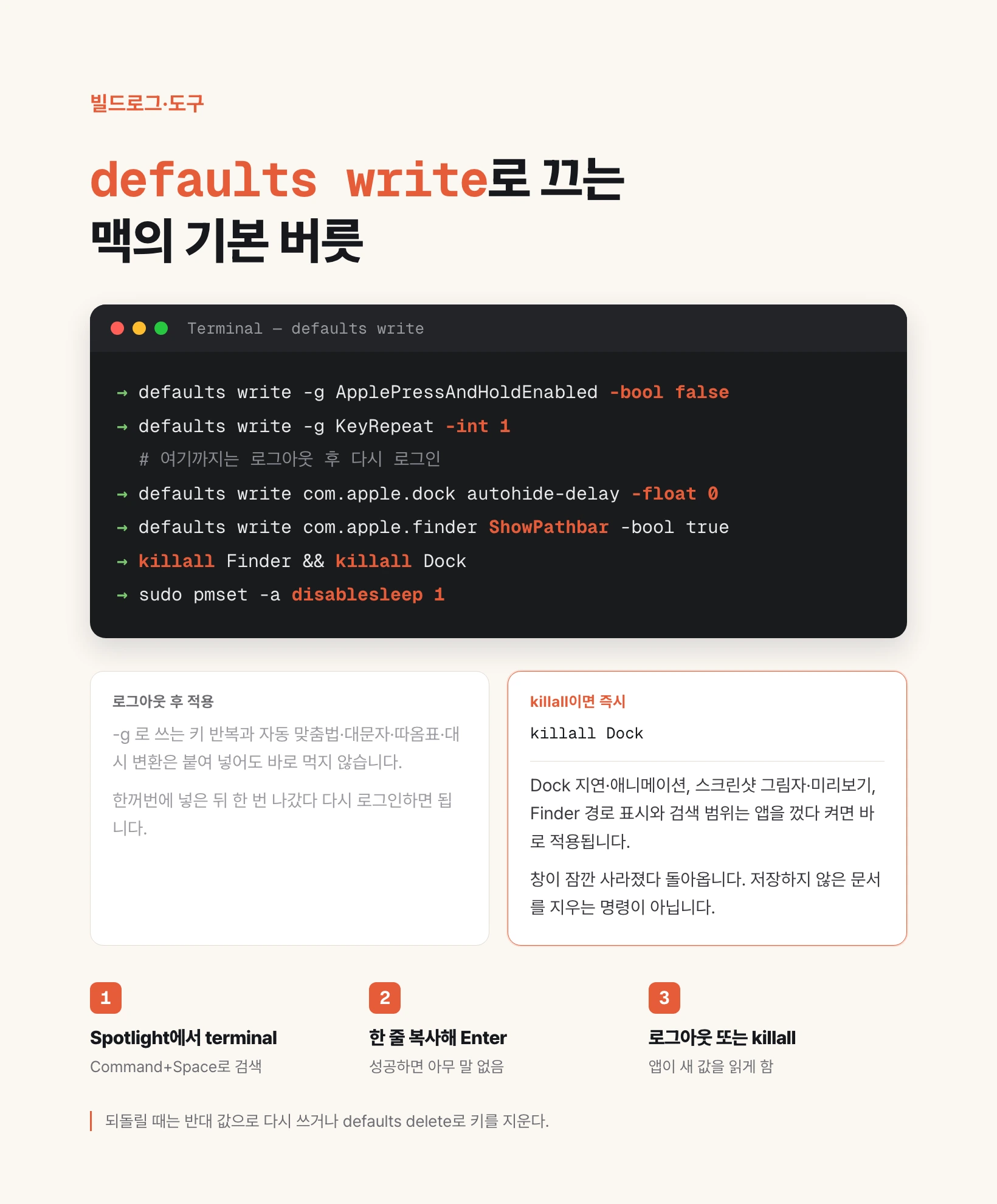
defaults write — stop Mac from stealing keys and delaying the Dock
Hidden Mac settings are changed with defaults write in Terminal, not in System Settings. Open Spotlight with Command+Space, type terminal, and paste. Key repeat and auto-correction need a log out. Dock delay, window animation, screenshots, and Finder paths take effect after killall. Only a Mac left on for an agent should run sudo pmset -a disablesleep 1.
FSD V14 Lite — What 26 Korean Owners Scored It, and Why
Twenty-six Korean owners who have driven FSD V14 Lite gave it scores clustered in the nineties: nine said 90, the single most common answer, with one 100 at the top and three 70s at the bottom. Most sat above 80. The more interesting finding is not the number but the shape of the feedback. Praise is diffuse — "the drive as a whole felt right", "apart from navigation errors I never intervened" — while complaints are precisely located: forks in the road, left-turn signals at night, phantom braking before speed bumps, speed cameras. The points came off in a few narrow situations, not from autonomous driving as a whole. That said, these are 26 replies gathered by the YouTube channel Tslachan on X, and the channel states twice that the sample is far too small to represent FSD.

Supabase RLS: is your app's database open to anyone right now?
In a Supabase app the key is meant to be visible in the browser, and whether that key is safe comes down to one thing: whether Row Level Security is enabled on every table. With RLS off, anyone holding that key can read and write your database. The Moltbook incident published by the security firm Wiz in February 2026 was exactly that case, and a single publishable key sitting in the browser JavaScript left roughly 4.75 million records open. Checking your own app takes three minutes: find the key on your deployed site, then look for the Unrestricted badge in the Supabase Table Editor. This piece walks through that check, explains why the screen goes blank right after you enable RLS, and shows what order to add policies in.
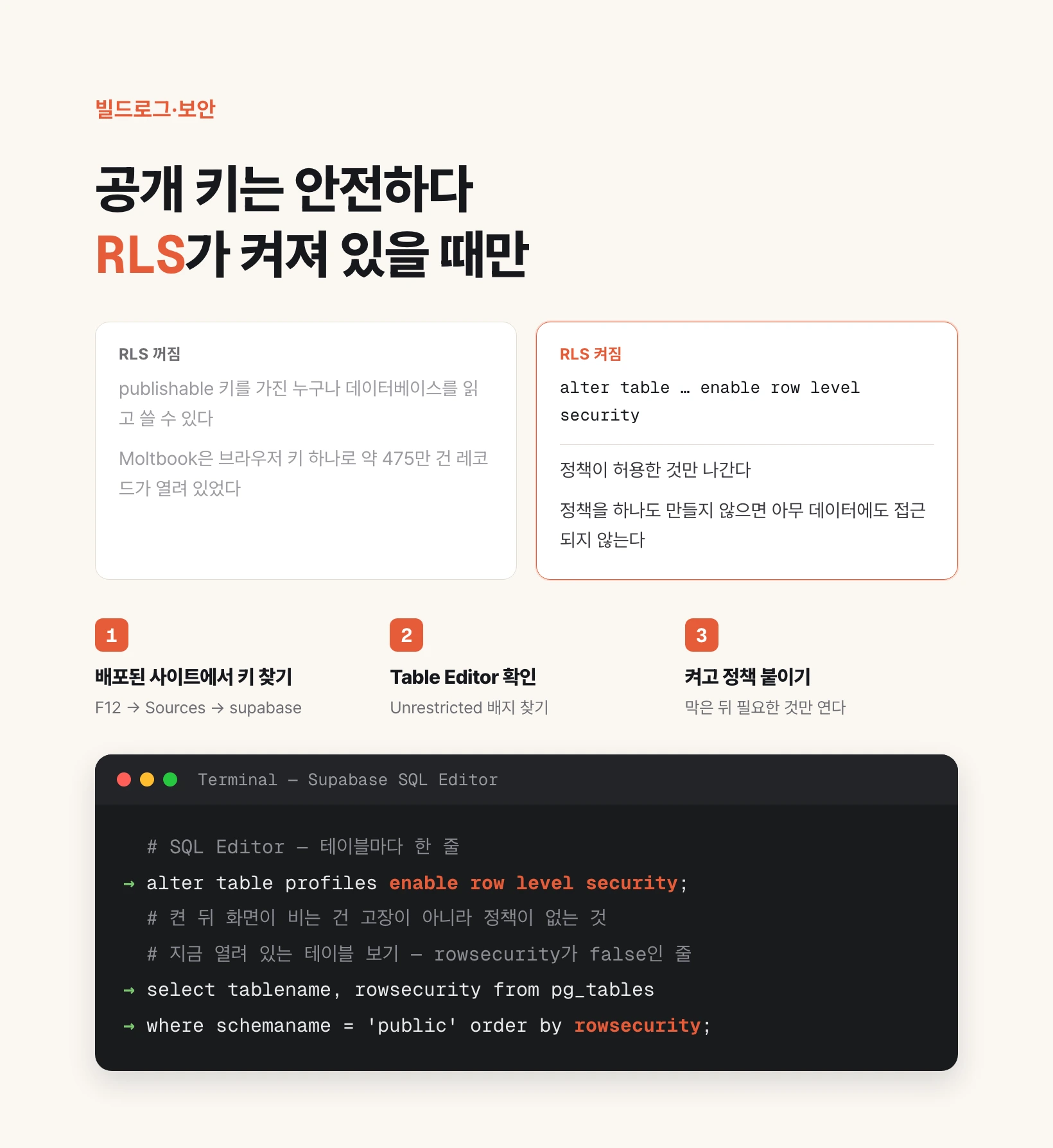
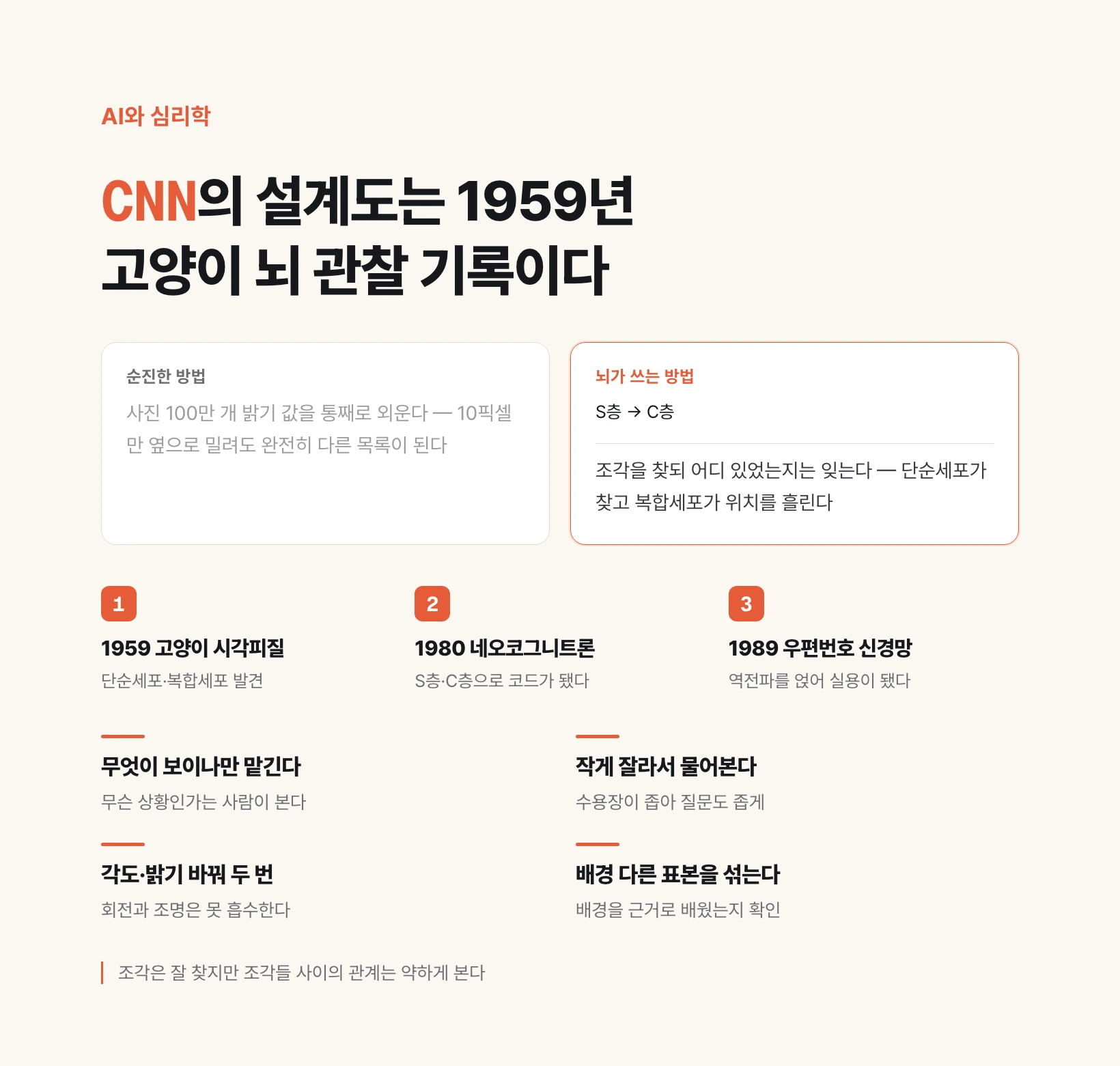
Image AI copied a cat's brain — from Hubel and Wiesel to CNNs
The structure that has carried AI which recognizes faces, spots defects, and reads X-rays is the CNN. Its blueprint was not drawn by an engineer. It came from records made in 1959 by pushing an electrode into a cat's brain. Two kinds of neuron, simple cells and complex cells, were found; in 1980 they were implemented as layers; and a 1989 paper cited that implementation on the way to today's image AI.
What does it mean to predict pharma stocks from clinical trial data
It means filtering pharma and biotech names by trial schedules rather than by charts. When a Phase 3 readout is coming is already written down in a public registry called ClinicalTrials.gov, and institutional order flow starts moving roughly two months before the announcement rather than on the day. So the pipeline keeps only trials whose estimated completion falls inside 60 days, attaches short-selling and order-flow data, and folds six dimensions into a single score out of 100. This piece opens up that pipeline end to end and explains why the most important design decision was deleting a good-looking number from the screen.

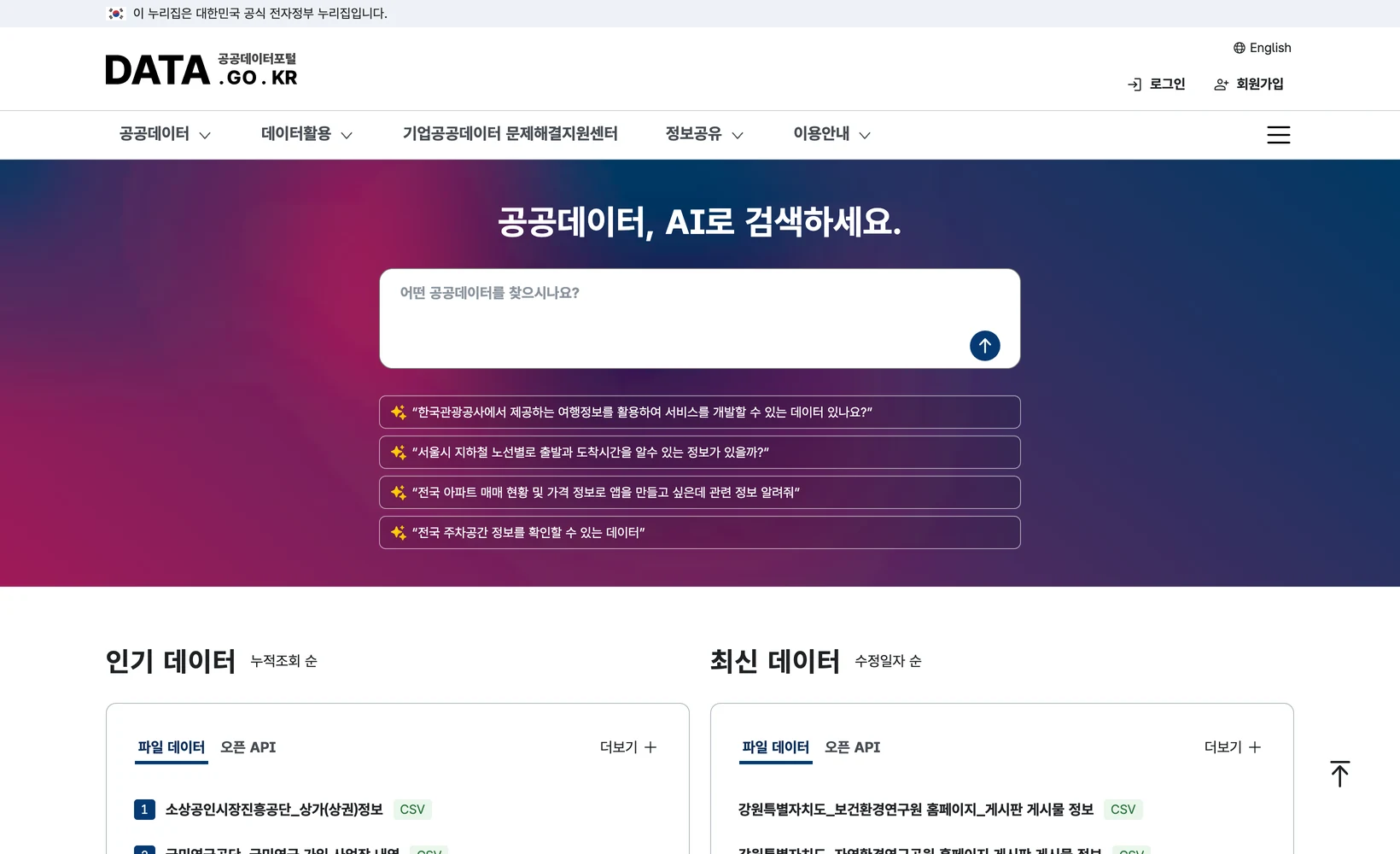
What to check first when wiring up a Korean public data portal API
Not authentication or request syntax, but silent failure. Some APIs on Korea's public data portal do not reject an unknown parameter; they ignore it and hand back nationwide data instead. Passing another agency's parameter to the health insurance review service's pharmacy API returned 25,771 nationwide rows instead of 5,883 for Seoul, and every response was HTTP 200 with valid JSON. This piece shows that measurement as it happened, explains what the first verification step should be, and why data being on the portal and data being available as an API are different questions.
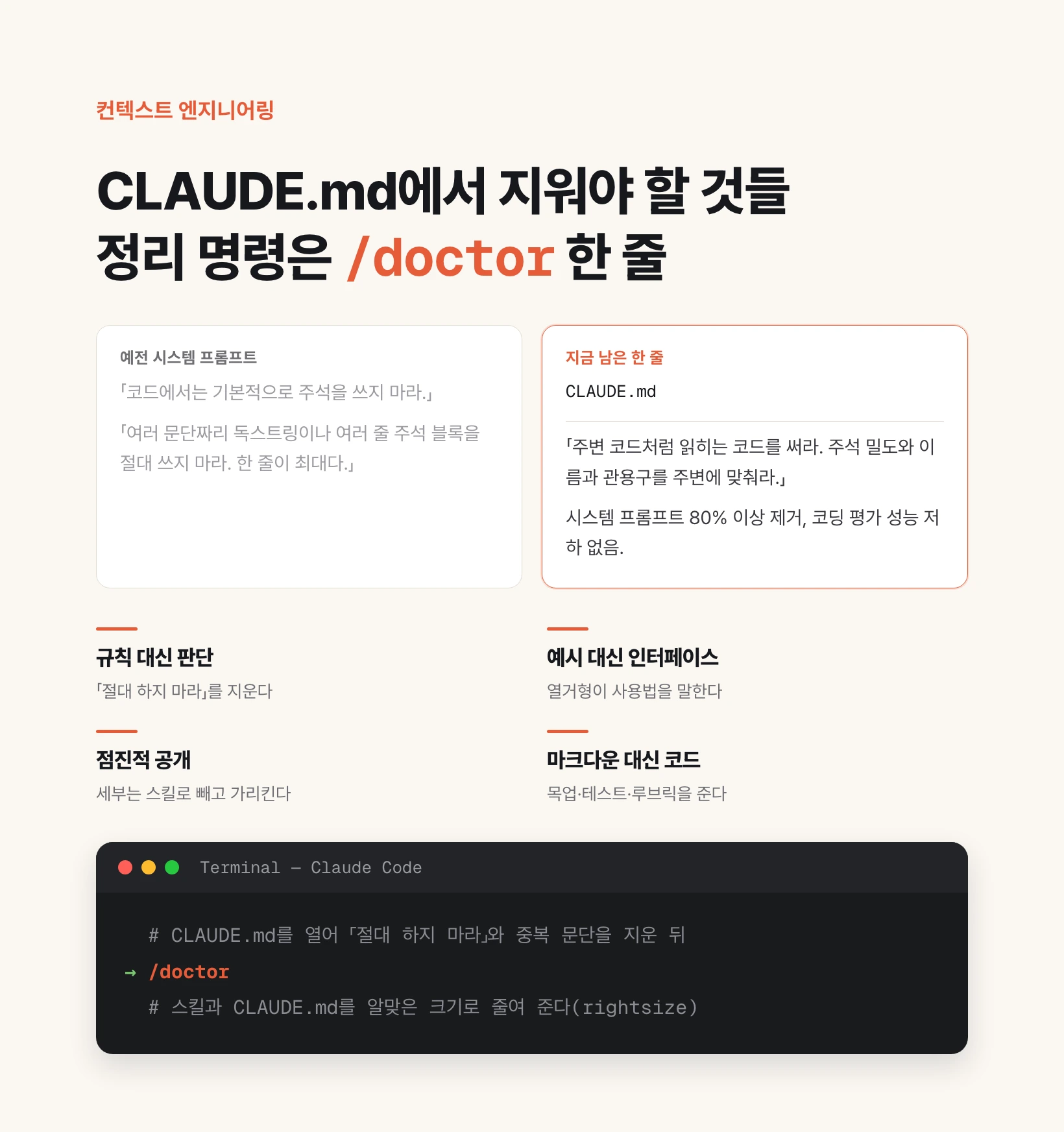
Context Engineering for Claude 5 — What to Delete from Your CLAUDE.md
Anthropic removed over 80% of Claude Code's system prompt and coding evaluation scores did not drop. As the model became capable of judgment, much of what we were taught to do over the past few months turned into ballast that costs performance. Six rules flipped, and the command to apply them to your own files is a single /doctor in Claude Code. The original is "The new rules of context engineering for Claude 5 generation models" on claude.com/blog.
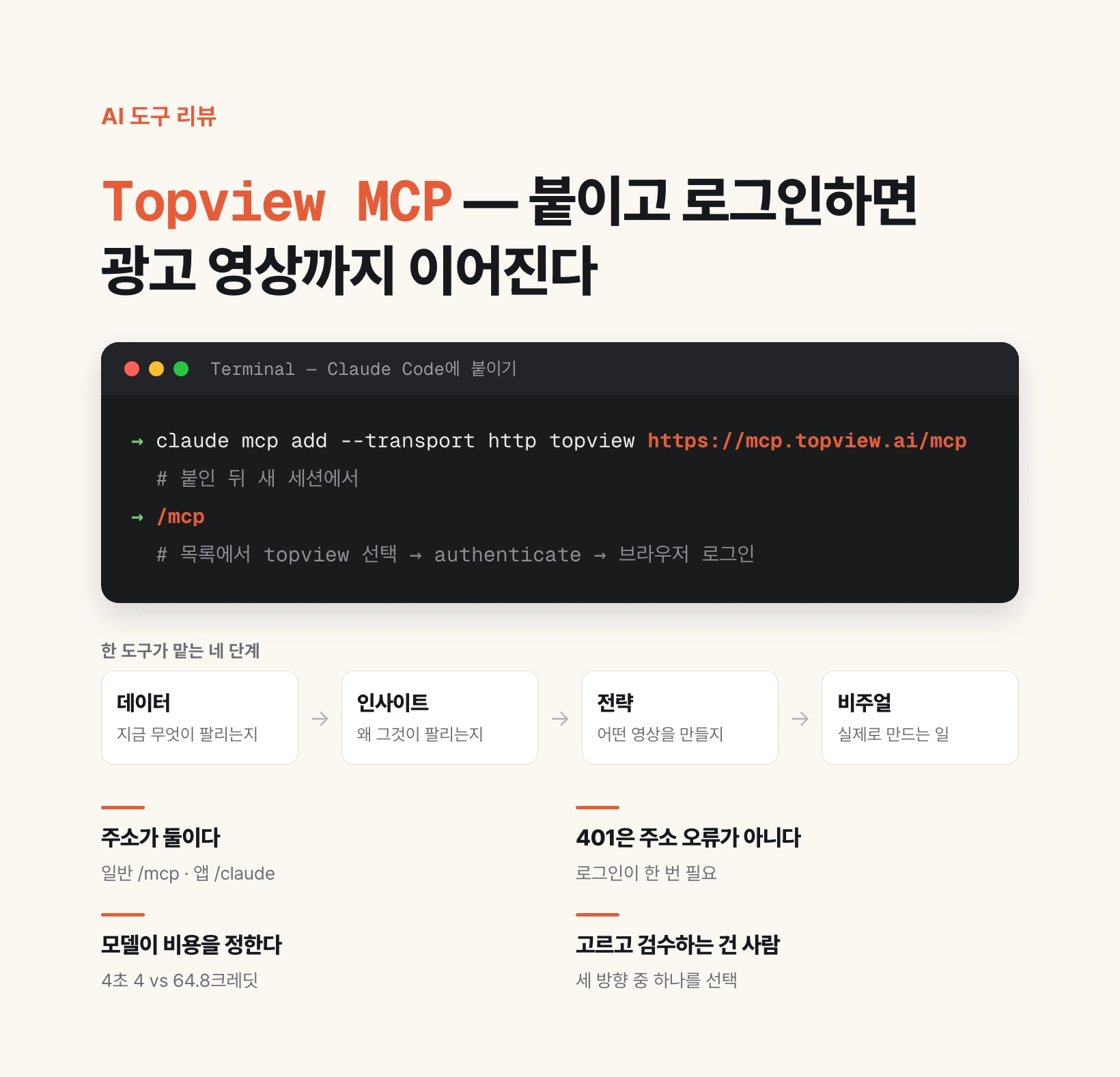
Topview MCP — Making Ad Videos by Connecting It to Claude
Topview MCP bundles everything from market data lookup to ad-video production behind a single MCP server. Paste the URL into your client, sign in once, and from then on a request like "find what is selling right now and make me an ad" walks through data, planning, images, video and voiceover. The URL differs by client: general MCP clients such as Claude Code use https://mcp.topview.ai/mcp, while the Claude app connector uses https://mcp.topview.ai/claude. The tool is made by Topview; this is a write-up after trying it.
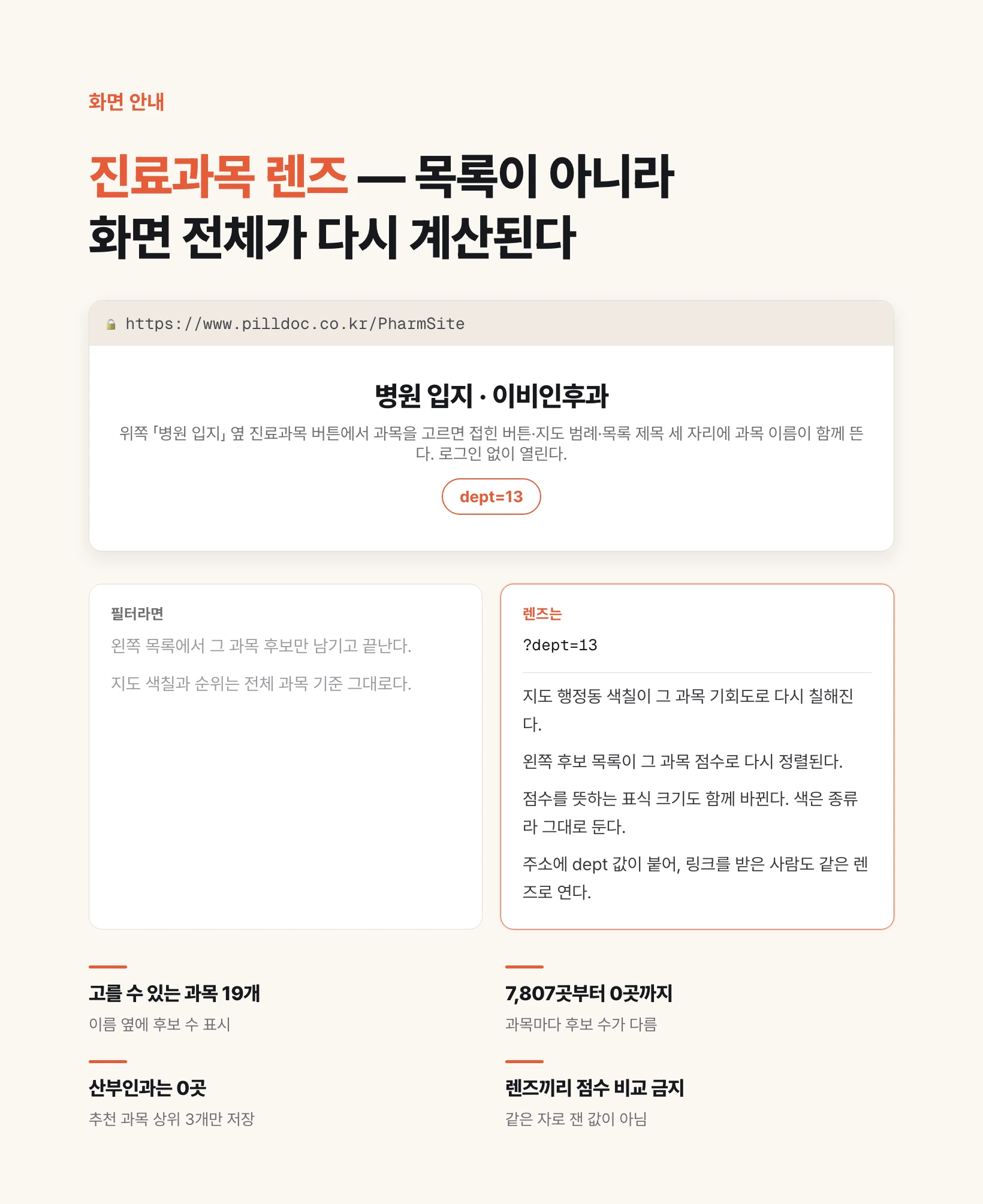
PillDoc Site Finder's Specialty Lens — Reading Clinic Locations One Specialty at a Time
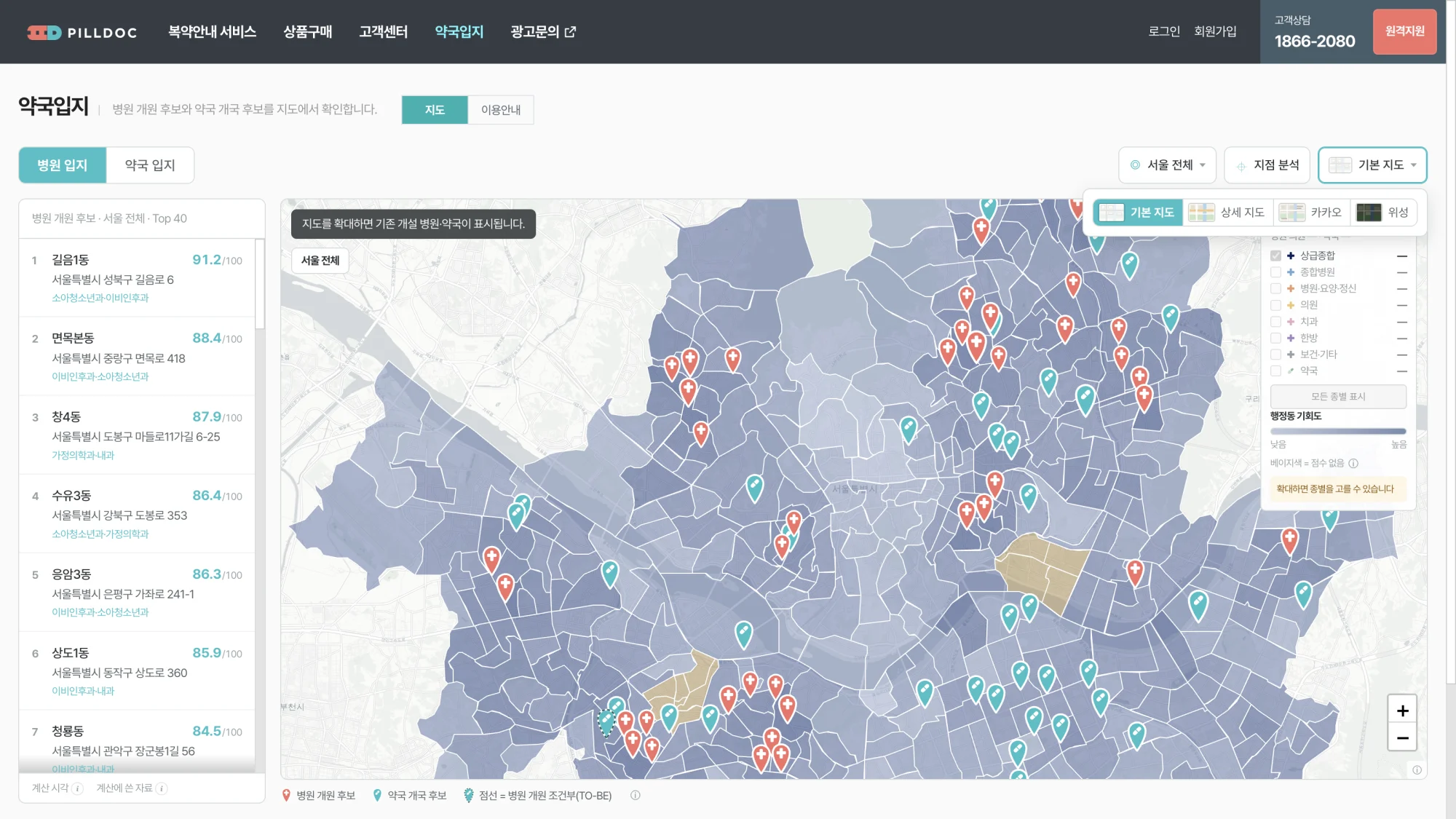
PillDoc's pharmacy site finder now has a specialty lens. Pick one medical specialty from the button next to the Hospital tab and the screen does not merely filter the list — the map shading, the candidate ranking, and the marker sizes are all recomputed for that specialty. Nineteen specialties are selectable, and how many candidates each one can show varies enormously: 7,807 for otolaryngology and 0 for obstetrics and gynecology. The screen is at https://www.pilldoc.co.kr/PharmSite and opens without a login.
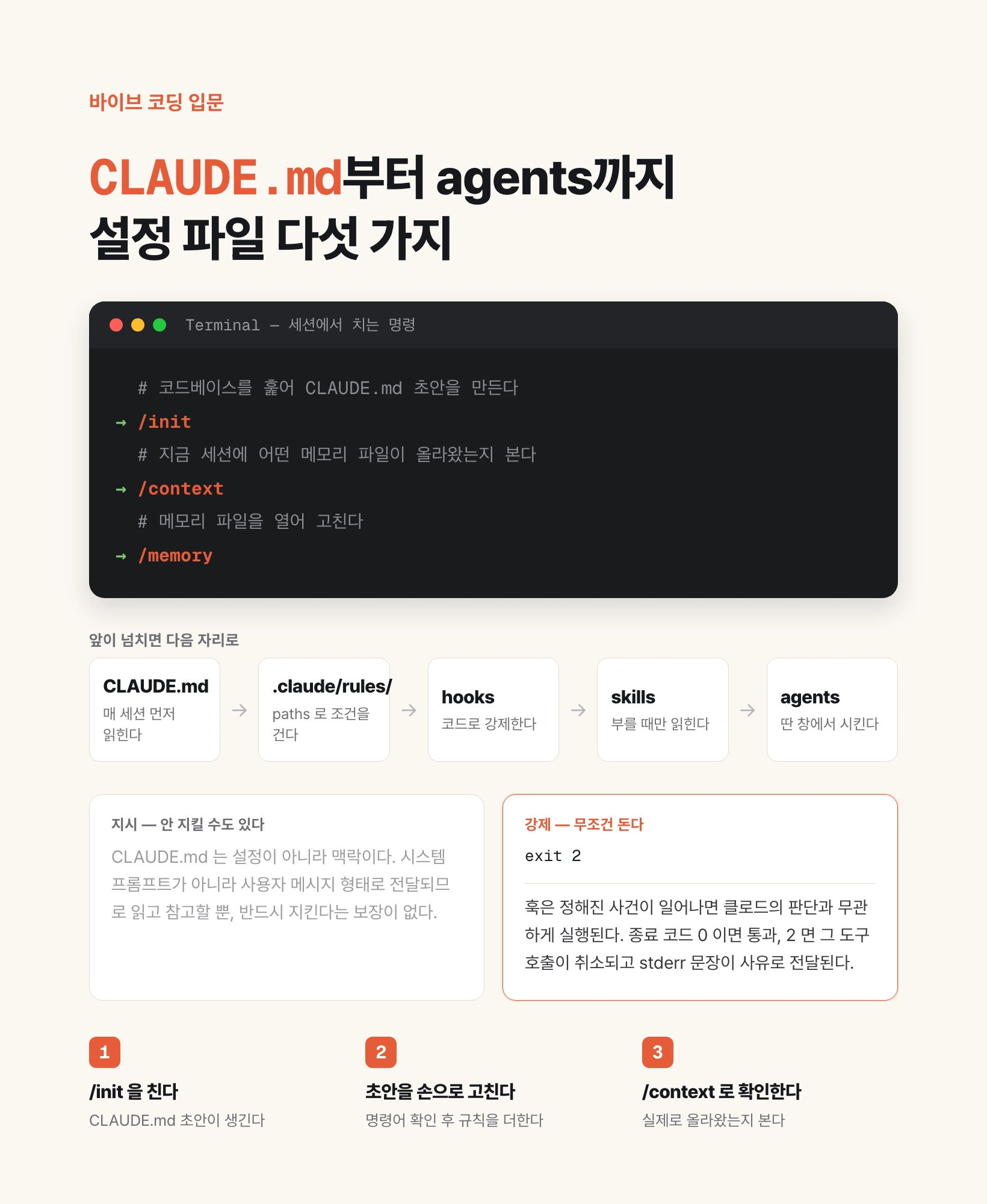
CLAUDE.md, Rules, Hooks, Skills, Agents — the five configuration files of Claude Code
Making Claude Code work your way comes down to placing five kinds of files. CLAUDE.md is the project brief read at the start of every session; rules are where that brief goes when it grows, loaded conditionally; hooks are enforcement in code rather than instruction; skills turn a repeated procedure into a slash command; and agents run side work in a separate window so your main conversation stays clean. This article covers where each one lives, what format it takes, and how to decide which of the five a given instruction belongs in.
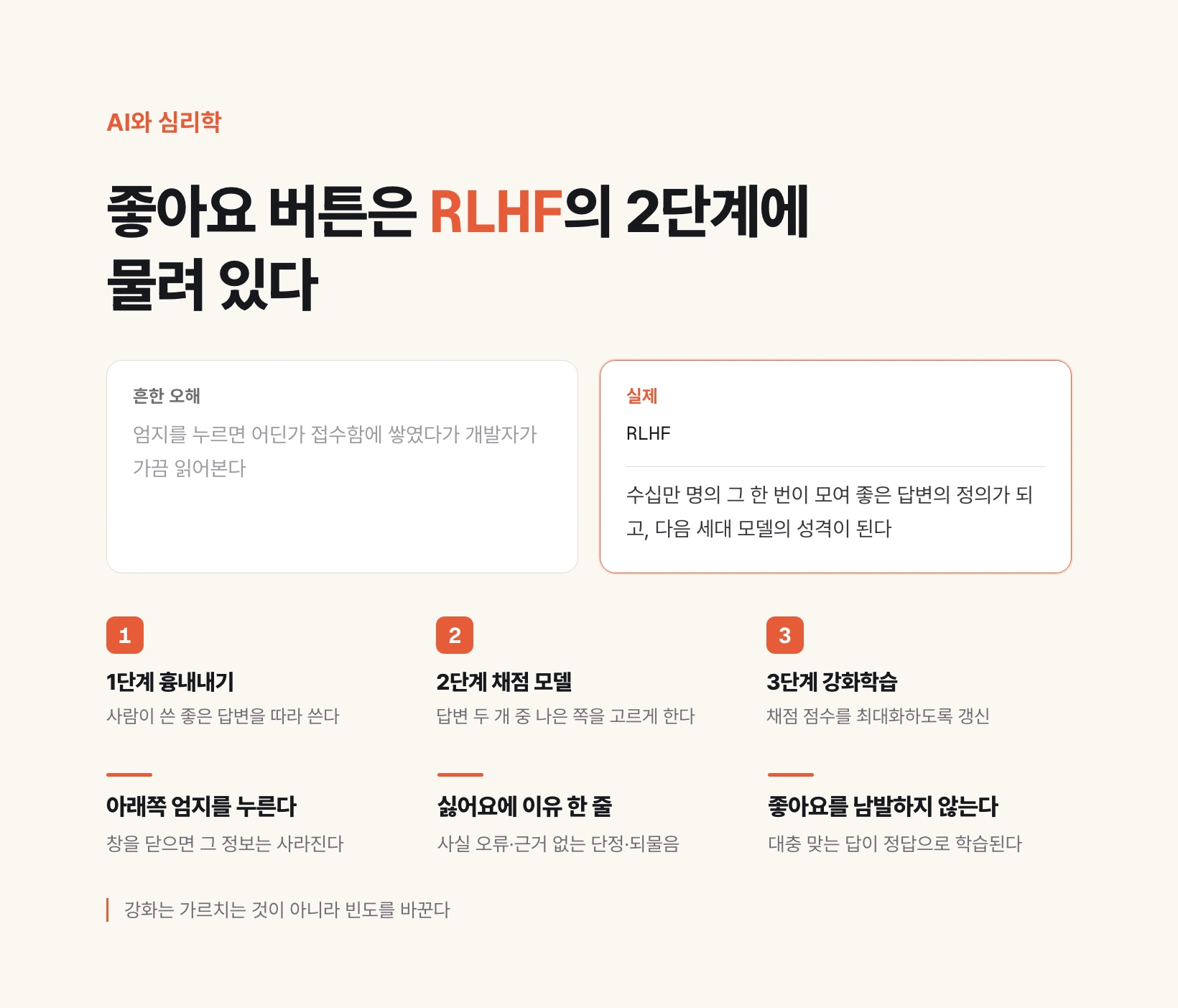
The thumbs-up button trains your AI — from Pavlov to RLHF
How AI picks up human tone and manners was not newly invented. It starts with a nineteenth-century experiment involving a dog and a bell, gets compressed in 1972 into a single principle about how far reality diverged from expectation, is found in actual brain circuitry in 1997, and arrives in computing as reinforcement learning, which won the 2024 Turing Award. The thumbs-up button under a chat answer is the handle at the end of that lineage.
How Do You Build Outbound That Sends a Diagnostic Report First?
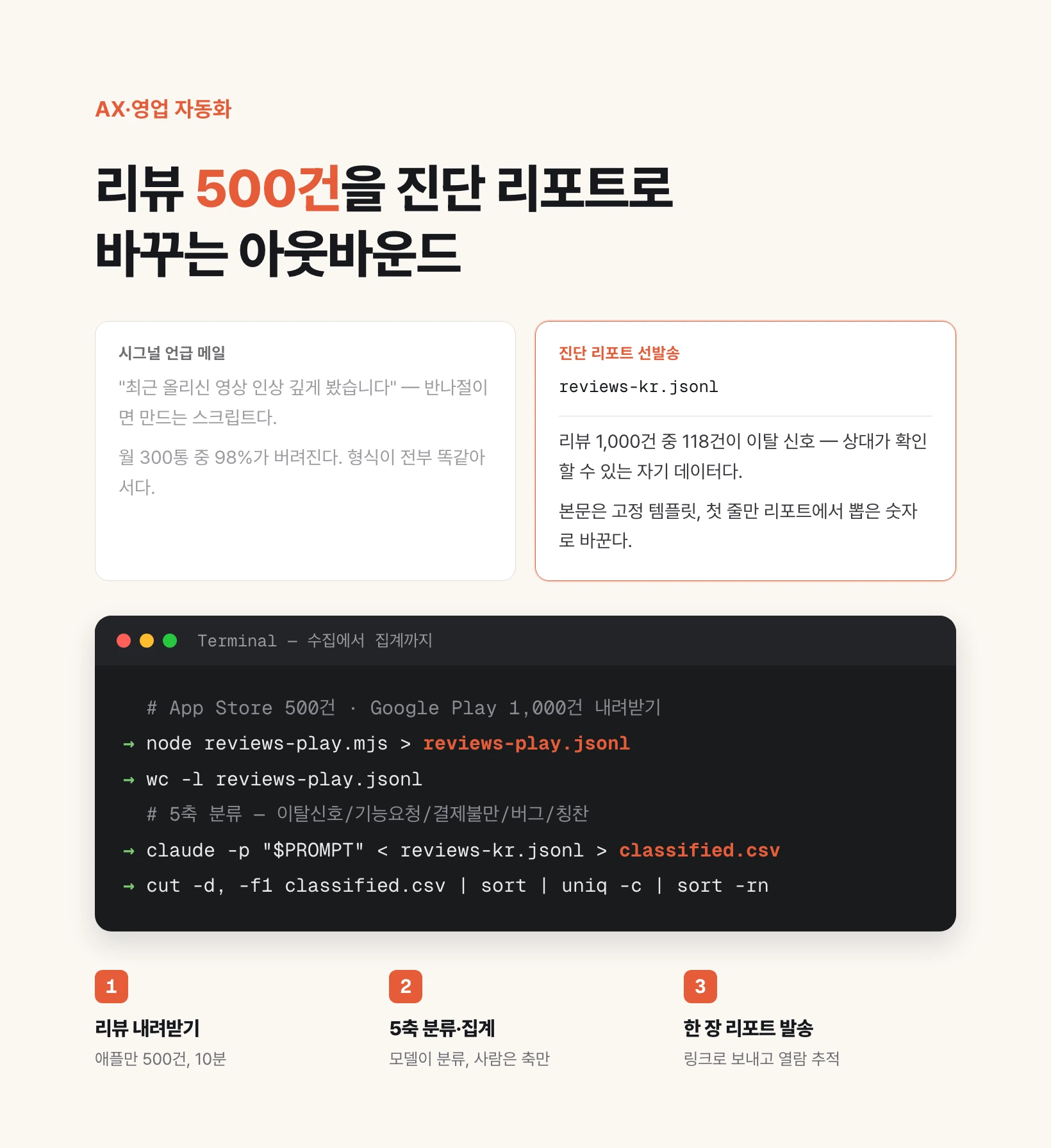
Report-first outbound means gathering a prospect's public data, turning it into a document about their specific problem, and attaching that document to the first touch instead of a sales pitch. If the prospect ships an app, store reviews are the easiest raw material. Apple's public review feed returns up to 500 reviews per store per country with no authentication, and Google Play can be collected in batches of a thousand with an open-source package. Sort those reviews into churn signals, feature requests, billing complaints, bugs, and praise, line them up against app versions, and you have a report. Then customize only the first line of the email and keep the rest as a fixed template. Track whether the report gets opened, and you have a reason to follow up even when nobody replies.
novice — a Claude Code plugin for non-developers
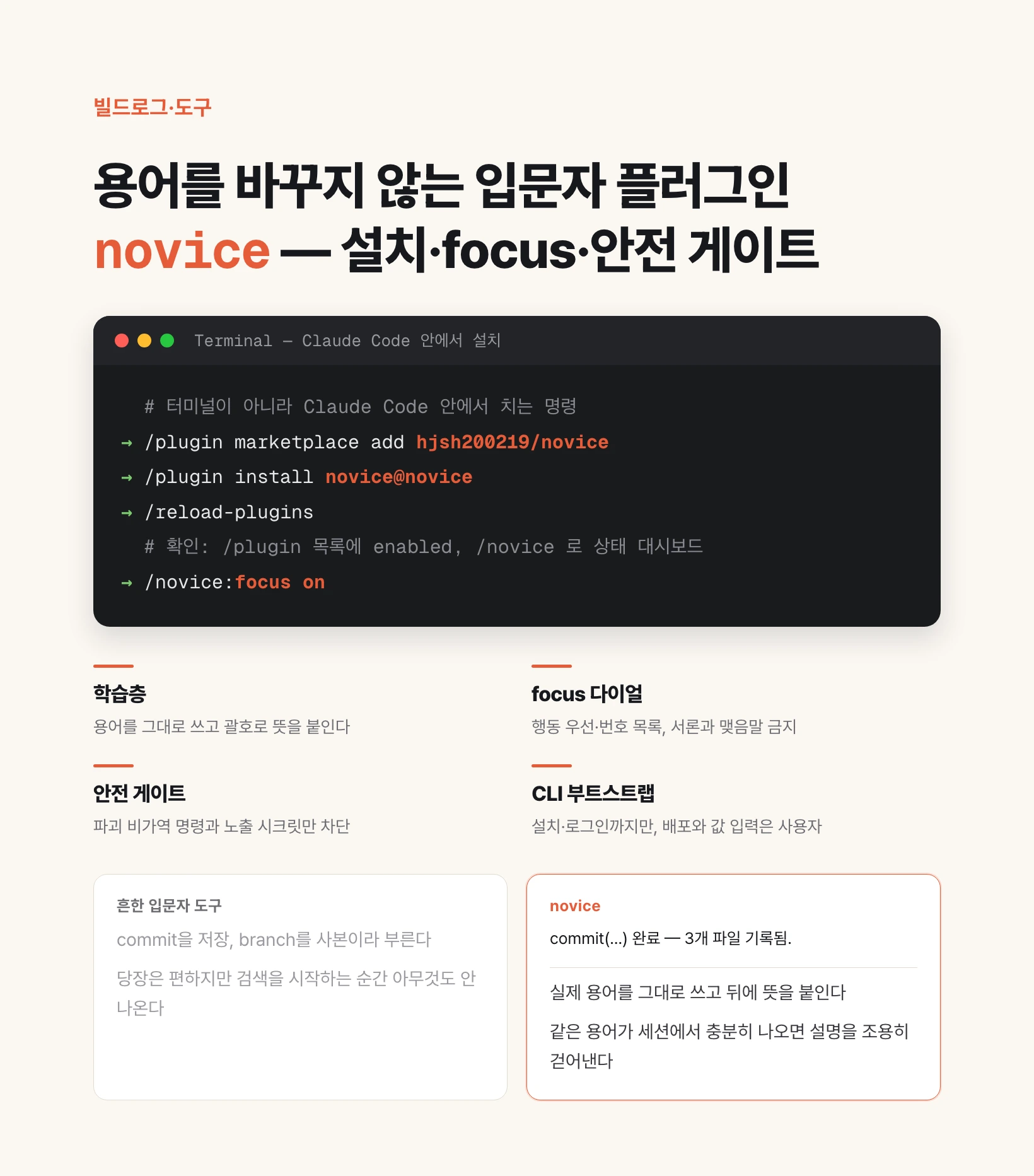
novice is a Claude Code plugin for people who are not developers and are starting to code with it. It does three things. First, it never swaps a real development term for an easier word: it writes the actual term and appends the meaning in parentheses, then quietly drops the gloss once the term has appeared enough times in the session. Second, a focus dial handles the moment when the answer is long and correct but you cannot tell where to start; turning it on forces action-first, numbered-list answers with no preamble and no closing. Third, a safety gate runs the entire time the plugin is enabled, blocking only irreversible destructive commands and exposed secret values, and a bootstrap walks external service CLIs through install and login for you. There are two install paths: attach it as a marketplace inside Claude Code, or take the npm package claude-novice. MIT, zero external runtime dependencies, currently 0.4.0.
Which YouTube channels should you watch to learn AI?
I went through 132 subscriptions and kept eleven that I actually use to learn AI. One filter decided it: does the channel show the screen while building, not a summary of the result? Grouped into four that show the process, two that go deep on one tool, two that move it into teams, two for the weekly picture, and one for foundations — with links.

What Vibe Coding Misses Is Not Code — It Is UI/UX Judgment
AI turns requirements into screens. What it does not decide is what to fold away and what to keep. Four principles used while re-cutting the same map screen over six days: copy what is familiar, group instead of listing, reveal detail on demand, and let the title carry what every row has in common.
How to read KakaoTalk's local database, and why it only works on a Mac
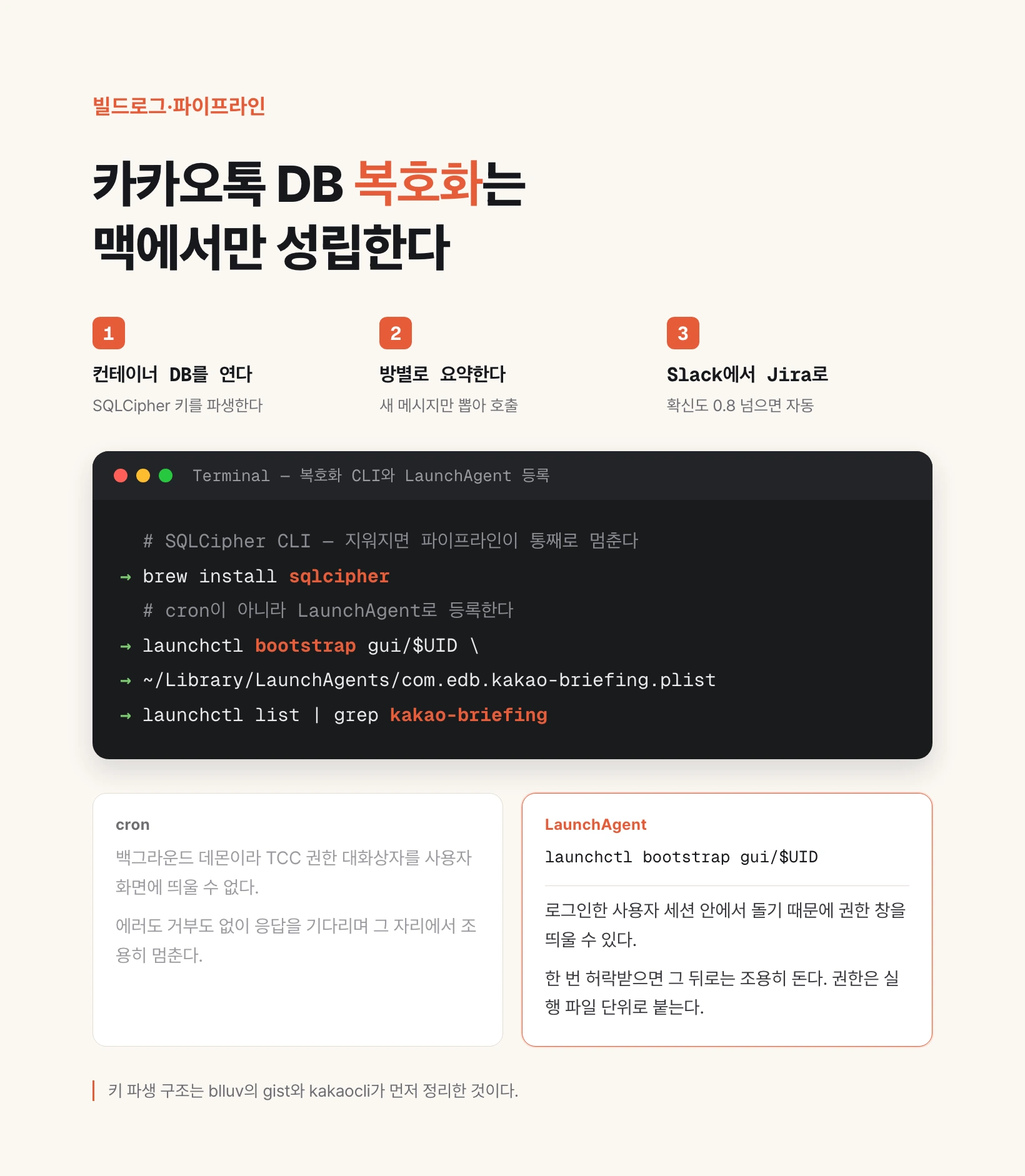
KakaoTalk offers no official API for another program to read your conversations. If you want to handle those messages in code, the only way in is the database file KakaoTalk for Mac leaves inside its own app container. That file is encrypted with SQLCipher, and the key is derived from the machine's hardware UUID combined with your internal Kakao account number. The way the hardware identifier is read, the place the app stores its files, and the permission model guarding that folder are all macOS constructs, so this pipeline runs on a Mac and nowhere else. It also refuses to run under cron, where it hangs silently instead of failing. Past that first stage the rest is ordinary work: pull only new messages per room, summarize each room separately, push to Slack, and let a bot in Slack draft the ticket body that lands in Jira.
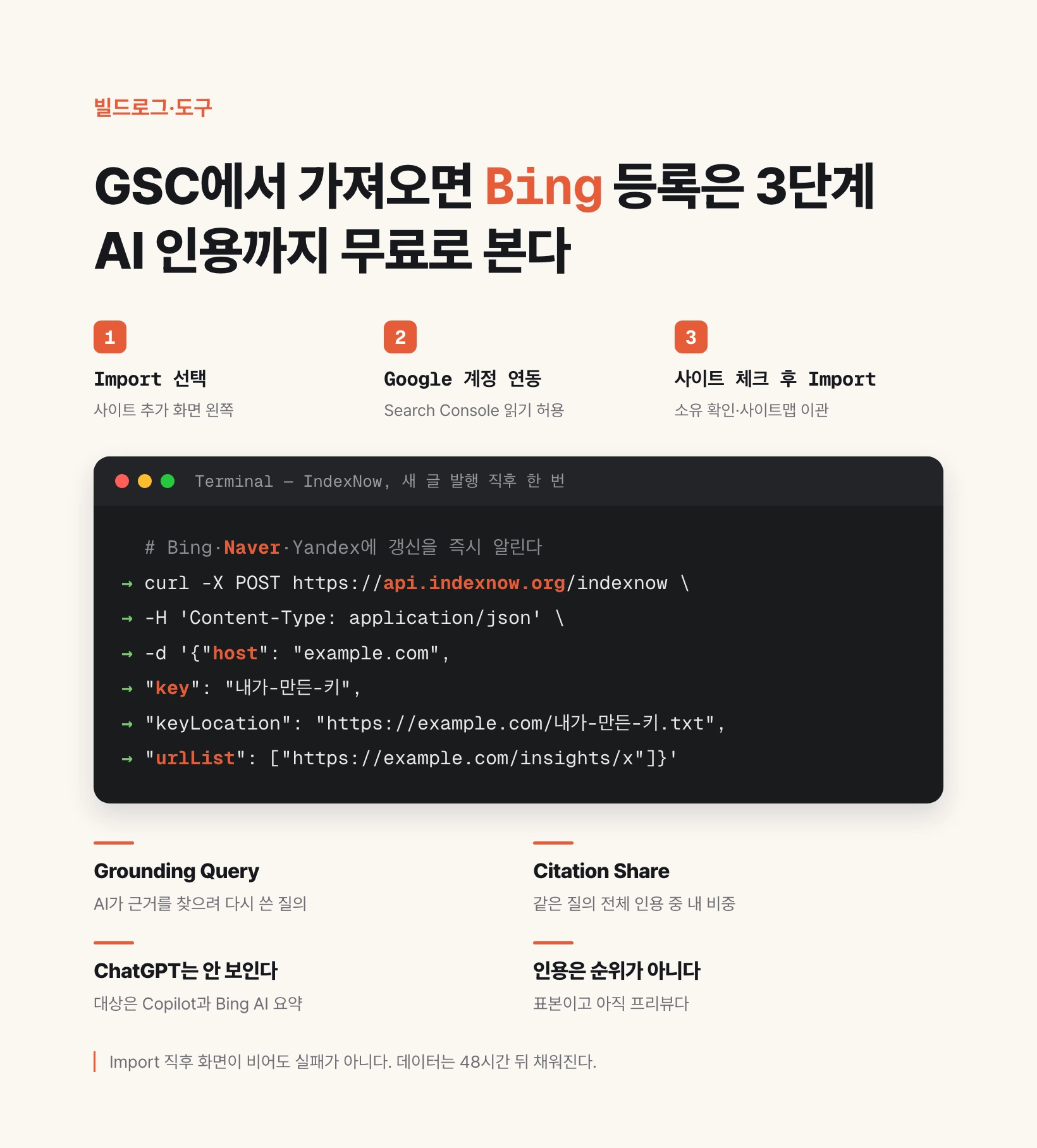
Bing Webmaster Tools — Import from GSC and Read Your AI Citations
Bing Webmaster Tools is Microsoft's free console for site owners. Think of it as the Bing counterpart to Google Search Console (GSC): it shows indexing status, search queries, sitemaps and backlinks, and lets you submit URLs directly. Registration is a single step if you already use GSC — on the add-site screen, choose Import on the left and connect your Google account. Sites already verified in GSC come over pre-verified, sitemaps included, with no meta tag or DNS record to touch. And since February 2026 an AI Performance report has been attached, showing for free how often Microsoft Copilot and Bing's AI summaries cite your pages.
RSI, MACD and Bollinger Bands — Five Indicators a Quant Agent Calls
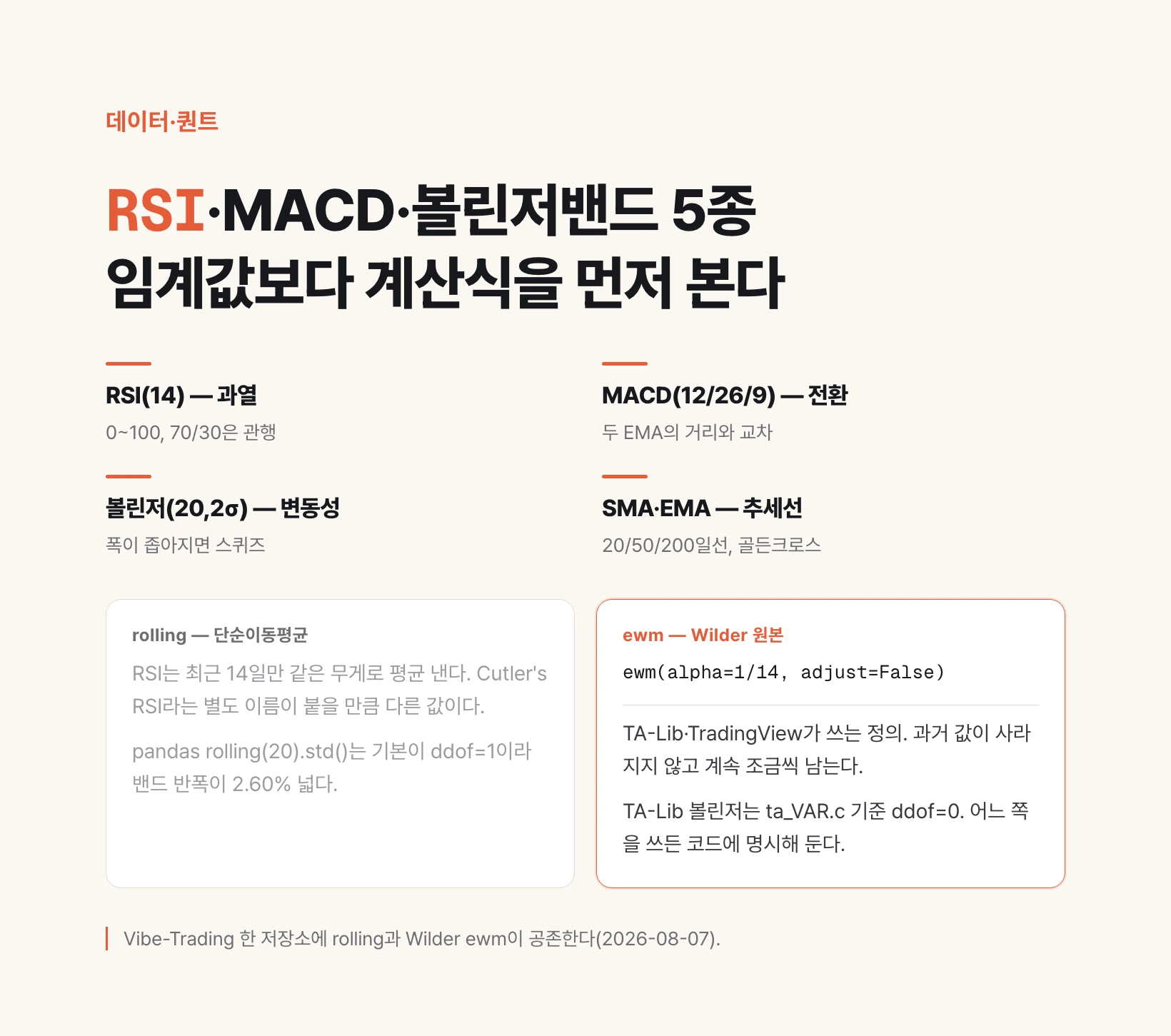
Technical indicators are second-order values derived from one primary dataset: open, high, low, close and volume. There are hundreds of them, but an AI trading agent calls exactly five through a single tool — RSI(14), MACD(12/26/9), Bollinger Bands(20, 2σ), SMA(20/50/200) and EMA(20) — and those five cover overheating, trend reversal, volatility and long-term direction. The catch is that the same name does not mean the same number. RSI splits depending on whether you smooth with Wilder's method (ewm alpha=1/14) or a simple moving average (rolling 14); Bollinger Bands split depending on whether the standard deviation uses ddof=1 or ddof=0. The thing to check before wiring up an indicator is not the threshold. It is the formula.
Creem — Payments When Toss and Stripe Both Say No
Creem is a merchant-of-record (MoR) payment platform that takes over the legal role of the seller. Customers buy from Creem rather than from you, and in exchange Creem handles tax calculation, collection and remittance across 190+ jurisdictions plus refunds and chargebacks. The fee is 3.9% + $0.40 per successful transaction, with no monthly fee and no setup cost. Create a product, drop the resulting product ID into your code, and a checkout opens; when payment completes, any file you attached is delivered to the buyer automatically. Skip code entirely and a shareable payment link is enough to start selling.
PillDoc PharmSite — How to Read Seoul's Clinic and Pharmacy Locations on a Map
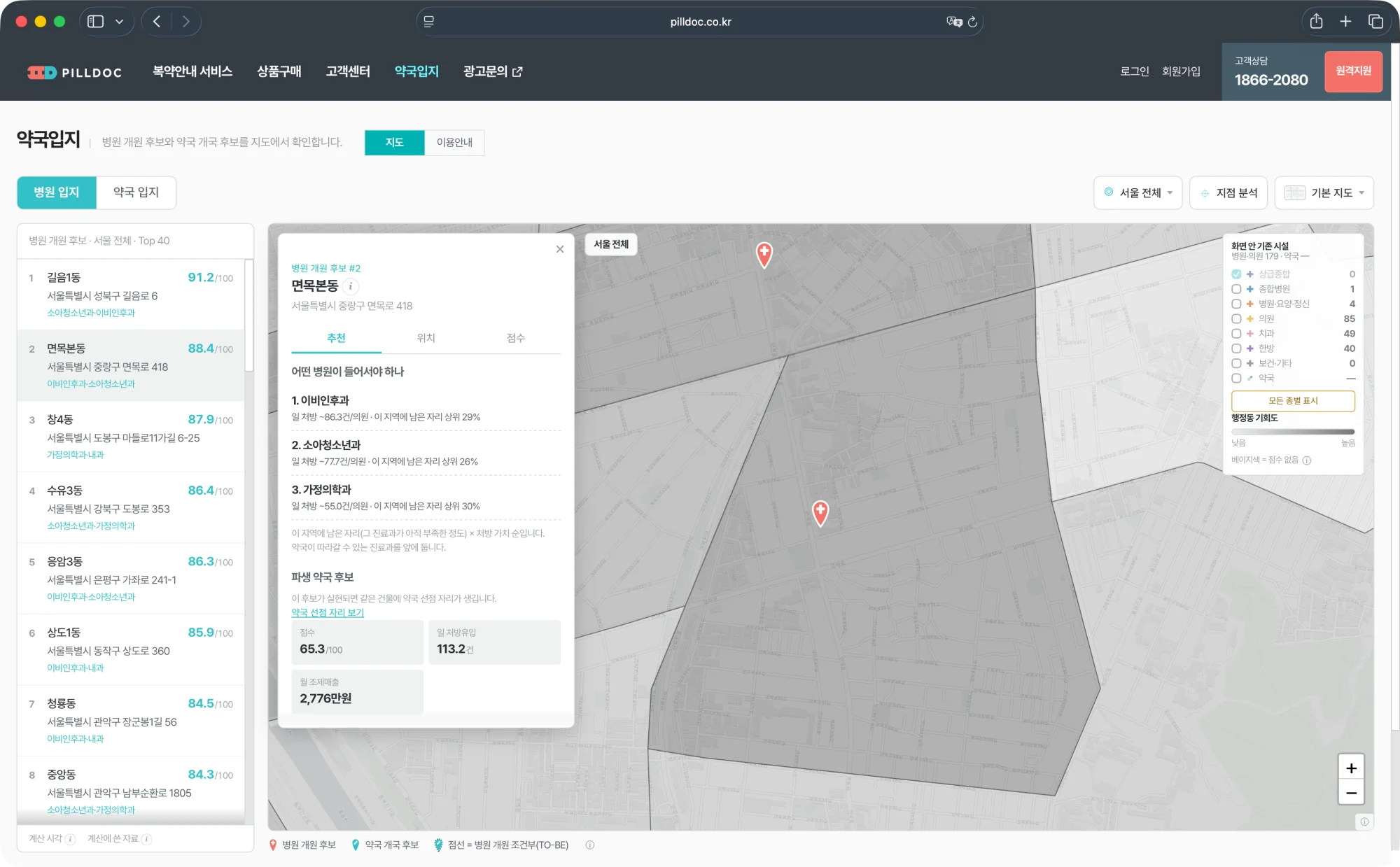
PharmSite is a read-only map screen published by PillDoc. It scores locations in Seoul where a clinic could newly open and where a pharmacy could newly open, out of 100, and plots them on a map. It opens at https://www.pilldoc.co.kr/PharmSite without a login, and selecting a location shows projected prescription inflow, monthly dispensing revenue, and nearby competing pharmacies. Every figure on the screen is a model estimate, not actual performance.
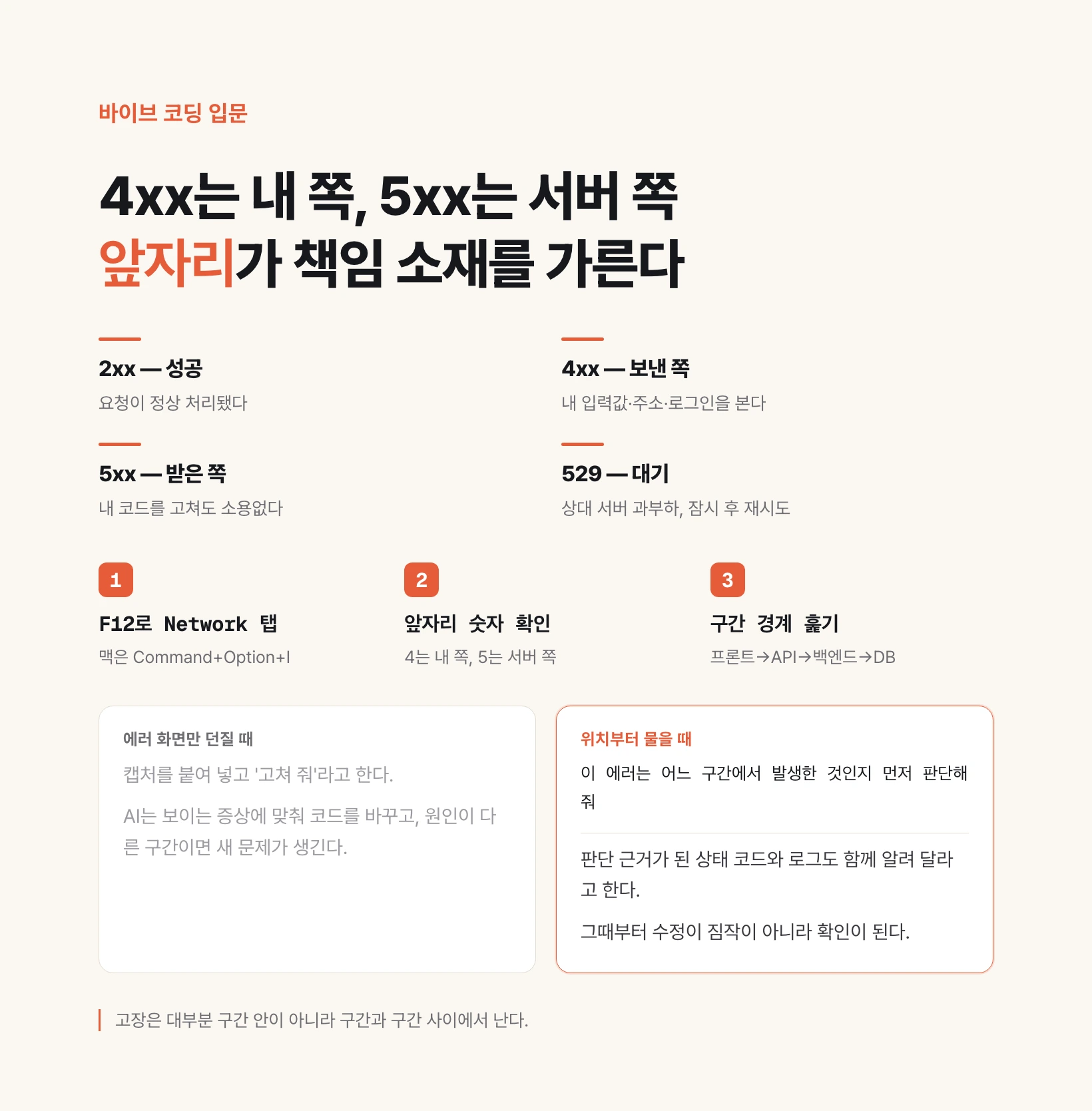
4xx vs 5xx — Where to Look When an Error Appears
One digit decides whose problem it is. A 2 means success, a 4 means the side that sent the request is at fault (your frontend or your input), and a 5 means the server that received it is. You find the status code by opening developer tools in the browser (F12 on Windows, Command+Option+I on a Mac) and clicking the failed request in the Network tab. Once the first digit points you in a direction, walk the segments a request passes through — frontend, API, backend, database — and narrow down which boundary it broke at, because failures happen between segments far more often than inside them. Knowing these two steps lets you stop playing twenty questions with your AI and ask a better question instead: which segment did this error come from? From that point on, fixes stop being guesses.
OfficeCLI — the CLI That Ends Excel, Word, and PowerPoint Overtime
OfficeCLI is an open-source CLI that lets AI agents and developers create, read, and edit Word, Excel, and PowerPoint files with a single command or a single line of natural language. It runs as one self-contained binary with no Microsoft Office installed, and what sets it apart is that it renders the document it just built and looks at it before fixing anything.
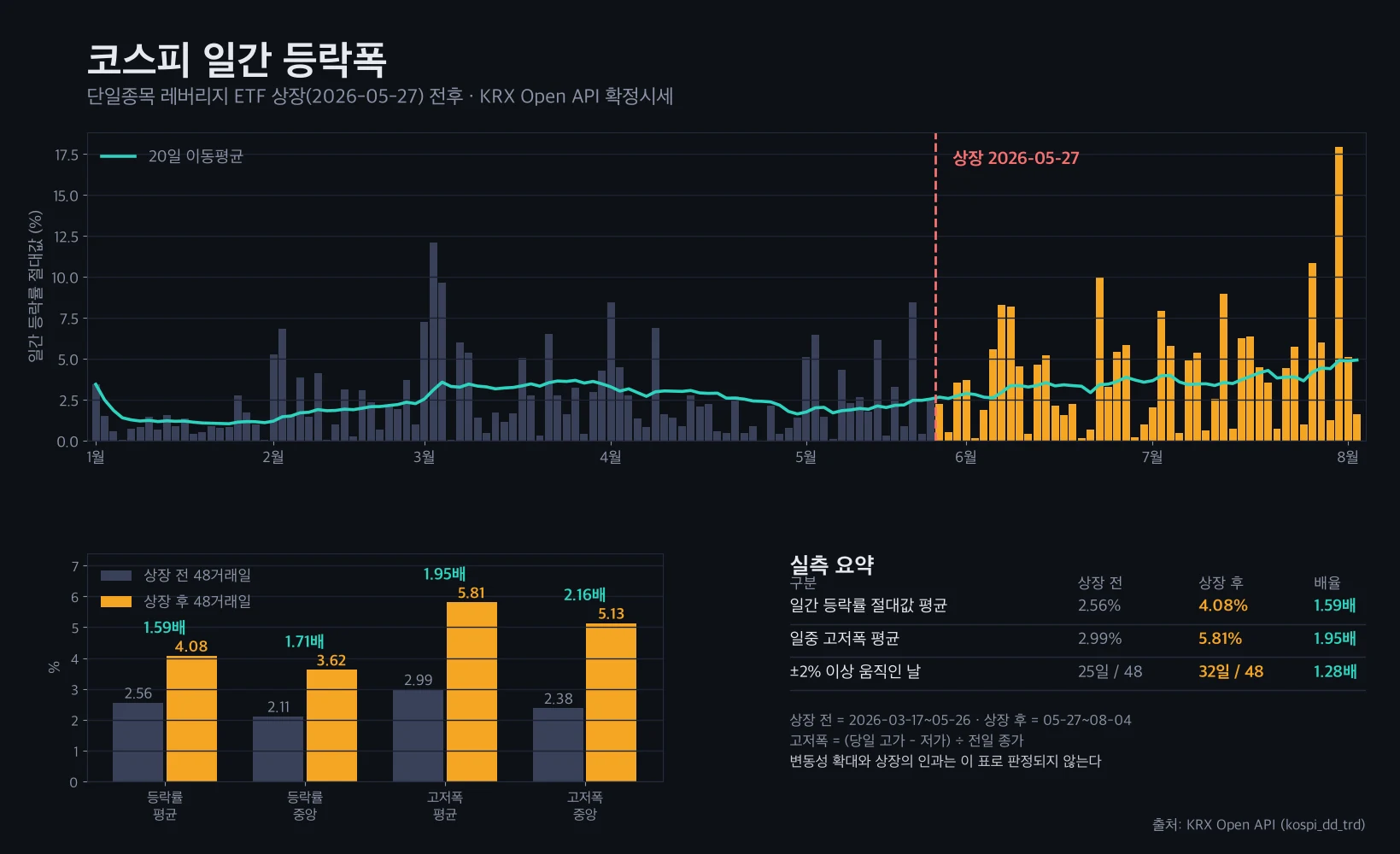
KRX Open API — Measuring KOSPI Daily Swings Yourself
The KRX Open API is the Korea Exchange's public data service at openapi.krx.co.kr. Put your key in an AUTH_KEY header, pass one date as basDd, and you get that day's open, high, low and close as json. Applying takes the four steps printed on the site: sign up and request a key, browse the service list for the API you want, file a usage request, then build once approved. Almost everyone stalls here, because key approval and per-service usage approval are separate gates and a key alone returns 401 on every call. With that key, thirty lines of standard-library Python produce the mean, median and extreme-day count for any window. Run it around 27 May 2026, when single-stock leveraged ETFs listed, and the 48 trading days on either side show mean absolute daily change rising from 2.56% to 4.08% and mean intraday range from 2.99% to 5.81%. Whether the numbers grew and what made them grow remain separate questions, and this data does not settle the second.
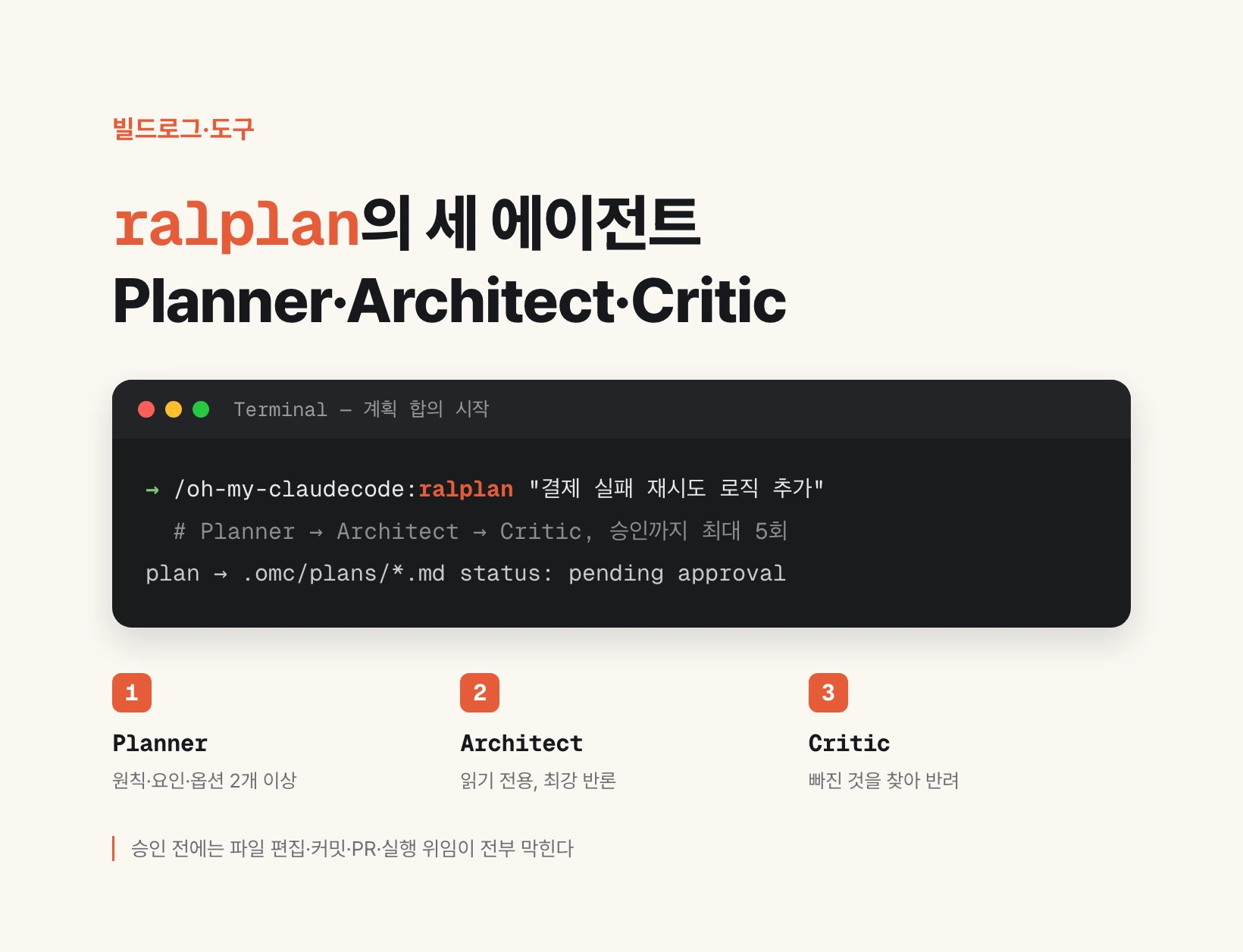
The Three Agents of ralplan — Planner, Architect, Critic
ralplan is the consensus planning workflow inside oh-my-claudecode (OMC), an open-source harness. Type /oh-my-claudecode:ralplan "task description" and three agents step in before any code does. Planner is forced to produce a plan with 3 to 5 principles, 3 decision drivers, and at least two viable options. Architect reviews it with Write and Edit blocked outright, so it can only produce the strongest counterargument. Critic does not grade what is written but hunts for what is missing, then returns approve, iterate, or reject. The three always run in that order, and a rejection sends the plan back to Planner and then back to Architect, up to five rounds. Throughout, the plan stays marked pending approval, with file edits, commits, PRs, and execution handoff all blocked. Installation is one line: /plugin install oh-my-claudecode or npm i -g oh-my-claude-sisyphus@latest, followed by /oh-my-claudecode:omc-setup.
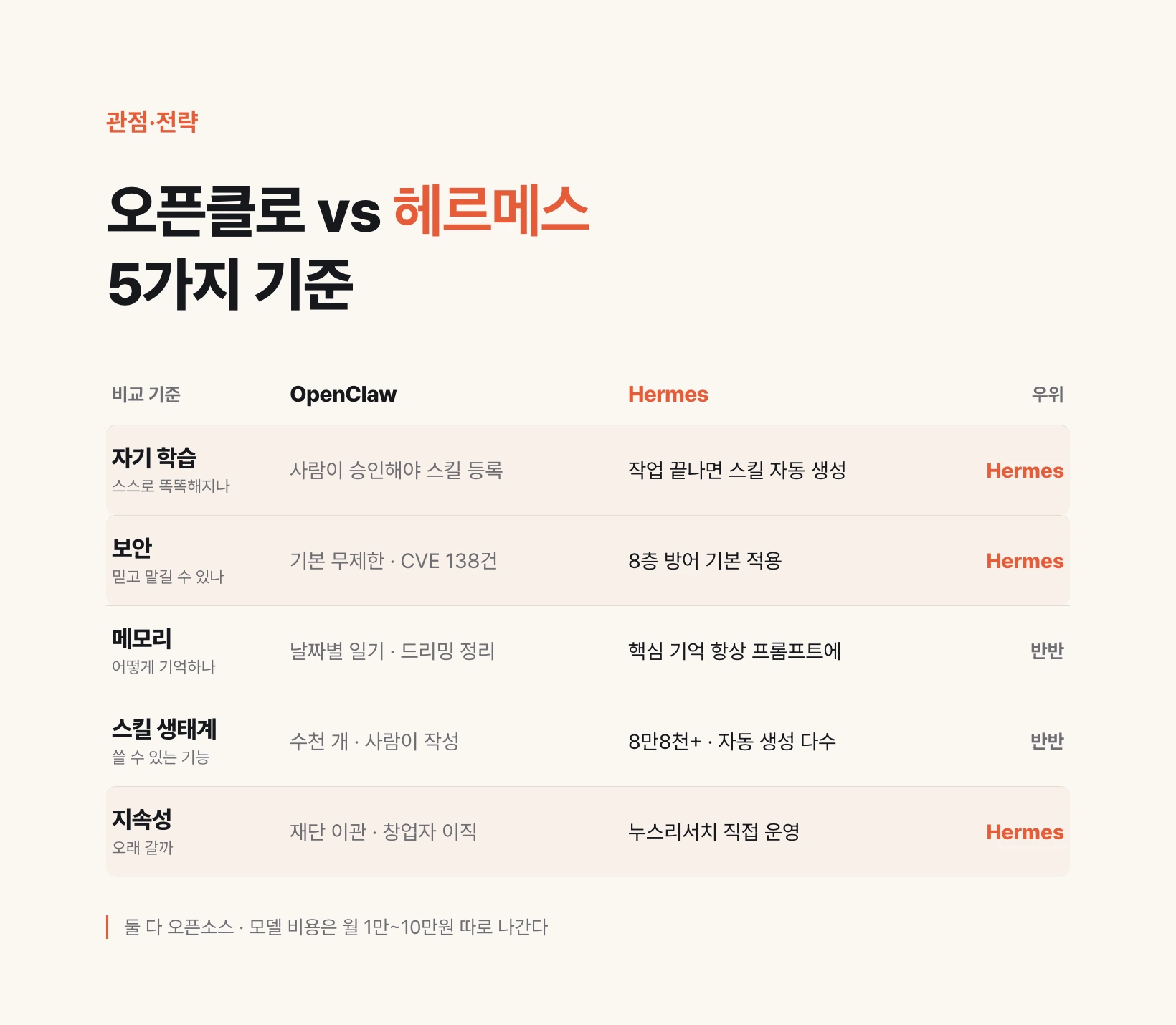
OpenClaw vs Hermes — Which One Should You Install?
OpenClaw and Hermes are both open-source AI assistants: you type an instruction into Telegram or Slack, and they create files and write code on your own machine. What they can do is nearly identical. Five things actually separate them — self-learning, security, memory, skill ecosystem, and longevity — and Hermes leads on the first two while memory and skills are a draw. Work alone and care about security, take Hermes; enjoy assembling things yourself and need a transparent team record, take OpenClaw.
Buzz — Running a Team of AI Agents on the CLIs You Already Have
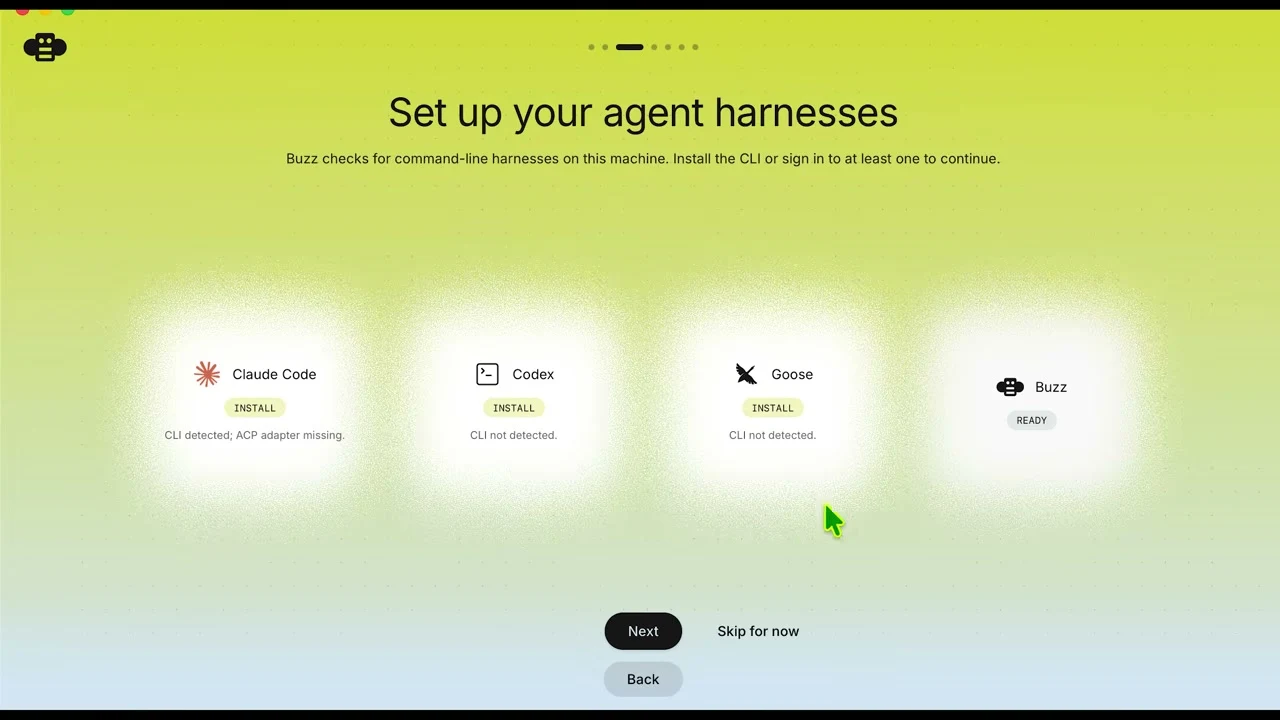
Buzz is an open-source collaboration app released by Block (the company Jack Dorsey founded) in July 2026, where people and AI agents work in the same channels. It looks almost exactly like Slack, with one decisive difference: it does not call model APIs. It attaches to the command-line tools already installed and signed in on your machine — Claude Code, Codex, goose. That means you can run several agents at once inside the subscription you already pay for, at the cost of keeping that computer awake. Getting started takes six steps: download and install the desktop app, create and safeguard your identity key, connect at least one CLI on the 'Set up your agent harnesses' screen, create a community, create agents with a name, instructions and model, then create a channel, invite the agents and address one with @. Agents hand work to each other by reading and writing the same channel, and every command they run asks for your approval first.
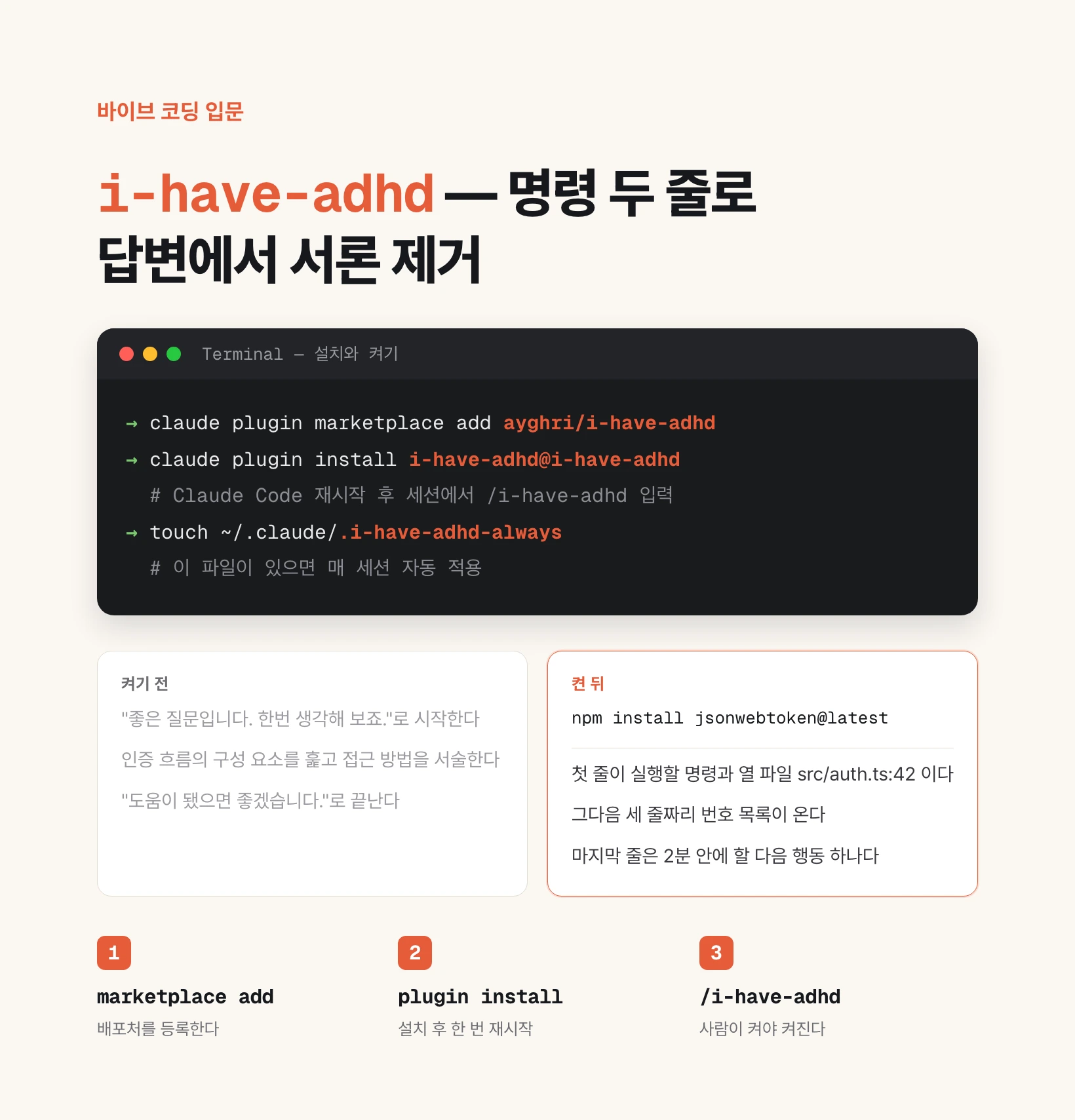
i-have-adhd — the plugin that strips the preamble out of AI answers
Two commands. In Claude Code, run `claude plugin marketplace add ayghri/i-have-adhd` to register the marketplace and `claude plugin install i-have-adhd@i-have-adhd` to install it, then type /i-have-adhd in a session. From that point the shape of every answer changes: the preamble is gone and the first line is a command or a file path. Multi-step work comes as a numbered list, and the last line is one next action you can do in under two minutes. To have it on in every session, run one more line: `touch ~/.claude/.i-have-adhd-always`. It was built by Ayoub G. (github.com/ayghri) and released under MIT. The name says ADHD, but no diagnosis is required — if long answers keep burying the one line you needed, it does the same thing for you.
How a Notion engineer reads code
Not by reading the diff line by line, but by reading an explanation the agent wrote and then taking a quiz on it. That is Geoffrey Litt's daily practice at Notion, and he has published the tool: the explain-diff skill. Install it and every code change can be turned into a single HTML document ordered background, intuition, code walkthrough, and a five-question multiple-choice quiz. Installation is two commands: download explain-diff-html.md from the gist into ~/.claude/skills/explain-diff-html/SKILL.md. After that you simply say "explain what changed on this branch." The result is written outside your repository with today's date at the front of the filename. A variant that builds a Notion page instead (explain-diff-notion.md) sits at the same address. One operating rule holds it together: if you cannot pass the quiz, you do not send the code to your team for review.

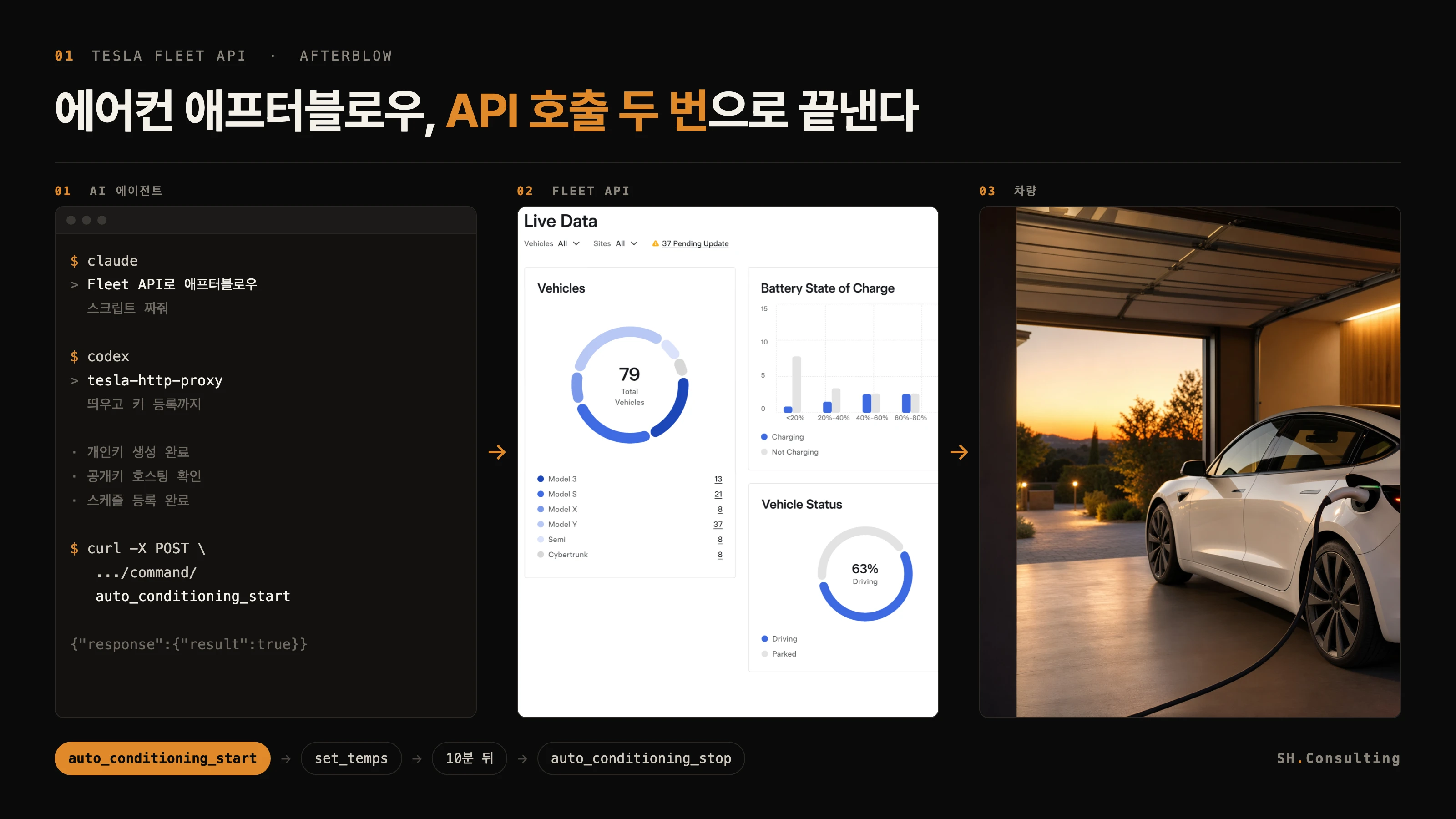
Can you control a Tesla with code? Automating afterblow with the Fleet API
Yes. Tesla runs an official vehicle control interface called Fleet API, and once an owner connects their account, a program can lock doors, open the trunk, run climate control, manage charging, send navigation destinations and toggle sentry mode. The most practical first automation is afterblow: running the fan briefly after you park so the air conditioning evaporator dries out. Most of that damp summer smell is moisture left on that evaporator, so the effect is immediate — and there is no button for it in the car's menu, which is why a subscription service exists selling this one feature. Building it is simple: on arrival call auto_conditioning_start and set_temps, then call auto_conditioning_stop ten minutes later. What actually blocks people is not the code but the registration path — register a developer app, host your public key at a fixed path on your own domain, and run a proxy that signs commands. That is exactly the kind of work to hand to a coding agent like Claude Code or Codex, and the cost stays inside the ten dollar monthly credit every account receives.
How to verify a YouTube investment claim with a backtest — from transcript to free price APIs
When a YouTube video says "this is the bottom," there is a third option besides believing it or not: turn the claim into a numeric rule and run it against past data. That is a backtest. You need exactly two tools — yt-dlp, which pulls a video's subtitles into text, and public APIs that hand you daily closing prices with no signup and no payment (Nasdaq for US names, Naver Finance for Korean ones). Three steps. Pull the transcript so the claim exists as text. Translate plain language — "it crashed and bounced, so this is the bottom" — into conditions and numbers: "if a stock is down more than 35% from its 60-day high and closes up 20% or more in a single day, buy at that close." Then run the rule across ten years. When you read the result, two things are mandatory: a baseline (what if you had simply held the same names?) and the median rather than the mean. Without a baseline, every rule looks good in a rising market. Read only the mean and you will mistake a handful of outliers for skill. And if a claim cannot be written as numeric conditions at all, that is not a failed test — it is an unverifiable claim, and identifying it as such is itself the result.
What are npm run dev and localhost? — Running your own computer as a server
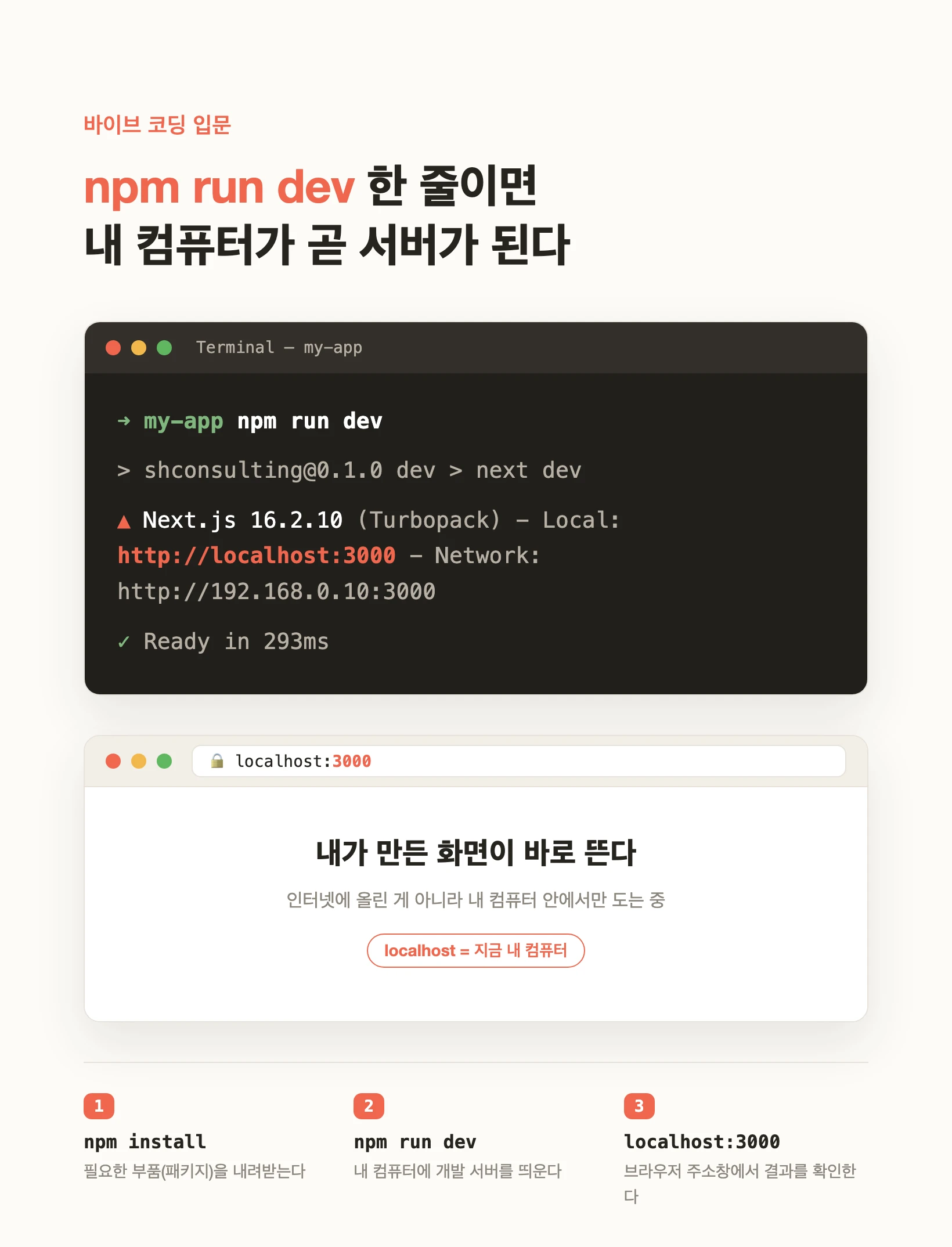
npm run dev is the command that starts a development server on your own computer — a program that turns the code you wrote into a live web page. When you run it, the terminal prints 'Local: http://localhost:3000'. That localhost is not someone else's server; it is the name for your own computer, right now (127.0.0.1 in numbers), and the 3000 after it is the port, the specific door this app uses. So the screen you open at that address isn't on the internet — it runs only inside your machine and only you can see it. npm is the tool that runs that command (Node Package Manager): it downloads the parts (packages) listed in your project's package.json and runs the real command wired to a run-name like 'dev' or 'build'. For a project you just cloned, the order is always three steps — npm install to fill in the parts, npm run dev to raise the server, and localhost:3000 in the browser to check it. Deployment to the internet is the story after all of that works.
When do you need on-premise AI, and what does it cost
On-premise AI means putting the model on your own hardware and running it inside your own network instead of calling someone else's API. Two things drive the need. First, regardless of whether your data is trained on, the path it travelled still stays with someone else. Second, when a security incident hits, frontier models may refuse the analysis at the guardrail. As for cost, running a frontier-class open-weight model means 1.4TB for the raw weights alone, an H200 cluster on the order of one 72-card rack, about 300 dollars an hour priced as cloud rental, or roughly 5 billion won to buy the hardware. But that math only works if workload arrives without pause and keeps the GPUs running flat out. So the working answer is not moving everything: keep only what must not leave inside on open weights, and leave the rest to frontier APIs.
Claude's Chat, Cowork, and Code — Which One and When
Claude has three products. Chat is an intern, Cowork is a team lead, Code is Einstein. All three talk, produce files, and connect to tools, so they look alike from outside. One thing separates them: where the work stops. Chat is done the moment it hands you an answer, Cowork does not stop until the goal is met, and Code makes what did not exist. The signal that you are in the wrong mode is unmistakable — if you are copying Chat's output into a document and splicing fragments, you are doing by hand what you should have delegated.
What is Impeccable and how do you start? — Planting design rules inside your AI coding tool
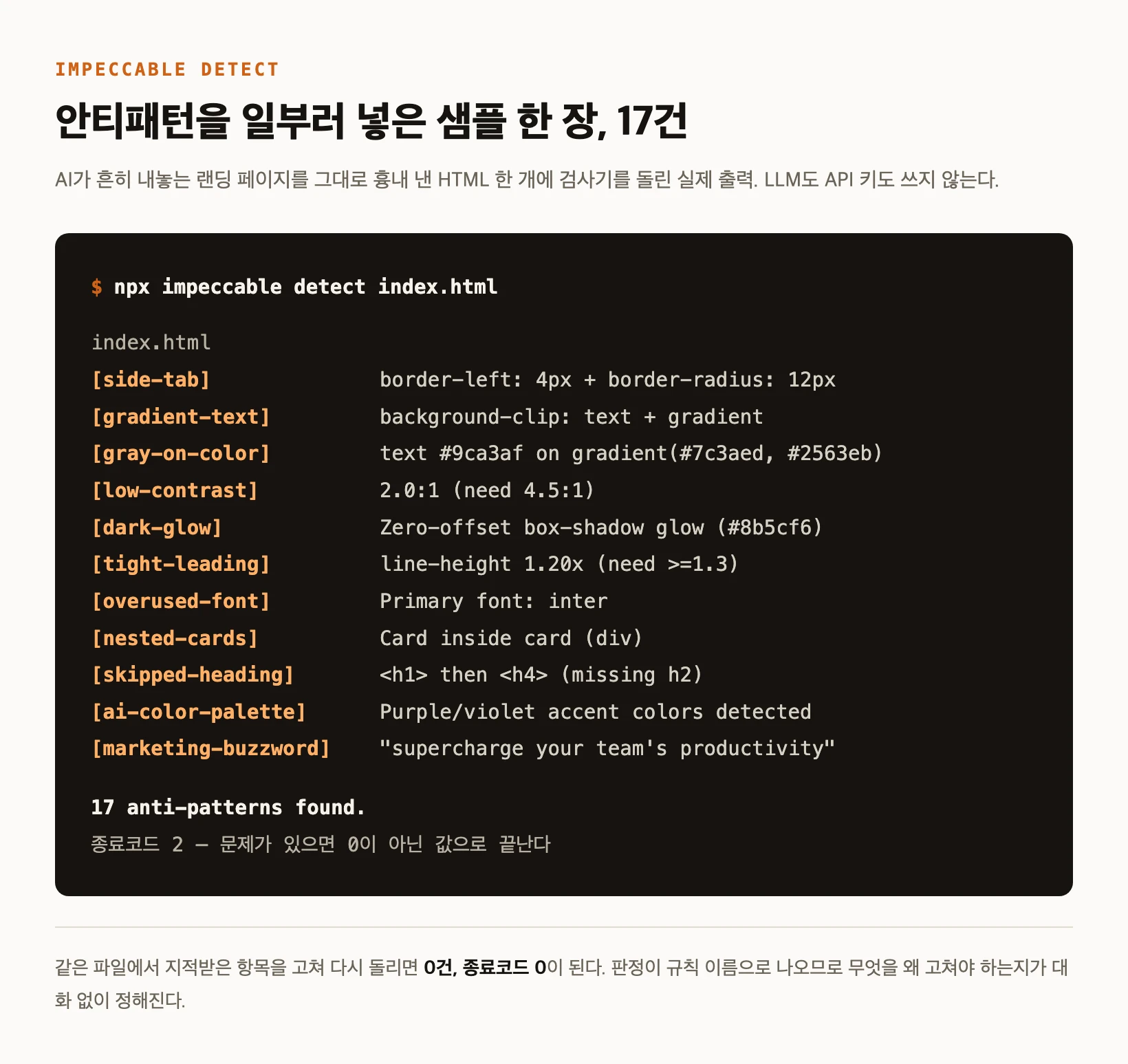
Impeccable is an open-source tool that plants the design guidance an AI coding agent should read directly into your project. It started from the frontend-design skill Anthropic published, added 23 commands and 60 deterministic detector rules, and is released by Paul Bakaus under Apache-2.0. Getting started takes two lines. Run npx impeccable install in the project root and it finds the AI coding tools already on the machine, lists them, and asks whether to install for this project only or for the whole machine. Then run /impeccable init once inside the tool: it asks whether the surface is brand or product, writes PRODUCT.md and DESIGN.md, and every later command reads those two files first. Actual work is directed by command name — audit for checks, critique for hierarchy and readability review, polish for the final pass, bolder and quieter for intensity, distill for stripping down — and the one you use daily can be pinned with /impeccable pin audit to get /audit. You do not need an agent at all: npx impeccable detect runs the rules with no LLM and no API key and exits with 2 when it finds something and 0 when it does not, which is enough to use as a CI gate. Run against a single sample HTML page written with the usual tells it reported 17 findings; fixing only what it flagged brought it to 0.
Why do AI-built screens all look alike? — The repeating tells and what to do instead
What makes AI-generated screens look cheap is not a matter of taste; it is a list. Models largely learned from the same SaaS templates strewn across the public web, so asking for a screen with no further direction produces the same choices across different models and projects. The frequent ones: a thick colored stripe down the left edge of a card, a gradient laid over a heading, a background flowing purple to blue, gray text on a colored background, a colored glow spread evenly around a shadow, a card nested inside a card, a tiny uppercase label above a heading, and Inter-family type. Filler like streamline and supercharge rides along. The open-source tool Impeccable gave these tells rule names and turned them into a checker that runs without an LLM. The fixes are plain: delete the stripe, make the heading solid, use white or a darker shade of the background instead of gray, replace nested cards with spacing and a hairline. Verification is a command rather than an eye. A single sample HTML page written with those tells reported 17 findings; fixing only what was flagged, leaving the layout structure alone, brought it to 0.

What does it take to put design checks in CI? — A gate made from an exit code
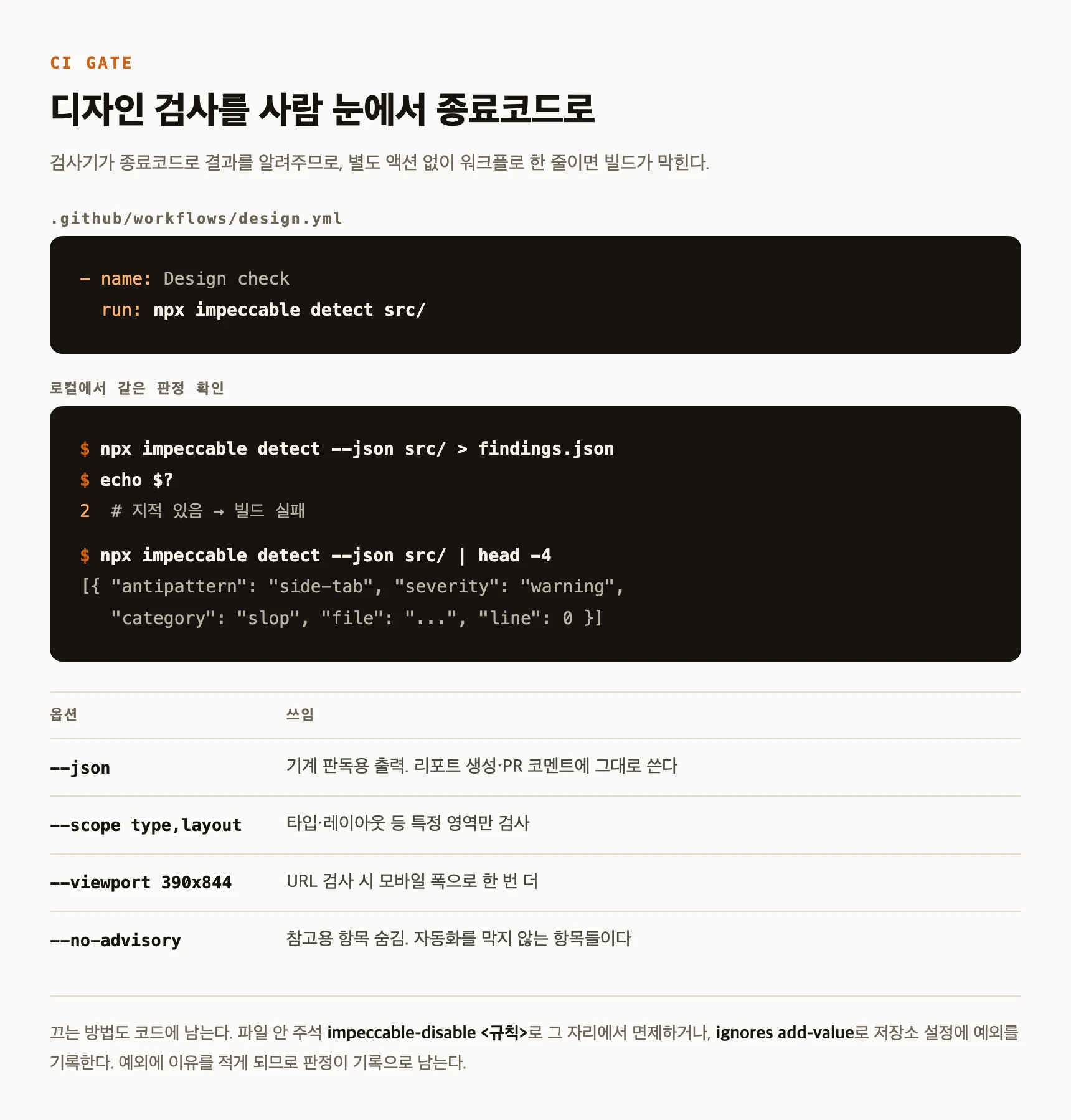
The point is moving design review out of a person's eyes and into an exit code. Lint blocks bad code, but a screen still needs someone to look at it. Impeccable's detect command runs its rules with no LLM and no API key and reports the result as an exit code: 2 when it finds something, 0 when it does not. So one line in a CI workflow — npx impeccable detect src — becomes a gate with no dedicated action to install. How it inspects depends on the target: HTML gets static analysis including linked CSS, other files such as JSX and CSS get pattern matching, and a URL is opened in a real browser so the rendered screen is read. A clean source scan can therefore still miss items a URL scan catches, and pointing it at the preview deployment closes most of that gap. Four options cover everyday use: json, scope, viewport and no-advisory. For exceptions, an impeccable-disable comment waives a finding where it lives and ignores add-value records it in the repository config — either way a reason gets written down, so the judgment survives as a record.
How do you tell whether a backtest return is real skill? Time in market and exposure-adjusted alpha
Put time in market next to the return, then subtract time in market times the buy-and-hold return from the strategy return. What remains is the part market exposure does not explain, which is alpha. Time in market is the share of trading days on which the backtest actually held a position. Without it, a return alone cannot tell you whether the strategy earned money by being right or simply by being absent. Running five widely taught technical setups across sixteen names — single stocks, leveraged ETFs, and index ETFs — makes the difference plain. None of the five beat buy-and-hold, and the best win rate was 34.5 percent. How far the asset itself rose over the window and the strategy's excess return moved together at a correlation of minus 0.945: when the asset rises the strategy loses, when it falls the strategy wins. The cause was exposure. Over one-year windows the setups held positions 23.8 percent of the time and sat in cash for the rest. Exposure-adjusted alpha came to a median of minus 5.73 percentage points, with a regression intercept of minus 0.52 percentage points — effectively zero or below. This piece lays out the procedure and the formulas so the check can be reproduced from scratch.
What do you have to specify before an AI agent can backtest your trading rule?
A backtest applies your trading rule to past prices and calculates what your balance would be if you had actually traded that way. Pull daily open, high, low and close from the Toss Securities Open API candle endpoint, describe the rule in plain language to a terminal AI agent like Claude Code or Codex, and a trade log and return figure come back within minutes. What decides the result, though, is not the rule but the assumptions you never stated. Pin down four things — when the condition is evaluated, what price it fills at, what trading costs apply, and which data window you use — or the agent will silently pick whatever seems most plausible, and that choice becomes your performance table. Running the same rule over the same data on a 3x leveraged ETF and changing only the exit fill assumption moved a five-month return from 15 percent to 95 percent.
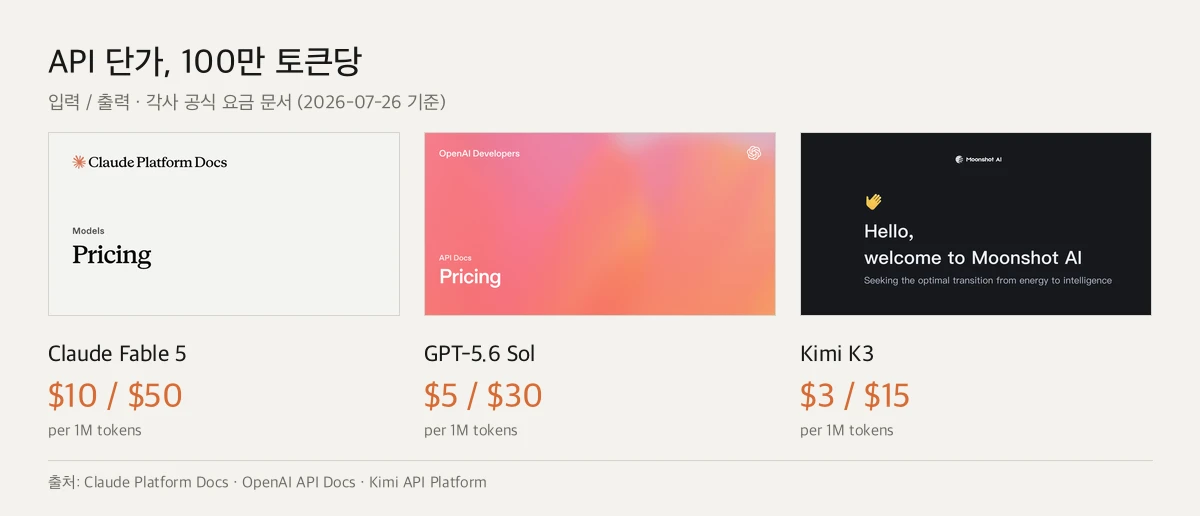
Fable 5, GPT-5.6 Sol, Kimi K3 — does a 3.3x price gap mean a 3.3x cost gap?
No. Per million tokens the official rates are $10 input and $50 output for Claude Fable 5, $5 and $30 for GPT-5.6 Sol, and $3 and $15 for Kimi K3, putting the most and least expensive exactly 3.3x apart on both. What you actually pay is decided by three things the table leaves out. First, how many tokens the same text becomes: Anthropic states that Claude 4.7 and later models use a newer tokenizer producing roughly 30% more tokens for identical text, so the billed quantity grows while the rate stays put. Second, whether the rate changes with length: on Sol, input above 272,000 tokens bills the entire request at 2x input and 1.5x output, an effective $10 and $45 per million, while the Fable 5 and Kimi K3 tables carry no length tiers at all. Third, whether the result arrives right the first time, since every retry multiplies the listed rate; in a review that gave all three the same prompt exactly once, Fable was clearly ahead on physics handling and visual detail while Kimi and Sol landed close to each other. Cache-hit discounts are identical at all three, exactly 10% of the input price, so caching lowers everyone together and closes none of the gap.
What is capability overhang, and what should an organization do about it?
Capability overhang describes what happens when the range of work an AI tool can handle expands every few months while the skill of the people using it grows far more slowly, leaving a widening band of unused capability. One conclusion follows: hand out the same tool to everyone and the productivity gap between strong users and average users does not shrink — it grows. So the real task of AX inside an organization is not rolling out a tool but managing that gap. The metric to watch is not adoption rate but distribution.
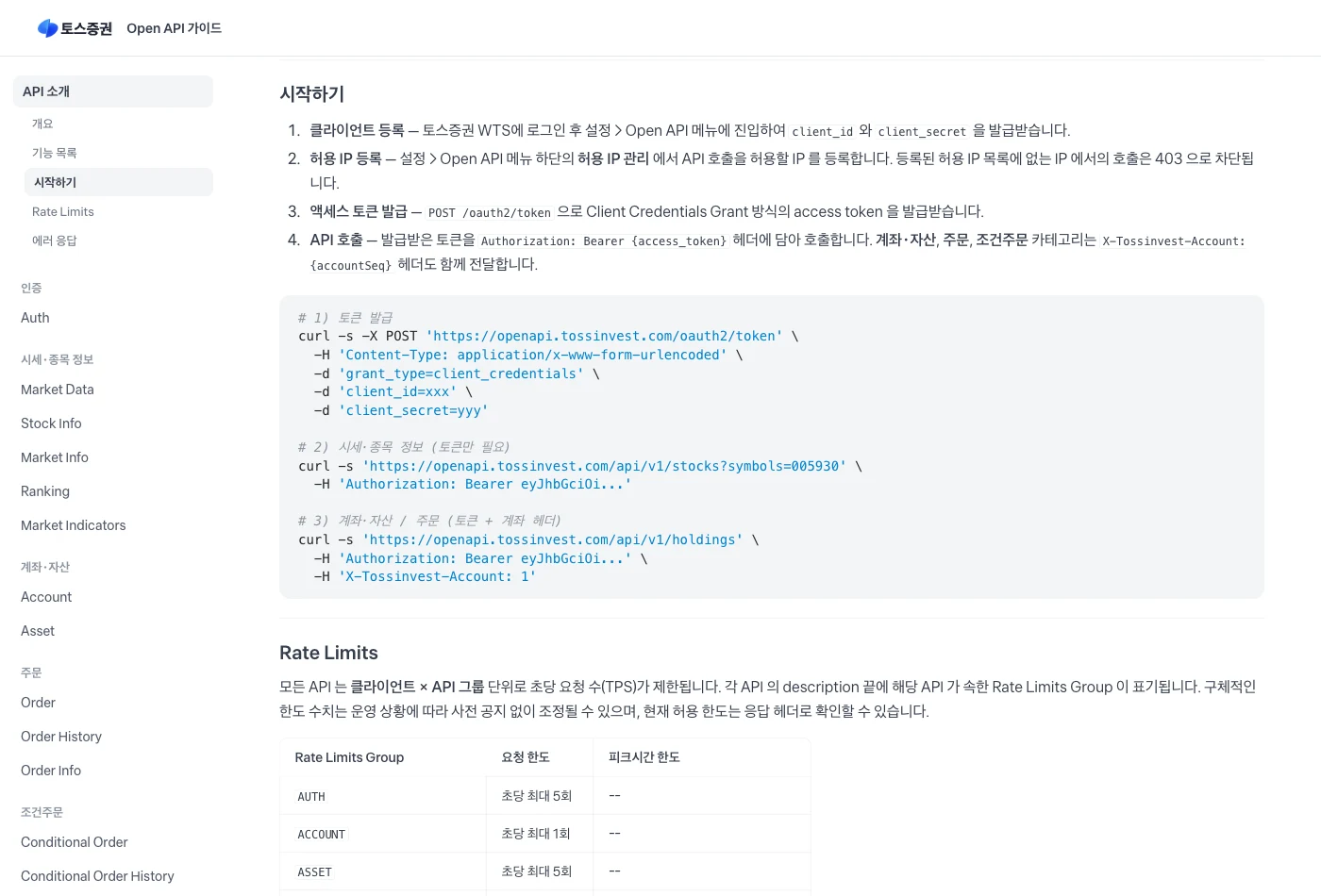
What does it take to let an AI trade stocks through the Toss Securities Open API?
The Toss Securities Open API is a REST API that covers market data and stock information, accounts and holdings, order creation, modification and cancellation, and conditional orders that watch a price and fire automatically once it is hit. You log in to the Toss Securities WTS, issue a client_id and client_secret under Settings and then Open API, and register the IP you will call from in the allowed list. Add a terminal AI agent such as Claude Code or Codex and you can automate reads and orders by describing your trading rule in plain words instead of writing the code yourself. But the moment reads work, orders work too, so a human has to put gates in front of live orders first: dry-run defaults, an explicit execution flag, an amount ceiling and an idempotency key.
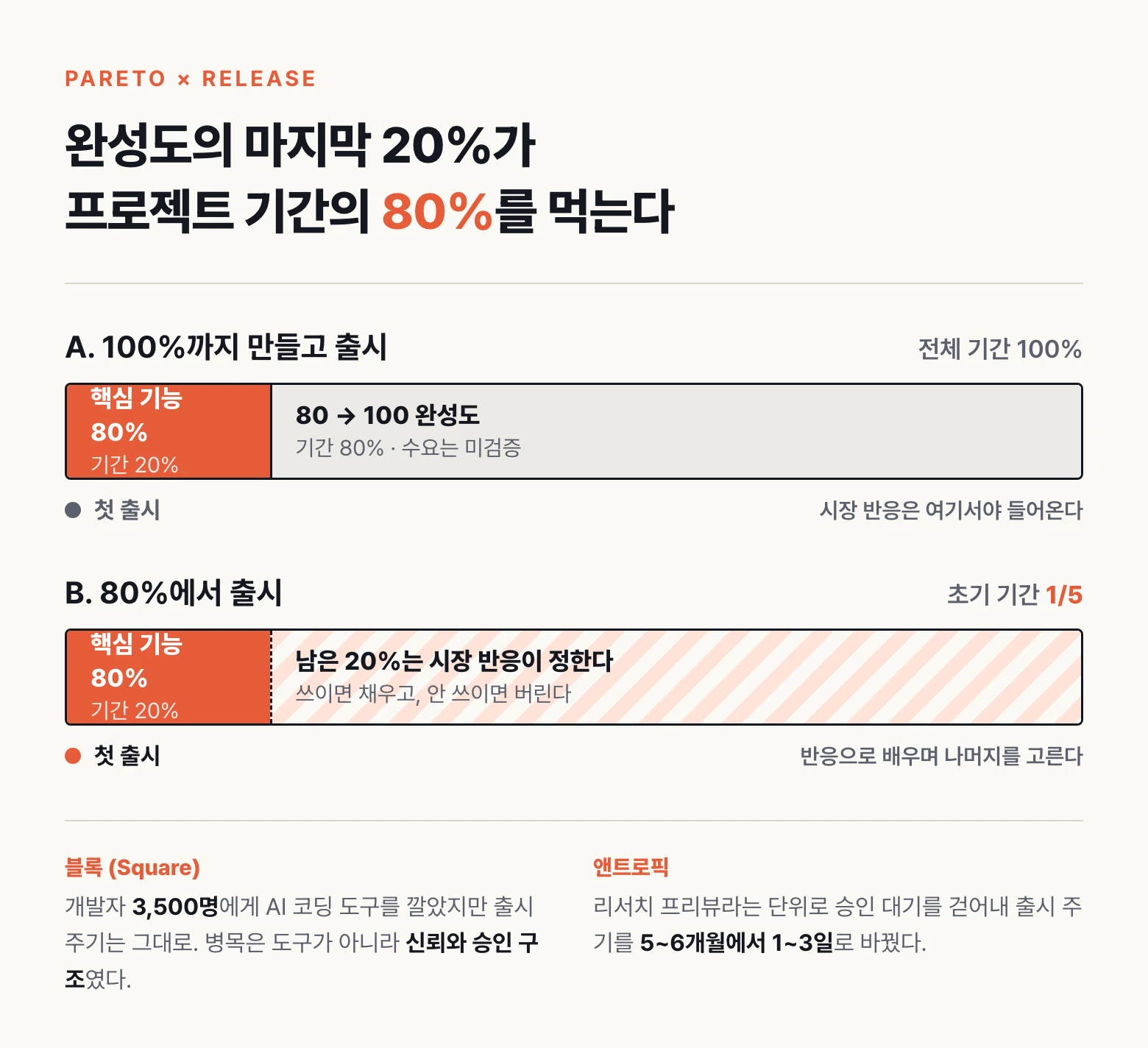
Why doesn't an organization with every AI tool get any faster?
Because speed is set by completion standards and approval structures, not by tools. Block, the fintech behind Square, put AI coding tools in the hands of most of its 3,500 engineers, yet its release cadence barely moved. The bottleneck was never missing tools; it was trust in AI-written code and the approval layer sitting on top of it. Anthropic attacked the same problem from the other side, inventing a release unit called the research preview that removed approval waits and cut its product cycle from five or six months to one to three days. Read through Pareto, the rule falls out: the core 80 percent of features takes 20 percent of the schedule, and the remaining 80 percent of the schedule goes to lifting that 80 to 100 — a stretch of polish the market has almost never been asked about. Ship at 80, let market response decide the last 20, and the initial project shrinks to a fifth of its length.
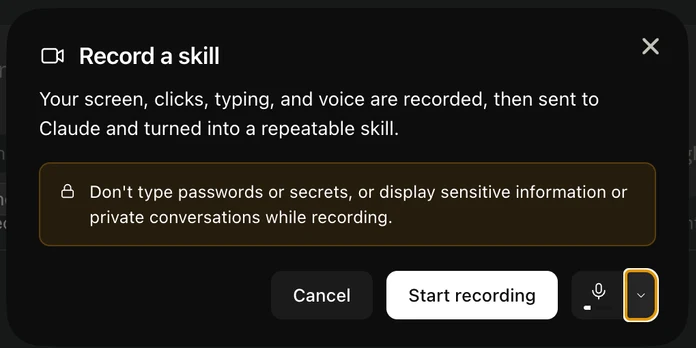
What is Record a skill, and how do you use it?
Record a skill is a Claude desktop app feature that captures your screen, clicks, typing and voice together, then turns that session into a 'skill' Claude can run again. Instead of describing a procedure in a prompt, you demonstrate it once the way you normally do it. Claude summarises what the workflow does, asks for the folder and connector permissions it needs, and saves a reusable skill. After that, one sentence — 'do this week's too' — repeats the job. The limit is that everything visible on screen during a recording is sent, so work that exposes passwords, account numbers or private conversations is not a fit.
How do you write a CLAUDE.md that Claude actually follows?
CLAUDE.md is not enforced configuration — it is a set of instructions loaded alongside every session. So the more you pile into one file, the more the rules compete with each other, burying the ones that matter under trivial ones, and Claude follows it less well. Five ways to make it stick. First, ask whether CLAUDE.md is even the right tool — a hard rule like 'never push to main' belongs in a pre-tool-use hook, not an instruction (the hook actually stops the action when Claude tries it). Second, CLAUDE.md lives in four places — managed policy (org), user (all your projects), project (shared with your team), local (just yours in this repo, git-ignored). They all load together, so put personal, temporary decisions in local. Third, split with @path imports — but imports expand inline at launch, so they help you organize without reducing context. Fourth, phrasing decides obedience — be specific and checkable ('new API routes in src/api/handlers, one per file', not 'follow best practices'), and name the replacement ('use named exports', not 'don't use default exports'). Emphasis is a budget: spend IMPORTANT and YOU MUST only on the two or three rules that hurt when broken. Fifth, keep it under revision — when Claude does the wrong thing, treat it as a bug report against CLAUDE.md and tell it to add the rule. Treat the file like production code and delete any line you can't justify. The leaner the file, the more of it Claude follows.

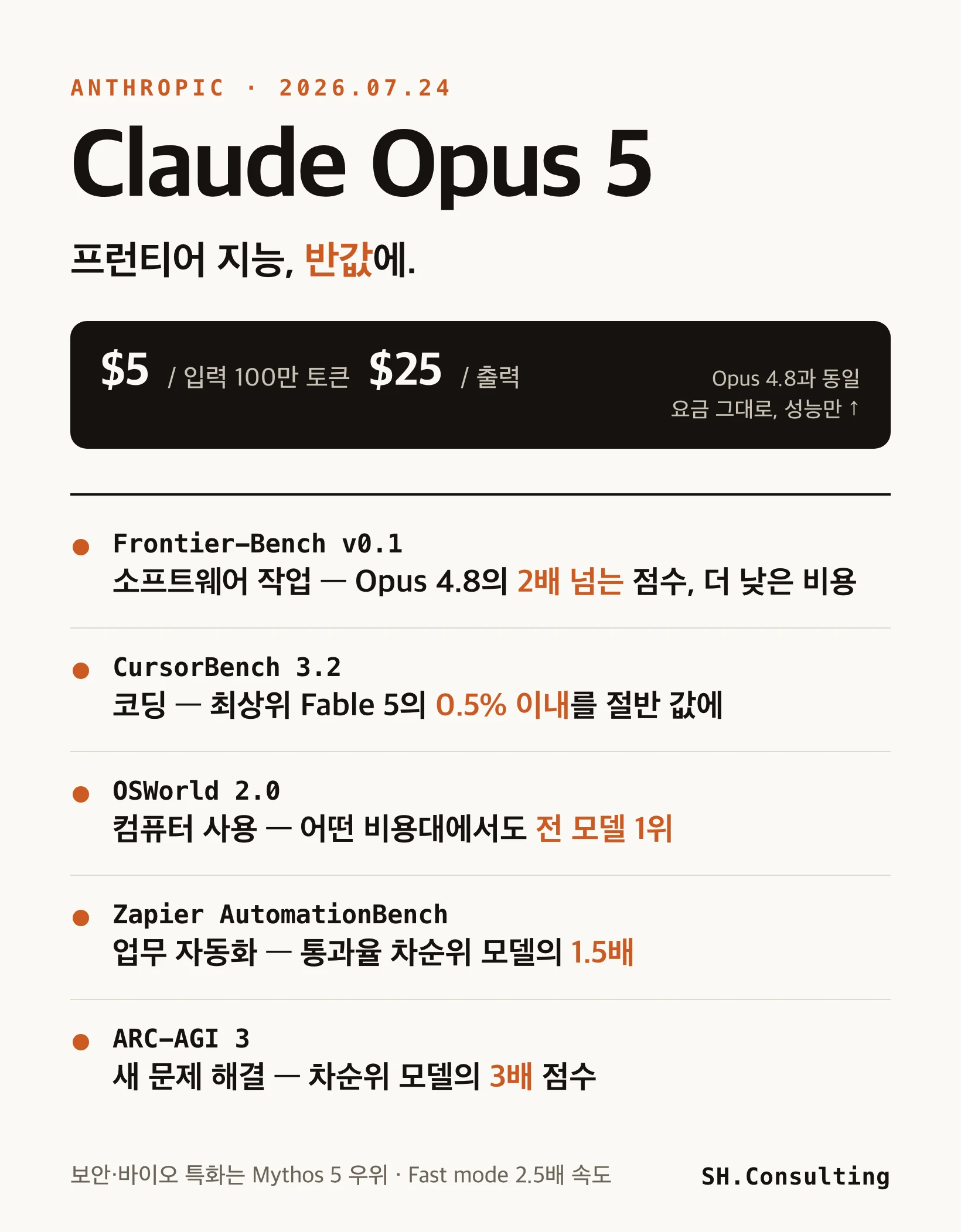
What is Claude Opus 5, and what changed?
Claude Opus 5 is a top-tier general-purpose AI model released by Anthropic on July 24, 2026. The headline is frontier intelligence at half the price: it comes close to the top model, Claude Fable 5, at half the cost. It is priced at $5 per million input tokens and $25 per million output — the same as the previous model, Opus 4.8 — but performance jumped, setting new highs on coding, knowledge work, computer use, and business-automation benchmarks. It still trails a dedicated model, Mythos 5, in specialized areas like security and biology.
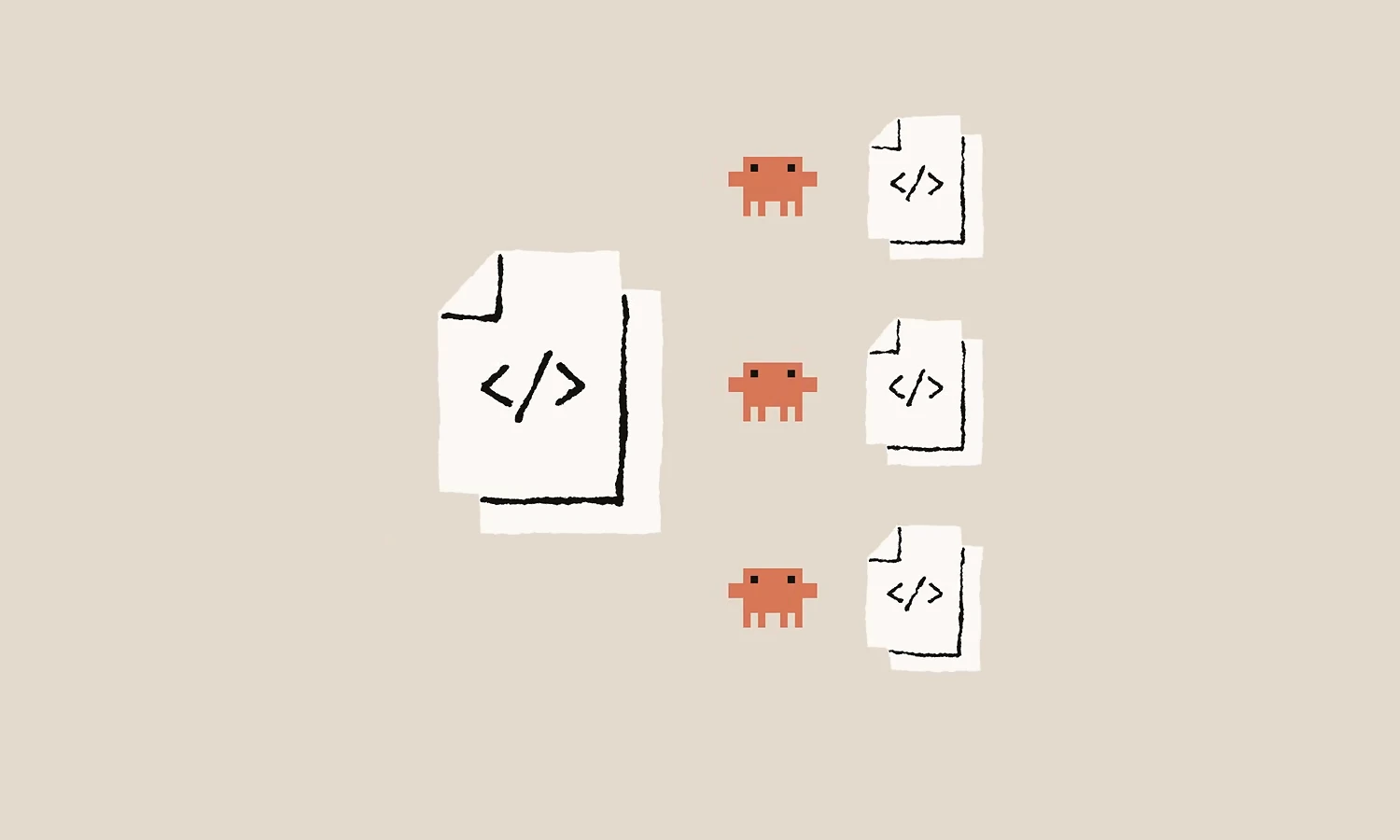
How do you steer Claude Code through hours-long sessions? — Plan, Compact, Rewind, Goal, Loop, Worktree
A short task you can just watch finish, but a long one — a refactor across a dozen files, a new feature that takes hours — isn't something you leave alone; it's something you steer. Two habits carry it: scope the work before Claude starts, and steer it while it runs. Six tools make that possible. Plan Mode researches in read-only mode and hands you a plan; read and refine it, and there's less room for hiccups during execution. Compact summarizes the conversation into a new context and deletes the old, freeing the context window — and adding instructions to the command tells Claude what to keep, so nothing important is dropped and it doesn't drift. Rewind takes you back to a checkpoint (double-tap escape on an empty prompt) to restore code, conversation, or both, or to summarize everything before or after that point. Goal sets a completion condition: describe what done looks like and Claude keeps working across turns until a fast evaluator confirms it, instead of stopping the first time it thinks it's finished (the evaluator only reads the transcript, so the condition must be checkable from Claude's output). Loop runs a prompt on an interval to watch external state like a CI run or a deploy and act when it changes. Worktrees give each of several agents an independent file tree so they don't fight over the same repo. Scope first, then steer, and you can trust a long run without babysitting it.
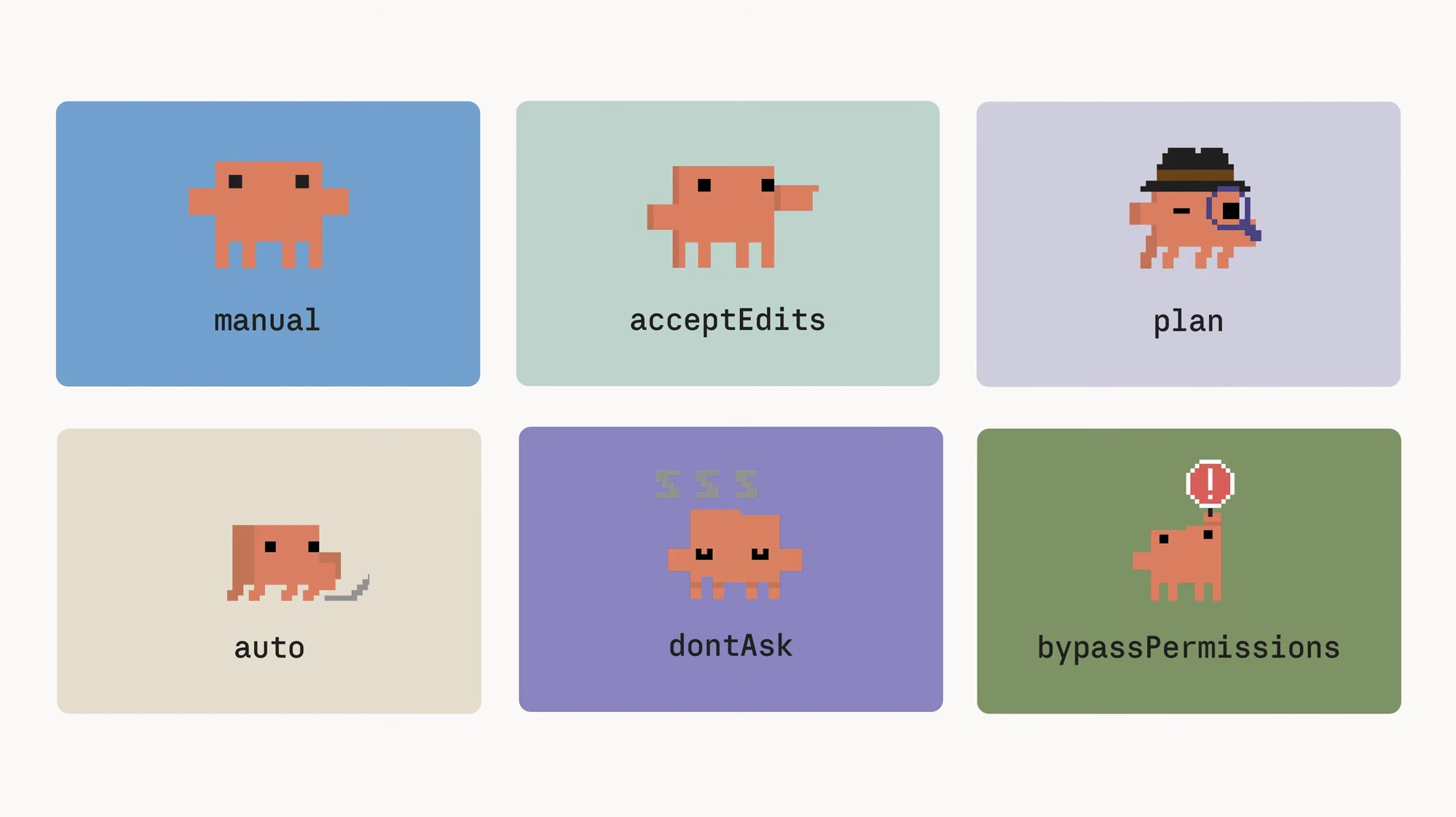
What are Claude Code permission modes, and when is it safe to go hands-off with auto?
A permission mode decides once what Claude Code is allowed to run without asking you every time. There are six. manual reads only and asks for everything else. acceptEdits proceeds without prompting for reads, file edits, and common file-system commands, so you review afterward in one pass. plan reads and researches to propose a plan but does not edit. auto runs everything while a separate classifier model reviews each action just before it executes and blocks only the dangerous ones — this is the hands-off default. dontAsk allows only pre-approved tools and auto-denies the rest with no prompt, which fits CI and overnight batches. bypassPermissions skips all checks — the same as 'dangerously-skip-permissions' — so run it only inside an isolated container or VM. Press shift+tab to cycle manual → acceptEdits → plan → auto, and the status bar shows your current mode. The auto classifier guards intent but cannot tell whether the code is correct, so pair it with a stop hook that runs your tests: the classifier watches intent while the hook confirms correctness. In the end, decide how far to step back based on the job, not on nerve, and match the mode to it.
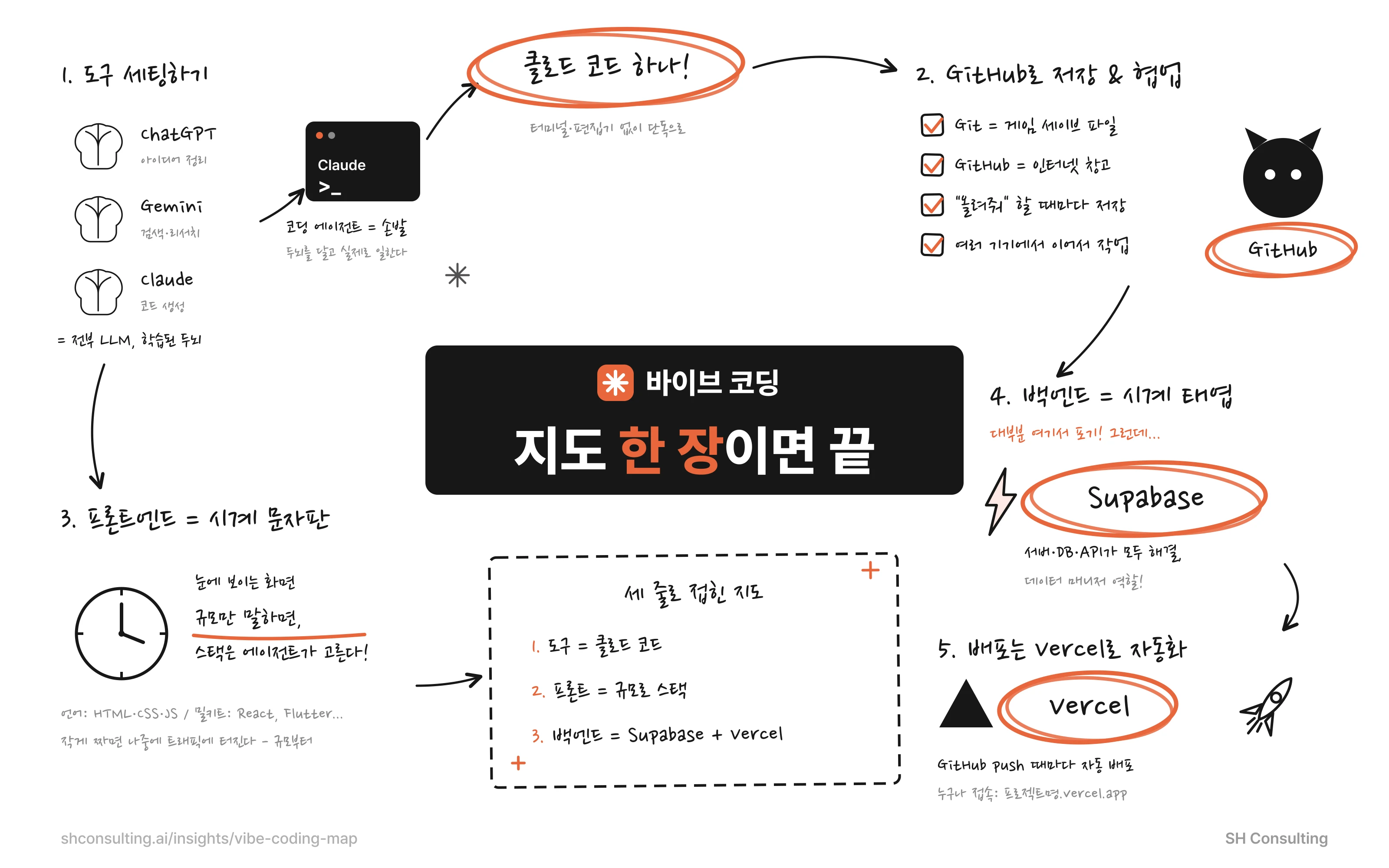
What is vibe coding, and how does the whole path from tools to deployment fold into a single map?
Vibe coding means building a website or service by telling an AI what you want in plain language, instead of typing every line of code yourself. Beginners feel lost not because any single tool is hard, but because they have no picture of how the pieces fit together. That whole picture folds into one map. First, the tools: an LLM like ChatGPT or Claude is a trained brain, a coding agent is the hands that actually create and edit files with that brain attached, and these days a single tool — Claude Code — plays this role on its own, with no separate terminal or editor. Second, the frontend (the screen you see): you just tell the agent the rough scale of your service and it picks a matching stack. Third, the backend (the server behind the screen that stores and processes data): this is where most people quit, but Supabase (your data manager) and Vercel (your deployment manager) cross that wall for you. Git and GitHub sit in between, saving your work and storing it in an online warehouse. In the end the map folds into three lines: the tool is Claude Code; for the frontend, state the scale and hand off the stack; for the backend, Supabase and Vercel.
What is Scrapling, and why doesn't its scraper break when a site is redesigned?
Scrapling is an open-source Python framework for scraping web data (BSD-3 license, 70k GitHub stars). Its defining feature is the adaptive selector. A normal scraper pulls data by pointing at a spot on the page — 'grab the element with this class name' — so when the target site is redesigned and the class names or structure change, those rules all miss and you get empty values. Scrapling stores each element's fingerprint on the first run, and on the next run, with the adaptive option on, it relocates the moved element by similarity. So a human no longer has to rewrite selectors when the site changes. On top of that, one library bundles anti-bot bypass for walls like Cloudflare, a large-scale concurrent crawler, and a built-in MCP server you can attach to Claude or Cursor.
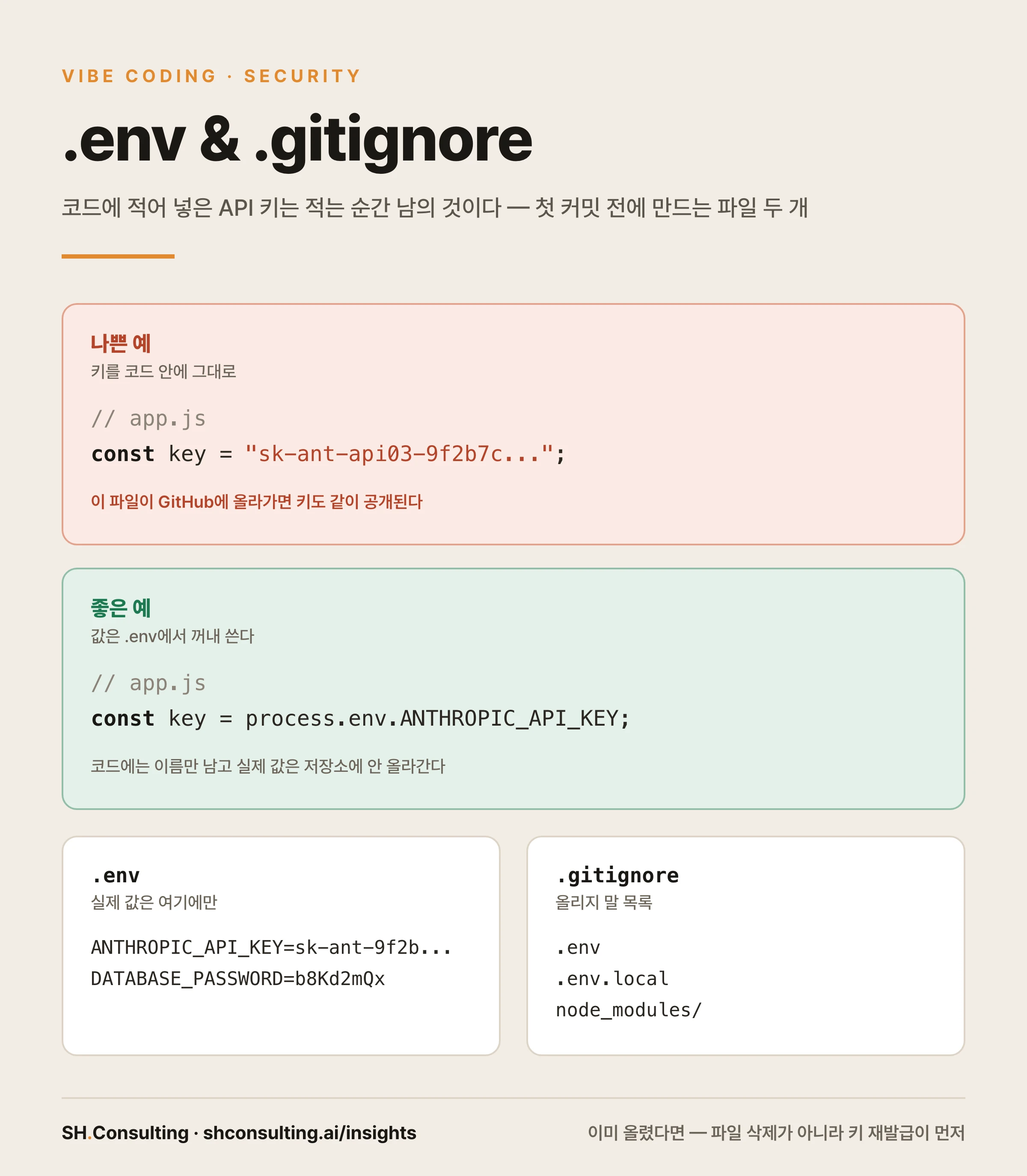
What Are .gitignore and .env, and Why Must They Exist Before Your First Commit?
.env is a file that holds values nobody else should see - API keys, passwords - outside your code, and .gitignore is the list that tells git which files never to upload. Both belong in place on day one, before your first commit. A key written into your code becomes public the moment it reaches GitHub, and automated scanners sweeping public repositories find it within minutes. If it is already pushed, issuing a new key comes before deleting the file - git history keeps the old one.
What Human Capability Survives in the Age of AI?
What passes to AI is producing answers and grading them. What stays with people is deciding what to grade. The most expensive asset in AI right now is the judgment criteria held by domain experts - the rubric, known as evals and verifiers. But a rubric, once extracted, gets copied, and grading itself is rapidly being automated as models judge other models. The layer that resists automation sits above that: curiosity, which chooses where to look, and taste, which chooses what counts as good. Both are acts of setting an objective function, and a model cannot write its own.
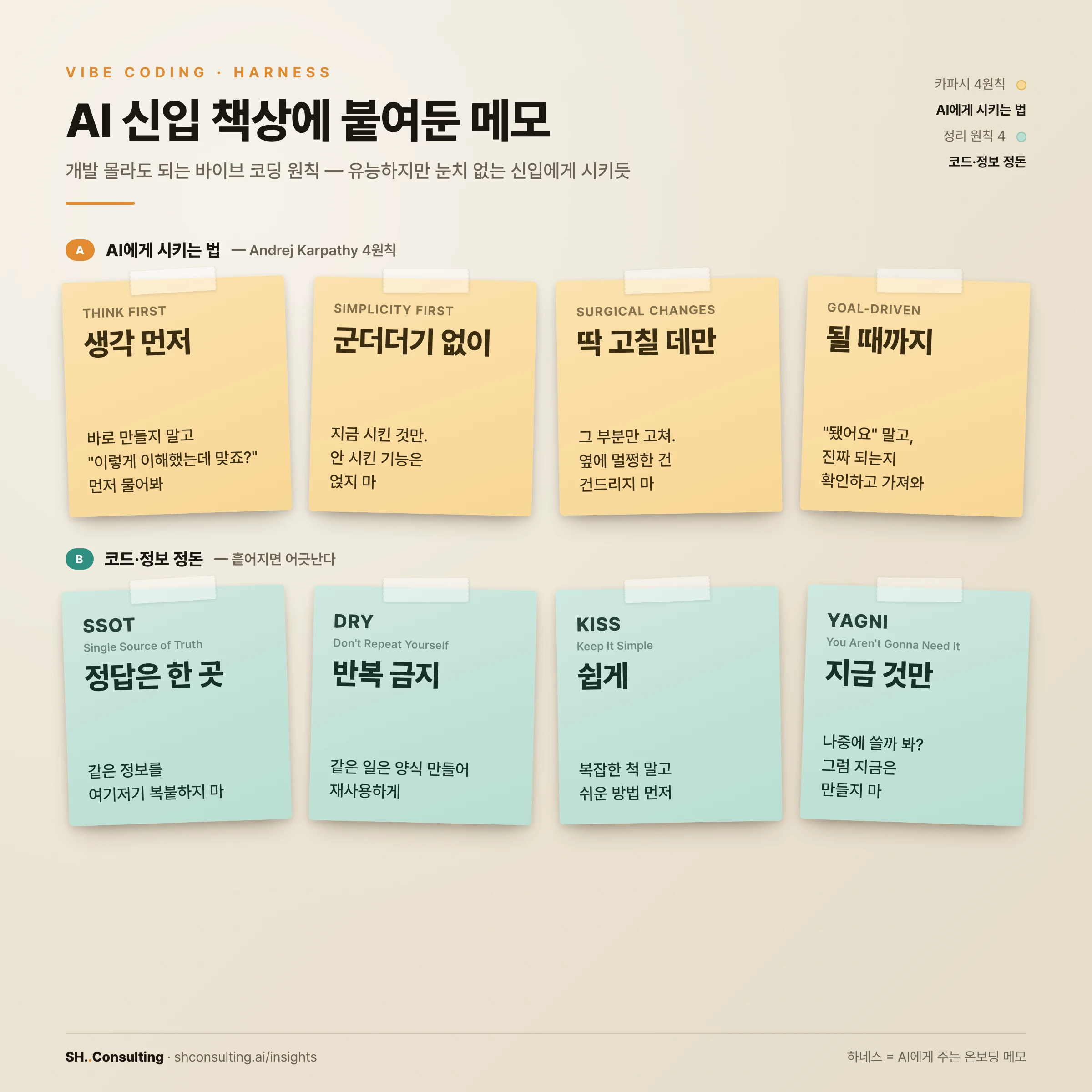
Vibe Coding Principles - What You Need to Set So the AI Codes Well
There are roughly eight principles for directing an AI to write code well: Andrej Karpathy's four (Think First, Simplicity First, Surgical Changes, Goal-Driven) and four for keeping code tidy (SSOT, DRY, KISS, YAGNI). Those eight actually fold into four common-sense rules - confirm before starting, keep it simple, touch only what you were assigned, gather into one place. Write these into a CLAUDE.md or AGENTS.md file (a harness) once, and the AI reads them at the start of every conversation. Think of them as sticky notes on the desk of a talented but clueless new hire.
What Is a Vibe Coding Harness, and What Should a Non-Developer Set Up First?
A harness is the set of rules and briefing you write into a project in advance so the AI works at your level and for your situation. For a non-developer starting vibe coding (building software by directing an AI instead of writing code yourself), the very first harness setting is a single line. Create a file called CLAUDE.md or AGENTS.md in your project folder and write "I am not a developer; explain technical terms in plain language, briefly and simply" - the AI reads that instruction at the start of every conversation, and the level of every answer changes.
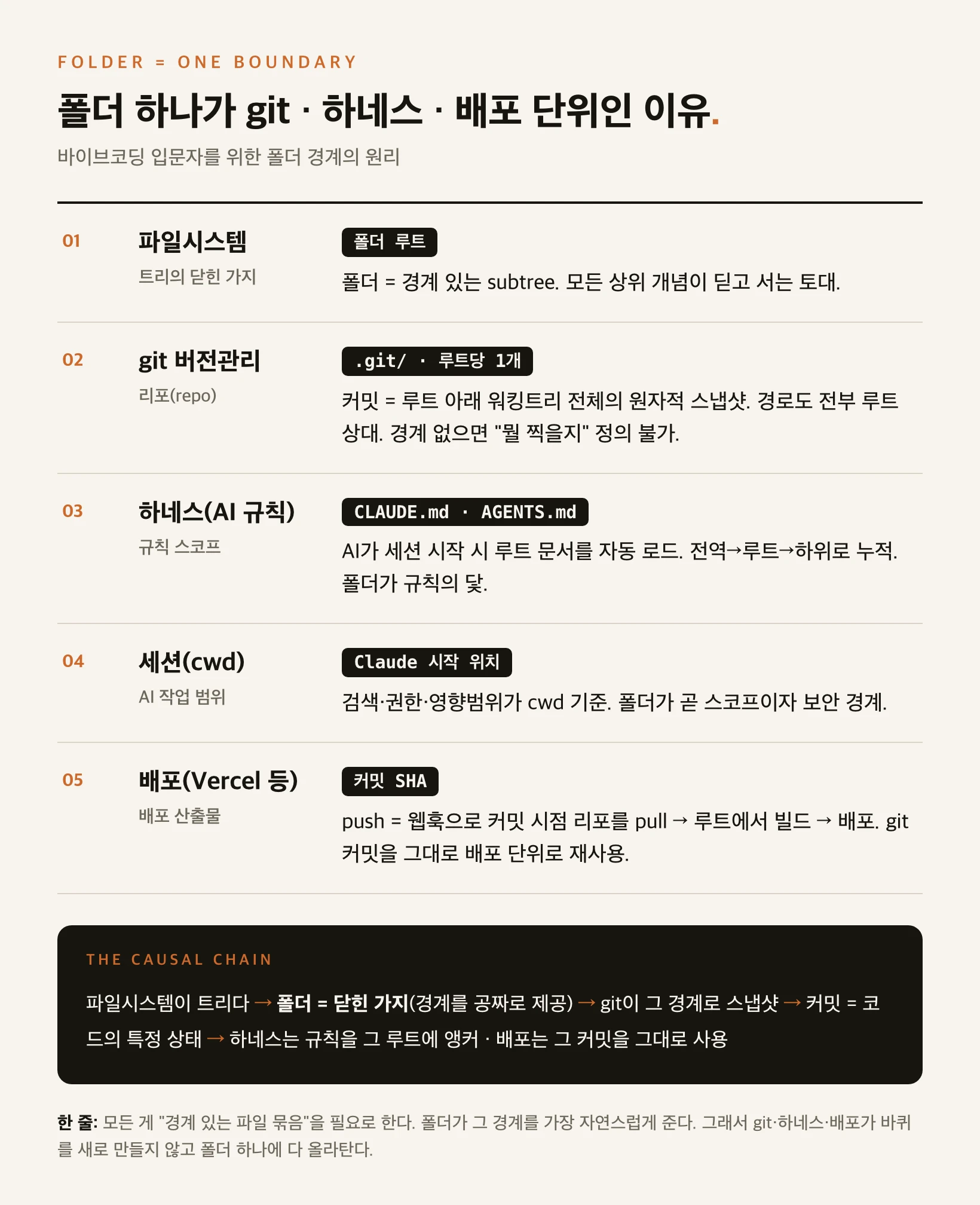
Why Do You Keep a Project in a Single Folder When Vibe Coding?
Because a folder is the shared boundary for git, the harness, and deployment. Since a filesystem is a tree, one folder becomes a bounded closed branch (subtree), and the git repo (one .git per root), the AI rule documents (CLAUDE.md, AGENTS.md), and deployment (a commit SHA) all reuse that same folder boundary. That is why a single push saves, applies rules, and deploys at once. The standard is to place projects side by side rather than nesting them, and to start from each folder's root.
What Is AI Washing, and What's the Real Reason Behind the Layoffs?
AI washing means a company disguises layoffs driven by real pressures - earnings targets, bloated headcount - as an AI-driven decision. In the US, layoffs explicitly attributed to "AI" topped 100,000 in just the first half of this year, yet in an anonymous survey of 700 CFOs, 90% said AI had essentially no impact on their company's hiring. What's actually happening isn't AI replacing people directly - it's a small number of people who use AI well doing the work of many, closing the door especially for entry-level and junior hires.
How Do You Cross-Check Whether a News Article Is True?
The same story appearing across many outlets isn't cross-verification — most of them just re-ran a single wire-service piece. This plugin takes a news URL, extracts the core claims, and checks each against genuinely independent sources to rule it true or false. The verdict is computed by code, not the AI's gut (two or more independent supports = true, two or more independent rebuttals = false, otherwise unverifiable), and wire-service re-runs are collapsed into one. It reads through bot-blocked sites, and it's an open-source (MIT) assistive tool.
How Do You Reverse-Locate a Place From an Instagram Reel Alone?
A promotional reel has to pull people in, so it leaves a pile of clues on screen. This skill pulls frames from the video, has an AI read those clues (signs, landmarks, on-screen text, captions), searches Kakao Map, Naver blogs, and the uploader's account in parallel to narrow candidates, then tries to disprove each before confirming the location. Install it as a plugin in Claude Code and hand it a reel URL. It targets public places in promotional content only, and it's open source (MIT).
What Does K Public Data MCP's Hospital Detail Lookup Add?
K Public Data MCP is an open-source MCP server that lets AI use Korean public data directly. It now connects HIRA's medical-institution detail service, so after finding a hospital by name, region, or type, you can pull that hospital's facilities and beds, specialists per department, equipment (PET, CT, etc.), and transit info in a single flow. Data that used to stop at search now reaches inside the hospital.
What Is Claude Code Remote Control — Taking Over a Local Session From Your Phone
Claude Code Remote Control lets you take over an AI coding session running on your own computer from a phone, tablet, or another browser and keep giving it instructions. The session keeps running on your computer (it is not in the cloud), and code execution and file access stay on your device. Your phone and browser are just windows for looking into that local session and talking to it. Type the single line claude remote-control in your project folder and a session URL and QR code appear; scan the QR with your phone and that session opens in the Claude app. It works on claude.ai Pro, Max, Team, and Enterprise subscriptions, and as of July 2026 it is a research preview.
What Is ir-search — an AI Skill That Exhaustively Surveys Government Grants
ir-search is an open-source agent skill that 'exhaustively surveys' Korea's government and public-institution support programs. It crawls the full set of open notices from K-Startup, Bizinfo, NIPA, KOCCA, and SMTECH, picks the programs that fit your project profile (startup stage, region, what you need), verifies eligibility against the full text of each detailed notice, and produces a report sorted into three groups: qualify now (A), a roadmap once you meet a condition (B), and eligible if you reframe (C). It installs and runs with one line across several agents — Claude Code, Codex, Cursor, Gemini — attaches a source URL to every notice, and marks anything not stated in the notice as 'unknown' rather than guessing. Its author (djfksjd) released it under the MIT license.
What Five Things Are Missing from an AI-Built Signup?
Tell an AI 'build me a signup with email and password' in one line and the screen appears in five minutes, but that output is missing five things: password reset, member info editing, account deletion, a privacy policy, and terms of service. This isn't a matter of bolting on one more feature; it's a matter of policy decisions. How many minutes the reset link stays valid, whether deleted data is truly erased or only anonymized, whether the privacy policy is written against the fields you actually collect — a human has to decide these first before the AI can build them properly. Skip deletion or the privacy policy and you're violating the personal information protection law and exposed to a fine. In the AI era, a builder's skill comes not from code but from this decision list.
How Do You Do Real-Time Interpretation with GPT Live?
GPT Live is OpenAI's new ChatGPT voice model, and thanks to its 'full duplex' design — listening and speaking at the same time — it judges, even while a person is talking, when to cut in and when to step back. That is what finally made real-time interpretation feel natural. Using it is as simple as turning on voice mode in the ChatGPT app and giving one sentence: 'From now on, interpret what I say in Korean into English, right away.' When the speaker talks in Korean, the AI renders it into English on the spot and feeds it to the listener's earbuds, and it doesn't break even when the two voices overlap. The feature is open even to free-tier users, so the era when interpretation was a matter of money and manpower is drawing to a close.
What Is Enterprise IQ, and Why AI Transformation Is Not About Inserting AI
Whether an AI transformation succeeds does not hinge on where you insert AI into your existing work, but on whether you embed into the AI your company's own winning logic — what BCG calls Enterprise IQ, the company's brain. Most companies stop at 'deployment': leaving the sequence of work untouched and slotting AI in between the steps, which only speeds up the hands and feet. BCG's 'reshape' redesigns the sequence itself, cutting new-product planning from six months to a year down to one or two months. The brain that makes this redesign possible cannot be built by OpenAI or Palantir — only by the company that understands the logic of its own market.
In an Age Where Clients Build It Themselves, What Does a Dev Shop Leave Behind?
In an age where clients can build things themselves with AI, what a dev shop leaves behind is not a finished product but a 'gate that judges' and 'training that lets the client do it alone.' The AI dev shop Litmus built a structure where a client clicks a spot on the screen, leaves a comment, that comment becomes a ticket, and an agent starts building; as a project matures, a PM judges at the gate what to ship and what to block. On the same skeleton, SH Consulting builds only the core 80% of the RFP instead of implementing 100% and handing it over, and helps the client finish and maintain the remaining 20% themselves through AX training. The more AI takes over execution, the more a dev shop's worth shifts from code to judgment and teaching.
What Changes When You Attach an AI Agent to a Professional Practice?
Attaching an AI agent to a professional practice means redesigning the work so that AI handles the repetition sitting in front of the expert's judgment—intake, classifying the case or inquiry type, first-pass risk framing—while the person concentrates on judgment and accountability. The site of Attorney Lee Young-nam, a 21-year former prosecutor, thechain.lawyer, is one such case. A visitor writes in their situation; the AI consultation agent sorts the case type and lays out the issues and risks on a first pass, then hands it to the lawyer, who judges on top of that organized context. Because the veteran's intuition is left untouched and only the repetition in front of it is stripped away, the AI augments the expert rather than replacing them.
AI-Generated Results: How Far Should You Understand, and Where Should You Cover?
When working with AI, don't try to understand everything — first draw the line for where to keep digging and where to cover it up. Trying to understand it all makes your own understanding the bottleneck and slows the work down. The core skill is buying trust through cheap, repeated verification instead of deep understanding. For example, ask the same AI 'are you really sure this is correct?' three times, and if it says yes all three times, trust it and move on. You only set the verification gate tighter where being wrong is fatal — money flows, security, contracts. This piece lays out, step by step for a first-timer, how to draw that line, how to actually run the re-asking, and what to cover versus what to keep.
What Is Claude Design, and How Does a Non-Developer Get Started?
Claude Design is an AI design tool from Anthropic that builds websites, prototypes, presentation slides, ads, and documents just from a conversation — an Anthropic Labs product currently in research preview. It runs on Claude's frontier model (Opus 4.8 as of the tutorial this article follows) and is available to Pro, Max, Team, and Enterprise subscribers, either from the claude.ai sidebar or the Claude desktop app. The key idea is that you first build a 'design system' that locks in your brand's fonts, colors, and logo, and then everything you create afterward comes out in that same consistent tone. When a design is ready, you hand it off to Claude Code to turn it into real code and deploy it. This article walks through, step by step for a first-timer, how one person can produce a full set of brand assets without a designer or video editor.
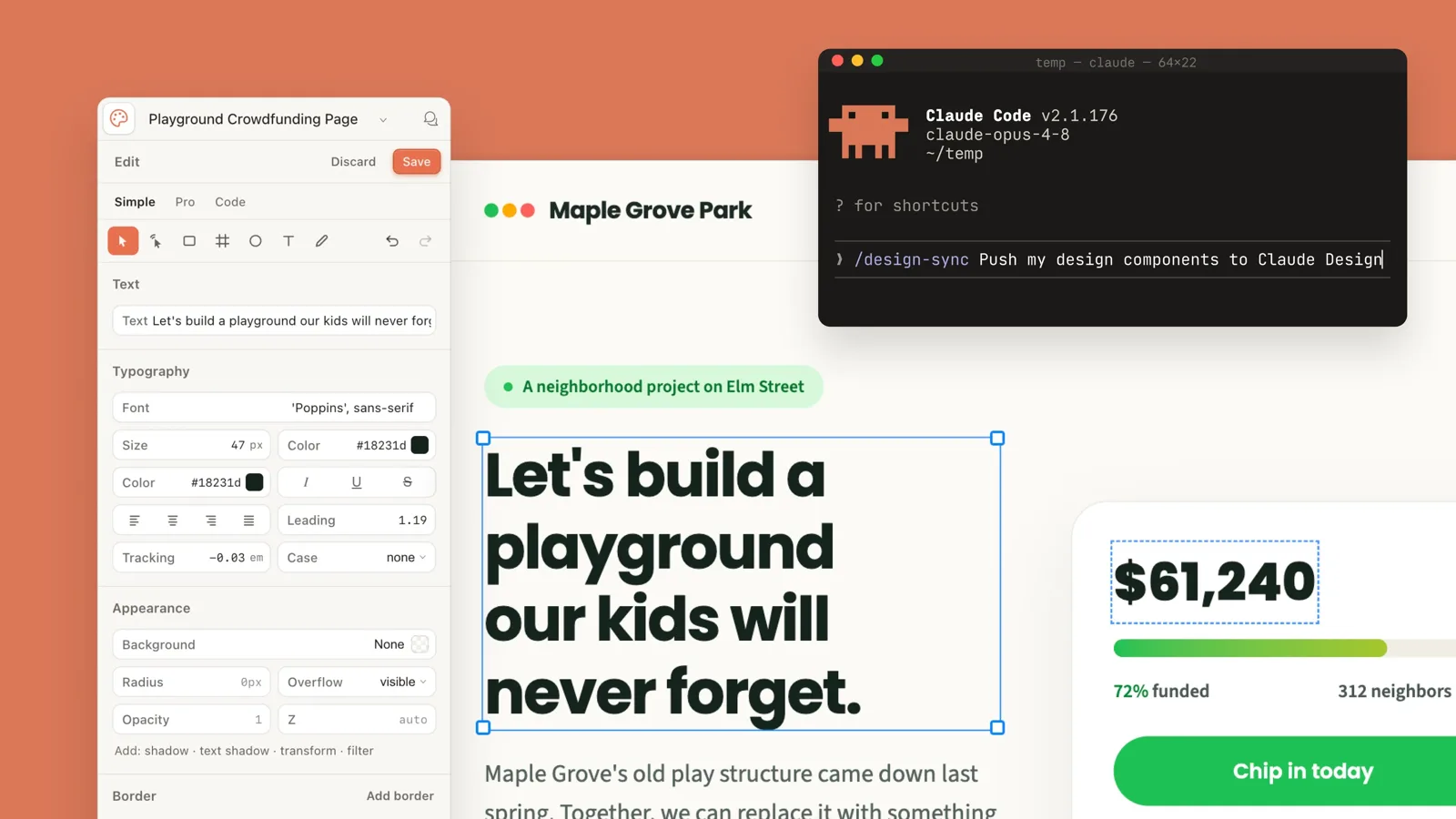
HITL: If AI Even Plans and Builds, Why Do People Stay?
AI work automation extends beyond repetitive execution into planning and building new services. An AI CS bot auto-handles, with sources attached, the repetitive inquiries that are only 20% of inquiry types but 80% of actual volume (Pareto 8:2). Going further, in a pipeline where AI monitors community sentiment and auto-plans and builds new services, people remain at just two judgment points — the Go/Stop decision and functional testing. Keeping a person inside the automation loop this way is called HITL (Human In The Loop). Machines take execution through planning; human work converges onto judgment.
GPT-5.6 Work vs Claude Cowork: Which Is Better at Work Automation?
An AI-education creator gave GPT-5.6 and Claude Fable 5 the same prompt — build a dashboard that pulls live YouTube data — and compared them. Their temperaments diverged: Claude fetches the result you want fast, by any means, while GPT thinks longer and plays it safe, going as far as deploying a real service via its new Site feature. But the important shift is structural, not the output. The harness we used to wire by hand (subagents, skills) is being absorbed into the tool, so the user no longer needs to know the concept — which materially lowers the barrier to corporate AX adoption.
Tesla HW3 vs HW4: How Different Is FSD Performance, Really?
According to a video comparing Tesla's older hardware (HW3) and the newer HW4 by running the same route on each with self-driving engaged, there is almost no difference between the two generations in everyday driving. Across a full city-and-highway round trip there were no interventions on the wheel or pedals, and HW3 — stuck on the same FSD build (v12.6.4) since early 2025 — drove as smoothly as HW4. HW4 and v14's real advantages (3-5x faster inference, an MLIR compiler rewrite, starting from Park) show up in tricky edge cases like emergency vehicles and complex parking. The takeaway: HW3 is still plenty for the vast majority of owners.
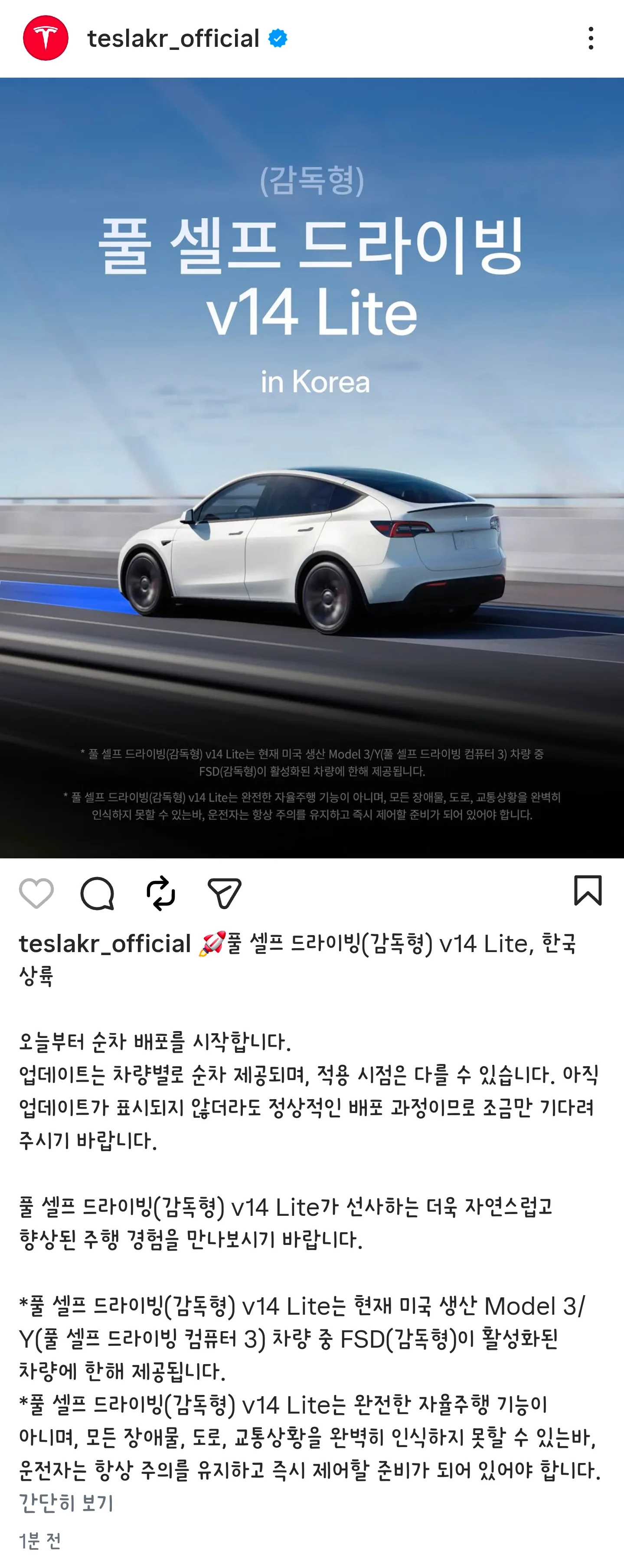
Git for vibe coding beginners: what to learn first
Git is a tool for managing versions of your code. It lets you roll back to an earlier state after a mistake, keep a history of everything you've done, and experiment safely without touching the original. A beginner needs only three chunks. First, add and commit stamp a moment you like as a version. Second, diff and the editor GUI let you check what changed before you commit. Third, branch makes a copy you build on first and merge back once it works. Install is one line, there are only a handful of commands to remember, and you can start with VS Code's GUI instead of insisting on the terminal.
Why Corporate AI Adoption Stalls Before It Reaches Real Work
Corporate AI rollouts stall at the POC stage not because of technology but because of structure. When AI adoption is bolted onto existing jobs as extra work, with no dedicated team and no time to experiment, you get a convincing prototype that never crosses into production. The industry calls this the curse of the POC. Success hinges on whether a company has a team devoted to AI, and on the domain knowledge needed to verify the output. Rather than building something grand, it's better to hand off a small, repetitive piece of your own daily work first.
Skills, CLI, and MCP in vibe coding: what's actually different
A skill is a markdown instruction sheet that tells Claude how to do something. A CLI is terminal commands the model already knows cold from training data. MCP is a protocol that bakes authentication, permissions, and tool descriptions into a standard spec to connect external services. The three don't compete — they stack. A skill decides the method; a CLI or MCP actually executes it.
Claude Cowork on Mobile: What Actually Changed
Claude Cowork now runs on web and mobile. It executes remotely on Anthropic's servers, so a task keeps running after you close your laptop and you can pick it up from your phone. Scheduled tasks can build a morning briefing in advance and wait only for your decision, and the desktop app now merges Chat and Cowork into one home. The catch: web and mobile work only with the cloud sources connected to your account, while local files and browser control still require the desktop app to be open.
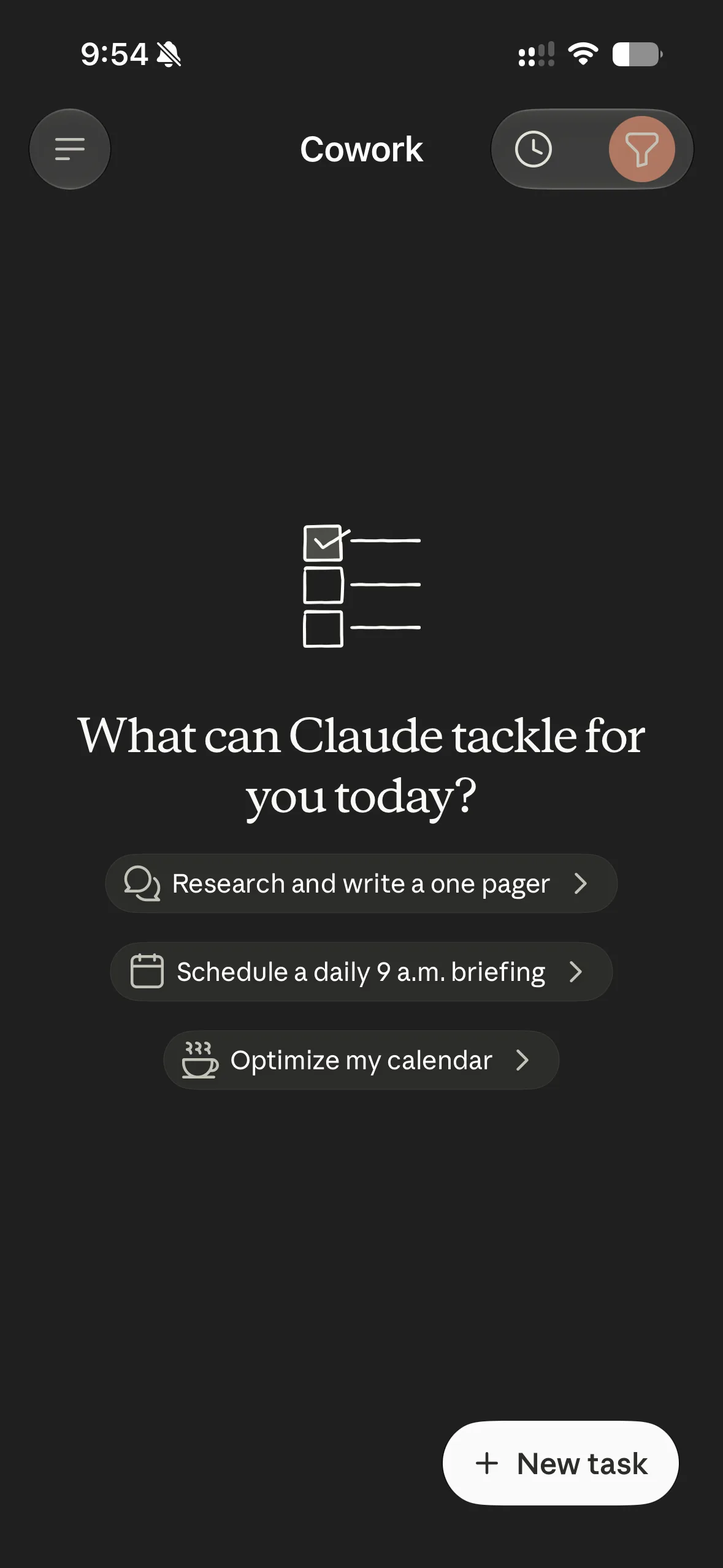
Why Vibe Coding Is Really About Handing As Much As Possible to the AI
The heart of vibe coding is not taking on yourself the work the AI could do. Beginners, when the AI says "install git" or "set up Vercel," go and do it themselves and burn out. But the AI can do most of those things itself — "you install it," "you set it up," "you go check it yourself," one line and the agent handles it. You keep only what only a human can do, like signing up for an account, and push everything else onto the AI until it genuinely says it can't. That is what delegation really means in vibe coding.
When You Roll Out AI Coding to Every Employee, What Does the Organization Have to Redesign?
The real challenge of deploying coding agents company-wide isn't handing out the tools — it's redesigning the bottlenecks that surface afterward. DoorDash gave Claude Code to every employee, not just engineers, and once throughput rose, CI/CD, code review, and security became the new bottlenecks that had to be automated with AI in turn. Three organizational lessons stand out: learning spreads only through written artifacts, experimental teams need executive sponsorship, and AI champions should emerge on their own rather than be appointed from the top. AX isn't about buying tools — it's about how an organization redesigns the bottlenecks that only appear once coding gets fast.
Why Git Is the First Hurdle for Non-Developers Starting Vibe Coding
When non-developers start vibe coding, they run into git before they even get to write any code. Ask Claude Desktop to run some code, and the first thing you see isn't the code running — it's an instruction to install git. Git is a version control tool that records every change to your code so you can roll back to an earlier state whenever you need to. It's the safety net that lets you recover when AI makes a mess of your code. The real obstacle here isn't the concept — it's the installation. Because everyone's computer setup and comfort level are different, most people get stuck on a single choice on an installer screen. That's why having Claude Code handle the git installation itself becomes the real first hands-on exercise of vibe coding.
Claude Code and Codex: where and how do you actually use them?
Coding agents like Claude Code and OpenAI Codex are used across four surfaces: a desktop app you drive with buttons instead of a terminal, a VS Code extension that rides on the editor you already use, a CLI that reaches all the way to automation, and IDEs like Cursor and Replit with the agent built in from the start. The same model behaves differently depending on the surface. In a terminal it becomes automation; in a desktop app it becomes conversation. So choosing the surface comes before choosing the tool.
The file formats you meet in vibe coding—how do you tell them apart?
The dozens of file formats a non-developer meets in vibe coding actually fall into just three groups: containers that hold data (CSV, JSON, XML), things that display on screen (HTML, Markdown), and settings and secrets (YAML, .env). You don't need to memorize every extension. When you hit an unfamiliar file, just sorting it into 'is this data, screen, or settings?' removes half the barrier to entry.
What actually defines the frontier of an AI model now?
The frontier of an AI model is now defined not by benchmark accuracy but by the ability to survive for a long time in messy real environments. Holding its own course amid the chaos of real work—decades of legacy tooling, legal and financial documents that must always be right, autonomous runs that stretch across hours—is the core of the new leap. As a result, the bottleneck for enterprise AI adoption shifts from 'is the model smart enough' to 'how do we hand our organization's messy context to the model.'
Where does a moat survive in the AI era?
In the AI era, a moat is shifting from 'what you know' to 'how fast you close the gap.' Now that frontier labs are buying experts' tacit knowledge as post-train data and AI is entering domains directly, neither domain knowledge itself nor model access holds up as a durable moat. What remains is a race between two speeds—how fast a domain expert absorbs AI, and how fast an AI-native person catches up on domain knowledge—and the moat belongs to whoever closes the gap first.
Why the Biggest Winners of AX Might Be People in Their 50s
The biggest beneficiaries of AX (AI transformation) may not be the 20-somethings fluent in AI tools, but the people in their 50s who already understand the work flow in their bones. The essence of AX is not knowing how to operate a tool but redrawing the flow of work, and the gap in output widens most when someone who knows that flow picks up the tool. In the world of Go, where AI became ubiquitous, skill levels did not converge upward — the gap between the top and the bottom actually widened.

What Is the Advisor Strategy, and How Does It Differ from opusplan
The Advisor Strategy hands execution to a low-cost model and calls in a stronger model on demand only when judgment stalls. Claude Code CLI's opusplan applies the same idea but fixes the handoff at the plan-to-execution boundary, with no loop that lets the stronger model step back in and re-check mid-execution.
How Do You Make AI Training Actually Stick?
AI training sticks only when it starts at the level people are actually at and, once the course ends, is followed by a side project reviewed on a regular schedule. Skipping levels means the knowledge evaporates the moment the course ends, and practice without review just gets crowded out by whatever is more urgent.
Why Did a Golf Tee-Time Alert Bot Become a One-Person Service?
GolfShin checks the booking pages of 34 Korean golf courses every hour and alerts you on Telegram the moment a slot opens up. Register your preferred course, date, and time on the Telegram bot (@golfshinbot), and you get free alerts with no login required. Built and run solo by Shin Seung-ho, it shows how automation that once needed a whole team can now be handled by one person.
What Is Claude Tag, and Why Is AI Becoming Team Infrastructure, Not a Personal Tool?
Anthropic's Claude Tag is an agent you summon by mentioning @Claude in a team channel (Slack, and soon Teams); it stays resident and works on its own. It captures AI's shift from a reactive personal tool you open and prompt into team infrastructure, and what drove that shift isn't a smarter model -- it's the environment: persistent presence, lasting memory, and multiplayer collaboration.
What Can Office Workers Learn From How Spotify Runs AI Agents?
Spotify kept quality steady while AI now writes 73% of its code changes, thanks to three things: verification-first automation, standardization, and reallocating freed-up time. None of these principles are specific to software -- they apply just as directly to reports, emails, and everyday office work.
Why Should AI-Era Teams Be Built Around Work Archetypes Instead of Job Titles?
As AI dissolves the boundaries between engineering, product, design, and data roles, what actually separates people on a team is no longer their job title but one of five ways of working: Prototyper, Builder, Sweeper, Grower, and Maintainer. Most people span two or three archetypes at once, and which combination a team needs shifts with the product's stage.
Why Does AGENTS.md Work Better Than Skills for AI Agents?
If you make an AI choose whether to open a document, half the time it will not, and it gets things wrong. Keep it always open in the project, like AGENTS.md, and there is no moment of choice, so no room to err. In Vercel's experiment, a Skill you pull out when needed capped at 79 even under strong instruction, while an always-open AGENTS.md scored 100. The real battleground of AX is not making the tool smarter but designing away the chance to be wrong.
What Does the End of Korea's Network Separation Demand of Companies?
Korea's uniform network separation, in place for two decades, was abolished in May 2026 through a revision of the national cybersecurity guidelines. The point is not deregulation but that companies can no longer avoid the homework they kept postponing: data classification. To connect the network, data must be sorted into three tiers, national security, sensitive, and open, yet Korea has never really done this. On top of that, the closed network was already broken by shadow AI. The real bottleneck blocking AI adoption is neither the model nor the infrastructure, but that no one has organized what kind of data we actually hold.
What Do Korean AI Startups Compete On in Europe?
The weapon Korean AI startups brought to Europe is not smarter model performance but trust. The six teams in the K-Startup pavilion at VivaTech spanned different fields, from internal document search to factory equipment data, 3D digital twin compression, fragrance recommendation, skin diagnosis, and simultaneous interpretation. Yet they shared one answer: on-premise architectures that keep data inside, compliance with ISO and GDPR, and PoC references already in hand. Not a flashy demo, but AI that works in the field, is the line that separates illusion from impact.
What goes wrong when an AI agent can't read a blocked public page?
When an AI agent fails to read a public page, the problem is usually not missing content but that a default fetch gives up the moment it hits a 403 or a bot-blocking signal. insane-search is a Claude Code plugin that does not pre-judge a block; it escalates through public APIs and feeds, lightweight probes, TLS impersonation, and a headless browser until one route works. It stops at logins and paywalls, reporting that authentication is required. It is a reader for public content, not a way around authentication.
In the AI Era, Why Must Every Employee Rise From Mason to Architect?
Until now, most office workers have been masons -- bricklayers repeating a blueprint someone else drew. AI changes that: just as an employee can build an MCP tool themselves or a small-business owner can publish content in one click, anyone can now become the architect who designs their own system. The real goal of AX, as I see it, is not some automation percentage but every single person in an organization rising from mason to architect.
What Are the Five Everyday-Automation Tools I Built and Released?
So that anyone can automate their own daily routines, I built and released five tools of my own -- spanning saju (Korean fortune-telling), personality-based consulting, public-data integration, card-news generation, and pension simulation. They aren't a grand platform; they're what came out of building the tools I needed, only as much as I needed, and fast -- starting from a belief that the end of AX is everyone becoming the architect of their own system.
How do you prevent coding agents from faking completion and sharing blind spots?
Coding agents fail in three recurring ways — false completion, unconsensused design, and single-model blind spots — and you close each with a harness layer: consensus, verification, and cross-review. The open-source harness oh-my-claudecode (OMC) ships ralplan, which forces a plan through a Planner-Architect-Critic consensus loop before any code; ralph, which declares done only after a separate reviewer verifies each user story; and ccg, cross-review that fills one model's blind spot with another. The gap in AI results usually comes from the harness, not the model.
Is AI Scissors That Cut Headcount, or Armor That Makes People Stronger?
The question I hear most in corporate training is, 'So adopting AI means cutting people, right?' I see it the exact opposite way: AI is not scissors that reduce headcount but armor that makes the same people stronger, and an organization that arms 400 people beats one that cuts down to 100. Cutting ends with a one-time saving, while arming compounds.
In AX, How Are the Roles of Humans and AI Divided?
In AX, the human decides where to dig, and the AI quickly checks with data whether that hypothesis is real. The real value of AI is not generating good ideas but honestly killing wrong ones. While building a location model on medical data, an AI agent rejected a plausible saturation hypothesis with the data, and a single remark from a domain expert pointed to the real signal. The combination of the two is the essence of AX.
What Is Loop Engineering, and When Should You Use It?
Loop engineering is a way of working where, instead of typing a prompt every time, you design a loop so the AI picks up the in-progress work on its own at set intervals and keeps processing it. Boris Cherny, who built Claude Code, has said he no longer types prompts each time but sets up loops instead. The key is to hand repetitive work to the loop while you focus on designing and monitoring it, and on the guardrails that stop anything from leaving the building unchecked.
Why Can't You Compare Renovation Quotes, and How Do You Turn It Into a Comparable Market?
In the 22-trillion-won interior renovation market, price competition doesn't work because every contractor measures and quotes in its own format, making objective comparison impossible. With close colleagues, I set out to solve this information asymmetry with standardization and AI, and the core is separating measurement from estimation. Once an inspector measures a site once with mobile LiDAR, a single standard item structure is created; on top of it, vetted contractors compete only on unit price and margin, and the consumer compares five quotes in a single meeting.
Why Is AX Environment Design, Not Training?
AX is not about training your people to use tools; it is about designing the very environment in which people work with AI. Trying to keep up with every weekly update at 100 percent only burns people out. The point is to change how work is done so you can say "we now do what we couldn't before," and the starting point is a small experiment: find a recurring, annoying task and automate it.
Why Did I Build a Golf Tee-Time Tool Myself, and What Does the Era of Solving Your Own Frustrations Mean?
To book a single weekend round, I used to comb through more than a dozen sites one by one -- so I built a tool that compares tee times at 34 of Korea's popular golf courses on a single screen. I gathered, in real time, only the non-affiliated popular clubs that major booking apps don't cover, and with no intent to monetize, my friends and I now use it for actual bookings. The point is that we've entered an era where the person who feels a frustration can solve it themselves through vibe coding.
In the Era Where One Person Can Build a Subscription SaaS, What Comes First?
A laptop and a single line of AI: we have entered an era where one person can build a small SaaS that gets paid every month. It happened because the investment cost of services that could not be built before has collapsed, shrinking the distance from idea to launch to a matter of days. So what you need first is not big capital or a big team -- it is observation of the small frictions in daily life, and execution.
Which Companies Survive in the AI Era?
The companies that survive are not the ones that adopted AI but the ones that rebuilt how they work 100%. With the same tools, an org where 90% of engineers use AI and one where 100% do are 10x apart. The tools are the same for everyone; the gap comes from what new process you stack on top of them.
What Is the Essence of AX? A System That Keeps Evolving in Employees' Hands After the Consultant Leaves
The essence of AX I verified at Astros, the trading company my younger brother runs, was not a system that does people's work for them, but a structure where employees instruct an LLM in natural language and verify the results themselves. The result was 60% automation of accounting work, but the more important change was that the staff's work moved from simple data entry to analysis and decision-making, and the system kept evolving in the employees' own hands even after the consultant left.
Why Does AX End With People, Not Systems? — Launching SH Consulting
Over a 22-year path that began in advertising and brand strategy, I founded a SaaS company and lived through an exit, and the conclusion I reached at the end was surprisingly simple. AX (AI Transformation) ends not with systems but with people. Good automation does the work for you and then leaves, but good AX leaves behind people who keep fixing the tools and uncovering new automation on their own, even after the consultant is gone.
Who should build AX for it to succeed?
AX (AI transformation) succeeds when it is built by the frontline people who do the work every day, not by outside developers. The exceptions and tacit rules hidden in a workflow are known only to the person who runs it daily. So the essence of AX education is not adding more developers, but enabling frontline workers to automate their own work through vibe coding. A finance and operations staffer who automated their daily ordering process shows what this looks like.
Why is automating your own daily life the best starting point for AX?
Removing one small task you repeat every day — entirely, not partially — is the best starting point for AX (AI transformation). The reason is that taking a task fully out of your own hands, rather than making it a few percent faster, is how you learn firsthand what AI can replace and how far you can trust it. A personal example: AI picks schedule items out of scattered KakaoTalk chats, registers them on a calendar, and delivers a single morning briefing.
What decides AI coding productivity — the model or the workflow?
The quality of AI-assisted coding is decided more by workflow than by model choice. The real bottleneck is rarely a weak model; it is vague specification and unfinished work. oh-my-claudecode (OMC) is an orchestration layer on Claude Code that hardens three habits into tools: deep-interview clarifies what to build, ralplan validates how to build it, and ralph guarantees it actually gets finished. The point is turning "what, how, and to the end" into an enforced pipeline.
Why Should You Get AI Output as HTML Instead of Markdown?
For finished deliverables, receiving AI output as HTML instead of markdown dramatically speeds up comprehension. AI now produces documents faster than people can read them, and markdown beyond 100 lines effectively goes unread. An Anthropic engineer on the Claude Code team made the same call — "HTML is the new markdown" — and started receiving output as HTML. When you need interactive views, the Playground plugin closes the gap. The rule is simple: finished artifacts you need to grasp structurally go to HTML; intermediate artifacts stay in text.
Is the Contact Center a Cost Department or a Source of New Business?
A contact center is not only a cost department; it can be a source for discovering new services and lines of business. Incoming customer inquiries already contain clues to unmet demand, and turning call records into assets with STT and an LLM wiki lets you mine those clues systematically. The remaining hurdle is masking personal data — solve it, and the contact center turns from a cost department into a business-discovery engine.
Why Does AI Output Probabilities Instead of Rules?
Today's AI is not a machine that executes rules written by humans; it is a machine that outputs probabilities, such as "93% likely spam," based on patterns it finds in data on its own. Problems with clear conditions, like bank transfers, are solved perfectly by rule-based code, but rules collapse on problems with many exceptions and blurry boundaries, like image recognition. Machine learning and deep learning emerged from this failure of rule-based systems, and this distinction becomes the first criterion for decomposing work in AX consulting.
What Is AI Orchestration? The Control-Flow Design That Begins Where RAG Chatbots Stop
AI orchestration is control-flow design: instead of a single-track pipeline that receives a question, searches, and answers, it builds loops that backtrack when stuck and branches that change course with the situation, so AI can handle complex real work. LangChain supplies the standard parts, LangGraph the control flow, and LangSmith the observability. Attaching it to a job a single API call can finish is wasteful; it is a tool to reach for when the work is complex enough to need loops and branches.
What Is a Backend? A Genealogy of Problem-Solving That Began with a 1993 Guestbook
A backend is the part of a service where a server receives requests, processes data, and returns results — and it was born in 1993 while solving the guestbook problem. Pre-built HTML files could not show the next visitor a message someone had just left, so servers began assembling pages on the spot for every request; that was the starting point. The thirty years of evolution that followed repeat the same pattern, and once you know this genealogy, even non-developers can give AI concrete instructions about the backend.
Why Does AI Keep Recommending Supabase in Vibe Coding?
Because databases and storage -- once entirely separate lineages of technology -- each outgrew their own limits and converged into a single platform, and Supabase is exactly that meeting point. The recommendation isn't a matter of taste but a result of technical history, and once you hold that lineage as a map, both your judgment about which tool to use and the precision of your instructions to AI change.
Why Do You Still Need Front-End Knowledge When AI Writes All the Code?
Because even when AI writes the code for you, if you don't understand the basic concepts of the front end, the level of what you can ask AI to do stops right there. Terms like React, npm, build, and SSR aren't vocabulary to memorize but a chain of problem-solving in which each step was born to fix a new problem the previous one created -- and only when that map of evolution sits in your head do your instructions to AI turn specific.
How Do LLMs Actually Work? Four Things Non-Developers Should See in Code for Themselves
An LLM is not something that remembers your conversation; it is a probabilistic model that re-reads the entire prior exchange on every turn and predicts the next token. This mechanism surfaces as a filling context window and rising cost, a token penalty for Korean, hallucination, and output that shifts with temperature and the system prompt. These phenomena only become design problems — verification steps, conversation-history management — once you reproduce them in a few lines of code and watch them on screen, rather than merely hearing them explained.
What Is Deployment — and Why Won't localhost Open on a Friend's Computer?
Deployment is the process of putting code that exists only on your own computer onto a server so that anyone on the internet can use it. This article covers why a vibe-coded app only runs on localhost:3000, how deployment evolved from FTP to Git, Docker, and CI/CD, and what platforms like Vercel do for you — and at what cost. With this map in your head, the questions you ask AI change, and that specificity is what separates skill levels in non-developer vibe coding.
What Is K Public Data MCP? — A Server That Connects Korean Public Data to AI
K Public Data MCP is an open-source MCP (Model Context Protocol) server that unifies South Korea's scattered public data APIs — the Ministry of Government Legislation's law database, the DART corporate disclosure system, and the public data portal — so that "search the Civil Act," "show Samsung's financials," or "find pharmacies in Gangnam" work directly in an AI chat. It runs on a single connector URL, with no API key issuance or installation required.
What Is Harness Engineering?
Harness engineering is the practice of improving AI output quality not by changing the model itself, but by designing which tools the model can use and which rules and workflows it must operate within. The same model performs very differently depending on its harness — so before upgrading to a more expensive model, this is the layer to inspect first.
Why AX Projects Fail — Don't Help the Team, Eliminate the Work
The most common failure pattern in AX (AI Transformation) projects: an AX team tours departments, collects requirements, and builds tools — which the field then never uses. Successful AX starts not from "help that team" but from "eliminate that team's unit of work entirely," and the people are not cut but transitioned to new roles.
Generative UI and MCP Apps — Where Are Agent-Era Interfaces Headed?
Agent UI is evolving through three stages: static (agents fill data into pre-built components), declarative (agents write a JSON description that a rendering engine maps onto a design system), and generative (the model writes HTML/CSS at runtime). Today's equilibrium is declarative; the gate to generative is not capability but trust — a safe distribution structure, i.e., sandboxing. MCP apps are drawing attention as that distribution channel.
AI Native vs. AI Assisted — Which One Is Your Company?
AI Native means a structure where entire workflows complete through AI with almost no human intervention; AI Assisted means people keep doing their jobs as before while AI helps with parts on the side. Most corporate "AI Native declarations" are in fact AI Assisted — and companies that cannot tell the difference see productivity stay flat even after adopting AI.
How Can Claude "Watch" a Video and Answer Questions About It?
Claude cannot play a video directly, but connecting the open-source tool /watch lets it break a YouTube link or a local screen recording down frame by frame, attach captions, and answer based on what actually appears on screen — not by guessing from a title or description.